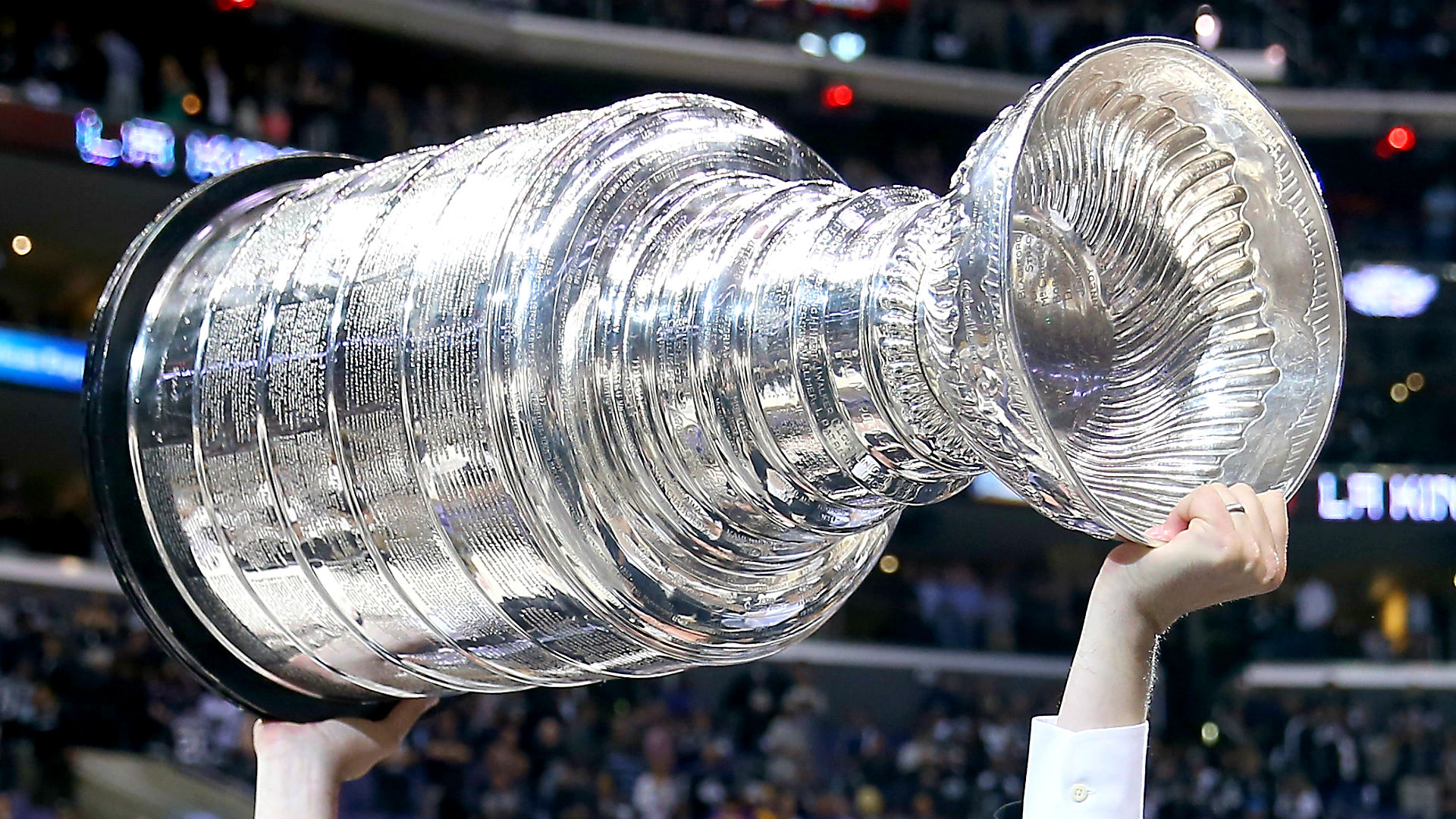
When the 2025-26 regular season concluded on Friday, it officially marked the end of nineteen seasons of AB evaluation for me at hockeyfreeforall.com. As the industry rapidly prepares for what should be an exciting Stanley Cup playoffs kicking off in a few short hours, I spent the last three days compiling all the data and insights I would need to present the following playoff predictions article. If you’re like me, you’ve probably read several of these types of work over the last 48 hours, and everyone’s entitled to their own opinion. However, what sets the annual HFFA predictions apart from those of media members, pundits, or fans is the intense analytical rigor and the unbiased, authentic data-collection processes behind this site’s work. What you’re about to read is the playoff field according to Team AB Score (the sum of all individual AB scores for each of the sixteen qualifying teams).
A common theme that will appear as you progress in this article is that I am a firm believer that the NHL should return to its 1-8 playoff format. I’m genuinely surprised that owners haven’t pushed for this harder with the league, as Boston had the 4th-highest Team AB in the East and would’ve been projected to win under the AB metric if this series had been against the Montreal Canadiens, as it would’ve been under the previous format (4-seed Canadiens vs 5-seed Bruins). Instead, the model projects the Sabres to win their first playoff series since 2007, and Boston’s bounce-back season to end. It’s no secret that teams earn massive amounts of revenue from additional playoff games; according to CBS17 Raleigh Carolina Hurricanes in the Playoffs: How much 1 game generates for local business, if the Carolina Hurricanes qualify for the Stanley Cup Playoffs, they generate roughly $2-$3 million per playoff game. Long playoff runs can generate tens of millions of dollars because the team is highly competitive and attracts more commercial business with every additional win.
I believe the current system doesn’t reflect the regular-season success of several teams and gives fans repetitive matchups because of similar divisional performance from year to year. The Minnesota Wild are one of the best teams in the NHL and are projected to lose in the first round to the Dallas Stars under my model, costing them gate revenue for second-round matchups and beyond against the substantially weaker Pacific Division side of the bracket. Under the old system, the Wild would face the Utah Mammoth in a 3-versus-6 seed game, a team they had 12 more points than over the regular season. Dallas finished 3rd in the entire league with 112 points, while Minnesota finished 7th with 104. The matchup will be discussed in more detail later, but I find it amazing that this playoff format will cost teams millions in extra revenue just to generate “rivalries.” Yes, we’re getting the Battle of Pennsylvania, and that will be exciting, but I will compare what each matchup should have been under the 1-8 seeding system with what we’re actually seeing now, and determine which is better.
- 1 Carolina vs 8 Philadelphia
- 2 Buffalo vs 7 Pittsburgh
- 3 Tampa Bay vs 6 Ottawa
- 4 Montreal vs 5 Boston
- 1 Colorado vs 8 Los Angeles (same)
- 2 Dallas vs 7 Anaheim
- 3 Minnesota vs 6 Utah
- 4 Vegas vs 5 Edmonton
When looking at this, I see it as just as good, if not better, divisional rivalries, and top-seeded teams actually facing opponents they are substantially better than, like Minnesota vs Utah and Dallas vs Anaheim. No team with 100+ points should lose to another team with 100+ points in the opening round of the playoffs, and I very much hope that owners encourage some changes because Commissioner Bettman doubled down on the format on Sportsnet yesterday, as noted in this article here. ‘We think it works really really well’: Bettman on current playoff format. I think this season especially exposed the incredible flaws associated with the current format, and the quality of games after the first round will be indicative of it. With that being said, let’s get into the overall projections.
Eastern Conference 1st Round: Buffalo Sabres vs Boston Bruins
The Buffalo Sabres qualified for the Stanley Cup Playoffs for the first time in fourteen years, allowing the New York Jets to have the longest playoff drought across the four major North American sports leagues. The Sabres finished with the best record in the Atlantic Division at 50-23-9, and finished 2nd in total points in the entire Eastern Conference with 109, a 30-point improvement from 2024-25. The Boston Bruins also improved drastically this season compared to last, boasting a 24-point increase (100 total) and a 5th place regular season Eastern Conference finish. Below is a graph illustrating each club’s roster outlook in Team AB.

As I mentioned before, the model predicts the Sabres to win this matchup in what should be one of the more entertaining series based on industry uncertainty alone. People are concerned about the young Sabres’ playoff inexperience and view Jeremy Swayman as a goalie capable of stealing the series for the Bruins. However, Buffalo’s year, according to AB, cannot be understated, as they have the third-highest Team AB of any team in the playoff field, behind only Tampa Bay’s (+38.10) and Colorado’s (+44.70). Buffalo’s roster is littered with players in the 2-3.5 AB range, which illustrates the depth of quality decision-makers at their disposal. Although it can be argued that the Bruins may have the best overall player in the series (David Pastrnak), the Sabres’ well-roundedness is the deciding factor in a decently lopsided +4.22 Team AB swing. I’d personally project a 6-game series based on that information.
Eastern Conference 1st Round: Tampa Bay Lightning vs Montreal Canadiens
The young Montreal Canadiens had an incredible regular season, registering 106 points and 48 wins for a 3rd place Atlantic Division finish. There were some outstanding individual performances, including 101 points from Captain Nick Suzuki, 51 goals from Cole Caufield, .95 points per game average from Lane Hutson, and 30 goals from Juraj Slafkovsky. They are going to be a perennial threat in the Eastern Conference for years to come, but despite all of that, they are a 4.8 AB underdog to the Tampa Bay Lightning, the third-highest Team AB gap behind only Colorado’s 18.49 points over Los Angeles, and Pittsburgh’s 9.41 over Philadelphia. Here is the AB preview.

As shown above, the Tampa Bay Lightning profile is one of the most complete overall teams in the AB model. They obviously have elite top-end scoring talent in Nikita Kucherov and Jake Guentzel, but also have a second-tier group of players that vastly exceed replacement and are positive contributors. A 50-26-6 record, given a multitude of injuries, shows just how truly remarkable Tampa Bay’s regular-season AB rank of #2 was, and the experience of a team that’s dominated this era and an obvious coaching advantage should be a differentiator in the matchup. As a fan, I’d love to see this series go to 7 games, but a 5 or 6-game series is my expectation with Tampa Bay advancing to the next round.
Eastern Conference 1st Round: Carolina Hurricanes vs Ottawa Senators
This is an incredibly similar series to the Tampa Bay vs. Montreal one in terms of predictability. A 3.62 AB difference in Carolina’s favor is also a similar margin to Tampa’s advantage over Montreal, and the result expectation is the same. Carolina has been a juggernaut this season, recording 113-points and a 53-22-7 record, the best marks in the Eastern Conference on both accounts. Below is the complete preview in terms of AB.

Ottawa’s defensive group, as shown in the projection model, is the team’s core strength. Their goaltending, led by Linus Ullmark, has been hot to close the season, but their drop-off in points and AB production outside of their obvious elite forwards can’t compete with the balance and structure of the Hurricanes. Like Tampa/Montreal, I predict the Hurricanes win the series in 6 games.
Eastern Conference 1st Round: Pittsburgh Penguins vs Philadelphia Flyers
Prior to the start of the 2025-26 season, I wrote an article Why Are Pundits Undervaluing the Pittsburgh Penguins? Could They Be Better Than We Think? – hockey free for all.com (HOME OF THE ADVANCED BRACTON) that explained how I expected the Pittsburgh Penguins to be better than the league and sportsbook’s consensus. Not only did they shatter their Over/Under points projection average of 75, but they also exceeded my 85-point prediction, finishing with 98 points. The Penguins finished second in the Metropolitan Division with a record of 41-25-16, good for 2nd behind the Carolina Hurricanes’ 113. Below is the AB matchup projection.

Even though the Flyers matched the Penguins’ 98 points, the key difference lies in the substantial AB gap. Recently, the Penguins also ended Matt Dumba’s contract, removing one of their few negative AB contributors. It was an enjoyable season for the Flyers and beneficial for their rebuilding effort, but the model predicts this series won’t extend beyond 5 games.
Western Conference 1st Round: Colorado Avalanche vs Los Angeles Kings
The Colorado Avalanche are considered the best team in the NHL by Team AB, and their standings confirm this. They won the President’s Trophy with a 55-16-11 record, ending the season with 9 more points than the Dallas Stars, who finished second in the Western Conference, and 8 points ahead of the league’s second-place team, the Carolina Hurricanes. Colorado’s advantage of 18.29 AB points is almost double that of the next highest margin in this playoff field (Pittsburgh’s +9.41 over Philadelphia). The Los Angeles Kings finished the year with 31 fewer points than the Avalanche. The model predicts this will be the only sweep in the opening round. Below is the AB preview, which highlights how one-sided this matchup is.

Western Conference 1st Round: Dallas Stars vs Minnesota Wild
I’ve already stressed how ridiculous it is that the Stars and Wild are facing each other in the first round, and that one of these two amazing teams will be eliminated from the playoffs in what has the makings of a 7-game classic. The AB difference between the two is 0.91, the closest margin of any of the opening series. Here is the projection preview.

The Minnesota Wild aggressively traded for Quinn Hughes to bolster their D-core and signed Kirill Kaprizov to the most lucrative contract in NHL history. Their commitment to winning and their 46-24-12 record (104 points) season is why I believe they are the biggest victims of the current playoff format. Dallas is the model’s projected winner, and even still, whoever wins this matchup has the privilege of playing the Colorado Avalanche in the next round, a daunting stretch to even reach the Western Conference Final. This format is in dire need of change, and this series may be the primary example of why.
Western Conference 1st Round: Vegas Golden Knights vs Utah Mammoth
Since John Tortorella took over for Bruce Cassidy in Vegas, the Golden Knights have gone 7-0-1 in eight games and secured the Pacific Division title. This gives them a significantly easier path to the Western Conference Finals, especially when compared to facing a tough Minnesota or Dallas team. Notably, Dallas finished the regular season with 17 more points than Vegas, while Minnesota had 9 more points. In my article, John Tortorella Hired in Vegas, Why the Golden Knights Will Regret Firing Bruce Cassidy – hockey free for all.com (HOME OF THE ADVANCED BRACTON) I discussed that I’d rather have had Cassidy coach this team in the playoffs rather than Tortorella, but listening to industry leaders discuss the backstory of this decision coupled with the dynamic looking eight game stretch, it’s fair to say that this move has the potential to be a resounding success if Vegas can get through the Pacific side of the playoff bracket. Their margin of 1.15 over Utah is the second smallest behind only Dallas’ over Minnesota in the playoff field, which should make for an entertaining series. Here is the preview.

On March 24th, I published a positive article about the Utah Mammoth, expressing my belief in the organization’s vision and future direction There’s Something Special Going On In Utah, Why The Mammoth Are Here To Stay – hockey free for all.com (HOME OF THE ADVANCED BRACTON). They improved their Team AB Score to +32.33 from +26.81 when that article was published. However, they ended the season with an average 6-4 record over their last ten games and are now facing Vegas, who, as I mentioned, is on a strong hot streak. This series is the one I’m most eager to watch, as I believe Utah matches up well against both Edmonton and Anaheim. It’s fair to say that the team that wins this series will likely advance to the Western Conference Finals on this side of the bracket. Initially, I liked Utah’s chances given their opponents, but unfortunately, they drew Vegas, and the model predicts a close 7-game series victory for the Golden Knights.
Western Conference 1st Round: Edmonton Oilers vs Anaheim Ducks
Our final first-round series features the Hart Trophy candidate Connor McDavid and the Edmonton Oilers against the upstart Anaheim Ducks, led by Coach Joel Quenneville. In my March article on the post-deadline Ducks, Joel Quenneville Has Altered the Trajectory of the Anaheim Ducks — The League Shouldn’t Make the Same Mistake with Peter DeBoer – hockey free for all.com (HOME OF THE ADVANCED BRACTON), I discussed how the Ducks were headed in the right direction under Q and was curious to see how the team’s AB Score would look heading into the playoffs. Like Utah, Anaheim improved from their 19.13 score post-deadline to 30.27 at season’s end, a great improvement from their 80-point, 6th-place Pacific Division finish last season. Here is the AB preview.

Despite my praise for the Ducks and their direction, the back-to-back Western Conference Champion Edmonton Oilers have the edge in team AB by 2.24, leading to another model projected 6-game series with the Oilers victorious. However, the health of Leon Draisaitl remains a glaring question, and if he misses a few games, Anaheim could make up some ground. However, each of these teams is projected to lose to the Vegas Golden Knights in the second round, according to AB. As you can see, the entire bracket is below.
Bracket
After dissecting the remaining playoff games through the same AB criteria, the playoff bracket is the following.

In the Western Conference Semifinals, AB projects the 33.48 Team AB Vegas Golden Knights to defeat the 32.51 Edmonton Oilers in 6 games, and the 44.70 Colorado Avalanche to defeat the 36.21 Dallas Stars in 6 games as well. In the Eastern Conference Semifinals, the model projects the 38.10 Tampa Bay Lightning to beat the 37.61 Buffalo Sabres in 6 games, and the 36.6 Pittsburgh Penguins to beat the 36.52 Carolina Hurricanes in 7 games. It then has the 38.10 Tampa Bay Lightning beat the 36.60 Pittsburgh Penguins to win the Eastern Conference, and the 44.7 Colorado Avalanche toppling the 33.48 Vegas Golden Knights to capture the Western Conference crown. All of this leads to the 44.7 Colorado Avalanche winning the Stanley Cup over the 38.1 Tampa Bay Lightning in 6 games. There will be so many incredible games and moments in these playoffs, as well as stories and moves from the non-playoff teams that will generate article discussion on hockeyfreeforall.com for the next several months. Be on the lookout for new work from me weekly, and follow me on Twitter (X) at hockeyfree4all. Enjoy the playoffs everyone!
Leave a Reply