
The Intersection of Data Analytics and Managerial Philosophy in Professional Hockey
By: Bracton Abella

Chapter 1- About the Author
My name is Bracton Abella, and I am honored to share this work with you. Hockey has been a defining part of my life, shaping not only my career ambitions but also my identity. From my earliest memories of watching NHL games to the countless hours spent analyzing every facet of the sport, my passion for hockey has fueled a journey driven by curiosity, discipline, and a relentless pursuit of understanding. This passion took root early—long before formal education entered the picture. I began my journey into hockey research in middle school, spending time exploring statistics, studying game footage, and creating my own methods to quantify what I saw on the ice. This work included creating detailed spreadsheets to track player performance, experimenting with rudimentary statistical models, and manually calculating trends that hinted at broader patterns in the game. While my methods were basic at the time, they laid the groundwork for what would eventually become a sophisticated system of interconnected metrics. What started as a personal interest evolved into a comprehensive framework for understanding the game, setting the stage for the academic and professional achievements that would follow.
My decision to attend Seton Hall University proved to be a good one, as it provided the perfect environment to bring this early work to life and push it to the next level. My time there was transformative, as it offered the tools, resources, and mentorship needed to refine my ideas and turn them into actionable insights. Through coursework in statistics, data visualization, and advanced analytics, I gained the technical expertise required to address the complex challenges in hockey analytics. Seton Hall also provided opportunities to test early iterations of the Advanced Bracton Score, comparing its outputs to real-world hockey data. This work is further strengthened by a dataset spanning 17 NHL seasons, from 2007-08 to 2023-24, ensuring that the conclusions drawn are robust and grounded in a comprehensive analysis of historical trends and performance metrics. My studies not only validated my methodology but also allowed me to refine the AB system by incorporating techniques such as regression analysis to assess predictive accuracy and clustering algorithms to identify patterns in player and team performance. Completing these projects for course credit, as well as independent work, not only expanded my skill set but also gave me the structure to formalize the research I had been developing since middle school. While at Seton Hall, I was able to connect my lifelong passion for hockey with cutting-edge academic knowledge, creating a foundation for meaningful contributions to the industry as a whole.
I graduated from Seton Hall in May 2024 with a Bachelor’s in Sports Management and Business Management. I am currently on track to earn my Master’s in Business Analytics by May 2025 from SHU as well. This combination of academic rigor and personal passion has allowed me to develop innovative analytical tools that revolutionize decision-making in hockey. Today, my work reflects not just my education but the culmination of a journey that began years ago, driven by an enduring love for hockey and a commitment to advancing the game through data and insight.
Beyond the numbers, my journey has been enriched by opportunities to engage directly with the sport. As a Hockey Film Analyst for SUNY Cortland, I spent countless hours dissecting games, seeking patterns, and generating insights that would aid the coaching staff in decision-making. This role underscored the importance of bridging the gap between raw data and actionable strategies on the ice.
At Sports Management Worldwide (SMWW), I honed skills in NHL scouting, agent representation, and negotiation, deepening my understanding of the business side of hockey. These experiences taught me how every decision—from player recruitment to contract negotiations—must be informed by data, intuition, and a nuanced understanding of the sport. As a graduate of the Hockey GM & Scouting and Hockey Agent courses, I am proud to be a lifelong member of the SMWW Alumni community.
The product of these experiences is Hockeyfreeforall.com (HFFA) and the Advanced Bracton Score (AB) family of metrics, a pioneering framework for hockey analytics. Over nearly a decade, I’ve built a comprehensive system that integrates statistical rigor with practical application, creating a toolset that is transforming how organizations evaluate talent, construct rosters, and achieve sustained success. The integration of Python into this process was a turning point, enabling deeper insights and more advanced analyses. Similarly, visualization tools have helped to illustrate the relationship between player movement and team dynamics, offering actionable insights for decision-makers.
My journey reached a significant milestone in October 2023 with the creation of the academic research study, Beyond Traditional Metrics: The Advanced Bracton Score and Hockeyfreeforall.com Paradigm for Informed Organizational Decision Making in Hockey, which laid the foundation for the AB family of metrics and demonstrated their practical applications across various facets of hockey operations.
Before delving into the detailed analysis, it’s crucial to highlight several key issues that will be recurringly addressed throughout this work. This report aims to comprehensively cover various facets of hockey operations, including General Management, Scouting, Coaching, and Agency relationships. As I approach the completion of my MBA, my primary goal is to secure employment where I can apply the insights derived from this research.
It’s important to underscore that the principles and methodologies discussed here are not confined to the National Hockey League (NHL) but are equally applicable to all levels of hockey. The hockey landscape at lower levels—ranging from minor leagues to collegiate or junior hockey—often lacks sophisticated statistical analysis that is more commonplace in the NHL. This gap presents a significant opportunity for the implementation of my research. Here, the insights could revolutionize how teams approach talent scouting, player development, game strategy, and even financial management.
For instance, GMs can use advanced analytics for strategic decisions regarding player acquisitions, cap management, and long-term team planning. Scouts could leverage enhanced data models to identify undervalued players or predict future performance with greater accuracy, offering a competitive edge in draft selections or free agency. Coaches could benefit from data-driven insights to tailor training programs, strategies, and player rotations to maximize team performance. Moreover, player agents can use detailed performance metrics to negotiate better contracts or guide their clients’ career paths more effectively.
The lower tiers of hockey offer untapped potential for these methodologies due to resource scarcity, where smaller budgets and fewer personnel mean that data-driven strategies could be a game-changer, allowing these teams to compete more effectively. Early adopters in these leagues could establish new standards, potentially leading to broader recognition and success. With less sophisticated competition, the impact of improved statistical analysis on player and team development could be even more pronounced.
It is also important to note that the lack of formal citations throughout this work is intentional. Unlike traditional academic research, which builds upon prior studies, the concepts, methodologies, and frameworks developed here are entirely original. This work is the product of independent thought and innovation, as comprehensive analytical models of this nature do not currently exist in hockey. The source data used throughout this analysis is exclusively mine, gathered through years of research and refinement. However, I have acknowledged the websites and resources that contributed to the data collection process in the Acknowledgements section.
The principles outlined in this report are designed to be flexible and scalable, offering endless opportunities for innovation at all levels of hockey. However, I want to emphasize that this analysis reflects my perspective on hockey analytics—I do not claim to have all the answers. I am eager to work within the industry, learn from established traditional methods, and refine my approach through experience. That said, I believe having a well-defined philosophy on the game is essential in this field, setting analysts like me apart from the average fan. With that being said, let’s get started!
Chapter 2- Introduction
The Advanced Bracton Score (AB) is not merely a numerical system; it is a transformative philosophy that redefines the way hockey organizations approach decision-making. At its core, the AB Score operates on a simple yet profound premise: minimizing mistakes leads to more wins. This guiding principle underpins the entire framework, which is designed to quantify intangible elements such as intelligence, discipline, adaptability, and situational awareness. By capturing these qualities, the AB metrics provide a multidimensional view of player contributions, coaching effectiveness, and organizational success—offering insights that expand beyond traditional statistics. This framework has demonstrated remarkable predictive power across multiple dimensions of hockey performance and success. Key findings include:
- Longevity and Team Impact: Players with high AB scores are consistently found to have longer NHL careers, more sustained contributions, and a greater impact on team performance. These players often serve as the backbone of successful rosters, providing stability and leadership.
- Championship Teams: A deep analysis of championship-winning teams reveals a common theme—rosters with a high ratio of positive AB players. These teams leverage the qualities captured by AB metrics to achieve success under the pressures of playoff hockey, where mistakes are most costly.
- Pre-NHL Evaluation: Metrics such as the Tentative AB (TAB) Score offer actionable insights into a player’s likelihood of NHL success, even in later draft rounds. TAB helps scouts identify “diamonds in the rough”, ensuring that teams can uncover hidden potential and make the most of their draft capital.
- Organizational Excellence: Teams and organizations that adopt AB principles—whether in drafting, coaching, player development, or general management—consistently outperform their peers. By aligning decision-making processes with AB insights, these organizations build competitive advantages that translate into sustained success both on and off the ice.
The Advanced Bracton Family of Metrics is not limited to player evaluation; it is a comprehensive toolset that supports every facet of hockey operations. Coaches can use AB metrics to tailor strategies to their team’s strengths while minimizing weaknesses. General managers can leverage the insights to optimize roster construction, salary cap management, and trade negotiations. Scouts can incorporate Tentative AB (TAB) metrics to uncover previously overlooked talent, combining these insights with traditional scouting methods to enhance the overall quality and precision of player evaluations. Agents can apply AB data to negotiate fair contracts and maximize their clients’ value, while teams can use arbitration metrics to ensure equitable outcomes in disputes.
The true significance of this research lies in its universality and adaptability. While its foundations are deeply rooted in hockey, the principles of mistake minimization, adaptability, and efficiency apply to any competitive or decision-driven environment. Whether in sports, business, or other high-stakes industries, the Advanced Bracton Score offers a framework for identifying and leveraging key contributors to success.
Moreover, this structure represents a paradigm shift in how we evaluate performance, moving beyond traditional box scores and rudimentary analytics. It embraces a more nuanced, comprehensive approach to understanding the human and organizational factors that drive success. The Advanced Bracton Score is not just an analytics system—it is a philosophy of winning, a roadmap for sustained success, and a testament to the power of combining rigorous data analysis with deep practical understanding. This holistic approach positions the AB Family of Metrics as an indispensable tool for any organization seeking to excel in hockey or any other competitive field.
The Birth and Evolution of HFFA
The path to developing the AB family of metrics has been one of evolution and refinement. It began with a simple question: How can we quantify the elements that truly make a difference in a hockey game? The journey has encompassed years of education, research, and professional experiences, each contributing to the development of a system that is as practical as it is rigorous.
In 2015, I launched Hockeyfreeforall.com, a platform to share insights and foster discussion about hockey analytics. What began as a small project has grown into a comprehensive research hub, featuring over 250 articles. The development of the Advanced Bracton Score emerged from this work, driven by a desire to create a metric that could capture the nuances of hockey performance.
Over time, the AB Family of Metrics has evolved into a comprehensive system encompassing multiple dimensions of hockey analytics. This system includes Replacement Level Player Analysis, which quantifies player value compared to baseline performance; Tentative AB Scores (TAB), designed to predict NHL success for junior and pre-draft players; Coaching and General Management Metrics, which evaluate the impact of leadership decisions on team performance; and Arbitration and Agency Analysis, providing tools for salary negotiations and contract efficiency evaluations.
The integration of Python and other data analysis tools has further elevated the capabilities of this system, serving as a transformative addition to the research process. These enable more advanced methodologies, such as regression models to validate the predictive accuracy of AB metrics, clustering algorithms to uncover trends in player and team performance, and visualization tools to effectively communicate complex findings. By leveraging Python’s analytical power, the research has not only increased its rigor but also revealed deeper insights into the interconnectedness of the AB Family of Metrics. This enhanced integration ensures that each component complements and reinforces the others, creating a cohesive framework for driving informed decision-making in hockey.
Connecting the Research Points
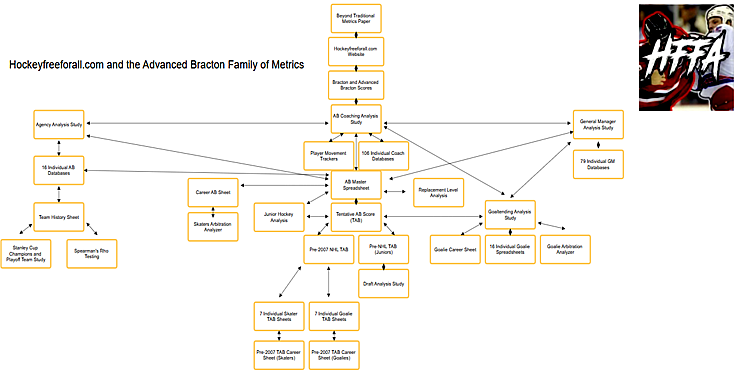
The Advanced Bracton Family of Metrics (ABFM) operates as an interconnected ecosystem, with each component contributing to a broader understanding of hockey analytics. At the heart of this system is the AB Master Spreadsheet, a meticulously designed repository that integrates both raw and processed data. This centralization not only ensures consistency across all analyses but also facilitates a seamless flow of information between specialized studies such as Replacement Level Analysis, Goaltending Metrics, and other key components of hockey operations. The flowchart titled The Advanced Bracton Family of Metrics: An Interconnected Framework for Hockey Analytics visually represents these connections, underscoring how each part of the system builds upon the others to create a cohesive and comprehensive analytical framework.
Each component of ABFM was developed through an iterative process during my time at Seton Hall University, where I combined my academic coursework with practical application. The foundational idea of creating a master spreadsheet stemmed from the need to organize and analyze large datasets efficiently, a skill honed through courses in advanced analytics and data visualization. Once the AB Master Spreadsheet was established, it became the backbone for subsequent projects, enabling targeted explorations into distinct areas of hockey performance.
For example, the Replacement Level Player (RLP) Analysis was one of the first major offshoots of this system. RLP Analysis quantified player value by comparing individual performance to league-wide baselines. This project highlighted the importance of establishing consistent benchmarks, which later informed the development of AB-centered Goaltending Metrics. Similarly, early insights from RLP studies revealed gaps in understanding how pre-NHL organizations contributed to player success, prompting the creation of the Tentative AB (TAB) Score to evaluate junior and pre-draft players.
Throughout this process, each new project refined and expanded the scope of the ABFM. The Coaching AB and General Management AB metrics emerged as natural extensions, drawing from player-level analyses to assess the broader impact of leadership decisions on team success. The interdependence of these metrics was key—data from the AB Master Spreadsheet provided the foundation for analyzing coaching impact, while findings from Coaching AB studies informed refinements in player evaluations. Likewise, General Management metrics leveraged the same central dataset to evaluate decision-making efficiency in trades, drafts, and salary cap management.
By blending advanced coursework with independent research at Seton Hall, I was able to create a system where each metric enhanced the others, resulting in a cohesive ecosystem that not only evaluates individual players but also informs team-level and organizational strategies. Each project built on the lessons learned from the previous one, creating a continuous cycle of improvement that remains the hallmark of the Advanced Bracton Family of Metrics as depicted in the graph below.
Introduction Conclusion
This paper represents a natural progression and significant expansion of the foundational work established in Beyond Traditional Metrics: The Advanced Bracton Score and Hockeyfreeforall.com Paradigm for Informed Organizational Decision Making in Hockey. While the previous paper laid the groundwork for introducing the Advanced Bracton Family of Metrics, this study builds upon that foundation by expanding on those ideologies in a more data centric manner. By exploring how the AB system intersects with every facet of hockey operations—this paper not only validates the metrics but also extends their practicality and reach.
Each section of this paper reflects a step forward in refining the metrics, connecting the dots between individual and organizational performance, and presenting actionable insights that were unattainable in the earlier study. As we move forward, this paper serves as a call to action for hockey organizations to embrace data-driven strategies that go beyond traditional metrics. The Advanced Bracton Family of Metrics is no longer just a theoretical framework; it is a proven, evolving system that empowers teams to make smarter, more informed decisions.
Chapter 3 – The Bracton and Advanced Bracton Scores
Initially, my work revolved around the somewhat obvious assumption that mistake minimization wins sporting events, especially hockey games. To my surprise, many organizations have seemingly failed to embrace it, constantly employing players who prove to hinder team success more than help it. This is probably because, as far as I know, no one has been able to accurately measure the essential elements needed to prove this seemingly obvious truth. Until now. My dispassionate and extensive deep dive into calculating intangible decision-making prowess at the individual NHL player level, showed conclusively over 17 years of data sets that not only can intelligence and talent be measured, but each is also a prerequisite to success on the ice.
This statement has been further supported with extremely high confidence intervals of various statistical analyses. Each suggests impressive retrospective veracity as well as modest predictive power, whether it be the application of the Metric to coaching, scouting, player draft results, playoff performance, or merely individual on ice results. My data clearly shows, as the following study presents that teams who maximize their aggregate Advanced Bracton scores win games with regularity, are more likely to qualify for the postseason, and consequently, have a better chance at capturing a Stanley Cup Championship.
Over time, it became evident that the philosophical foundation of HFFA, as embedded by the AB score, is fundamentally sound. Engaging with insights from industry experts and professionals underscored the importance of developing one’s unique strategies or ideology in the game, thereby setting individuals apart from casual fans. This differentiation arises from the remarkable accuracy of retrospective data analysis and its potential applicability in shaping prospective managerial decisions. These ideas were subsequently structured into a proprietary format and have been published over the years. Importantly, the principles clarified herein possess a universal versatility that can be effectively conveyed in a professional context, spanning all levels of the game. Furthermore, this body of research extended beyond the realm of player analysis. It encompassed various industry analysis exercises, including the evaluation of the hockey agency business, financial assessments for all 32 NHL teams, and an in-depth analysis of the NHL arbitration process. Consequently, the study presented serves as an exposition of the underlying philosophy, its resultant findings, and a prelude to the proposition that past experiences often serve as a prologue to future outcomes.
The Advanced Bracton score represents a meaningful quantification of the impact of errors on outcomes of hockey games. Just as there are positive multiplicative effects of multiplying two negatives in mathematics, the same holds true in hockey. As a result, two metrics arose; the first one being the Bracton Score “Bracton”, and the second the “Advanced Bracton Score.” The “Bracton” numerically calculates the positive or negative contribution of a player to his team vis-a-vis mistakes taken or generated via the penalty assessment process. The Bracton Score can also be used when aggregating the ability of an entire team to generate more mistakes from its opponent than it commits. In formulating the “Bracton,” the following assumptions and questions about hockey in general to deduce a numerical conclusion were considered.
- If the only differentiator in a game pitting world class athletes against one another is the combination of skill, intelligence, and the desire to win, can these intangiblesbe measured?
- Through an analysisof the process of taking and drawing penalties, is it possible to partially evaluate these intangibles?
- Assuming players are most often only desperate enough to gain some extra-rule advantage when opposing players are either working harder for the puck, are demonstrating superior skill, or are making more intelligent decisions on or off the puck. Conversely, the players that consistently take minor penaltiesare the ones who are either slower, are being outplayed, are out of position, consistently playing outside the system of the coaching staff, or worse, playing injured. These situations only arise due to an asymmetry of skill, intelligence, desire, injury, or a combination of all four.
- When a team either takes or draws a penalty, the difference between goals produced and goals allowed is far higher in both directions. Therefore, players who possess a positive “Bracton” scoreallow for an additive contribution to the success or failure of a team.
- Players that generate penalties, even if they are normally not on the power play unit, maximize ice time for the assumedly most skilled star players who are on the power play unit. Conversely, and most significantly, players who take more penaltiesthan they draw maximize ice time for opposing premier players. This is because 5×4/60 minutes is much higher than 5×5/60 minutes and of course saves goals by not taking penalties 4×5/60 minutes.
Even though the above points may seem obvious, we must ask ourselves, why hasn’t a metric such as the “Bracton” been either advanced, widely reported, or become a mainstay in hockey for decades, not just in the dawning era of “Moneyball” in hockey? While the “Bracton” is a powerful metric, if not somewhat a priori, it must be understood that it only provides a springboard to its more highly correlated predictive brethren; the Advanced Bracton (AB) Score.
In this proprietary statistic, various data points related to retrospectively positive or negative outcomes within the play of hockey games, aggregated for a season, were compiled within a highly complex formula in order to assign every player a numerical value. These statistics were added to the Bracton score to uncover an even more meaningful quantification of whether a hockey player impacts his team positively or negatively. Unlike the “Bracton”, these results are in no way obvious even though for seasoned hockey enthusiasts and managements they may be intuitive. For example, for someone to say, “I knew Auston Matthews was a good player, but I didn’t really know how good relative to the rest of the league” the AB successfully measures ostensible intangibles that appear to relate to what I term “unscored goals at the margin (UGM).”
By deducing the contribution of a player toward UGM, we can assign an actual value (or in many cases a negative value) players have toward the overall team performance. For example, in the case of Auston Matthews, he scores among the league best AB at 9.66. Under the AB philosophy, in addition to the goals and assists produced by Matthews, he was responsible for another 9.66 goals UGM for Toronto that neither he nor the Leafs scored directly but avoided by either limiting mistakes or being “in the right place at the right time with the right mindset.” In this regard, to earn a 9.66, Matthews undoubtedly had his head in the game, played hard the majority of his shifts, and played within the system employed by Toronto’s coaching staff. As such he is what the sports community terms a “character player.” A character player is not only someone who plays with heart and high energy, but if he is someone who provides UGM, he is possibly worth the money he is being paid to play hockey – a statistic also tracked herein by our proprietary arbitration analyzer (addressed in a later chapter).
In contrast to success stories like Matthews, it was quite surprising at just how many players in the NHL not only produced negative UGM but recorded lower than replacement level production for their respective clubs – a replacement player analysis has recently been completed in the context of the AB metric as well (see later chapter). By virtue of their presence, negative Advanced Bracton players take away UGM and actually cost their team goals, wins, points in the standings and above all, strike the teams’ salary cap with detrimental returns on investment. In fact, it was also striking to note that roughly half of the players in the league could be replaced by a lesser-known talent and possibly have an overall positive impact on the team replacing them. Also, it became apparent that there are some teams in the NHL that use metrics similar to the AB in constructing their teams. Of the teams in the middle of the pack, generally it was concluded that even if they had several high UGM players, their success was muted if they had several in the lowest quintile. Finally, the worst teams in the league are literally loaded with negative UGM Advanced Bracton players with few or no players to counteract them at the top.
From a general management philosophical standpoint, teams who have adopted or will adopt the Advanced Bracton (or facsimile) method of team construction enjoy more playoff success and longevity than teams who do not. The remainder of this study will demonstrate further analysis into the roster construction of NHL teams since the 2007-08 season, as well as provide more insight to the concepts addressed to this point. The Average AB Score by Team graph below underscores the critical role of constructing rosters that maximize aggregate Advanced Bracton Scores. Teams with consistently high scores, such as the Pittsburgh Penguins, Tampa Bay Lightning, and Colorado Avalanche, demonstrate the competitive advantages of optimizing player contributions to avoid the pitfalls of negative UGM. These organizations excel at identifying talent capable of positively influencing team performance while maintaining roster balance. This focus on maximizing AB Scores not only improves on-ice success but also highlights the financial prudence of avoiding players whose inefficiencies erode team value.
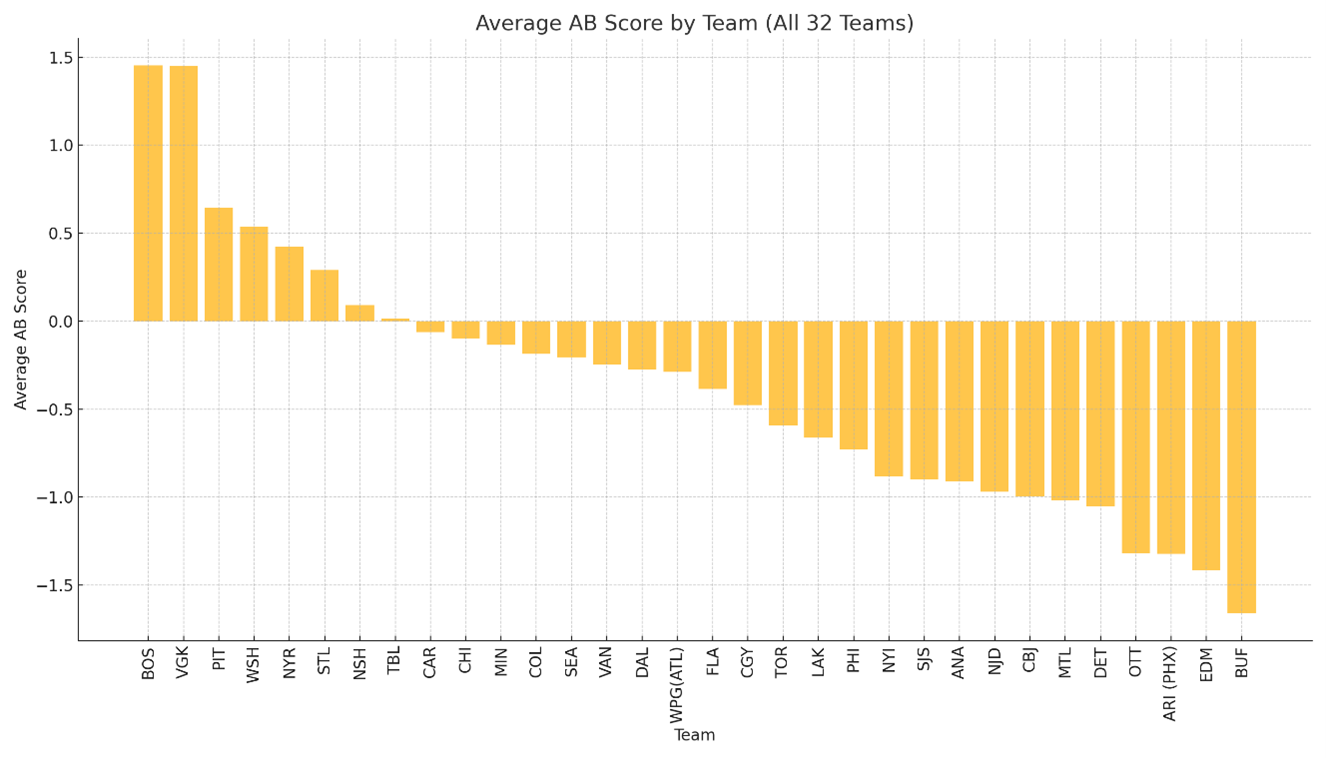
The data also reveals that teams with middling aggregate AB Scores often struggle to capitalize on high-impact players due to a lack of complementary talent. This imbalance is evident in teams like Detroit, Ottawa, and Nashville, where the presence of low-performing players offsets the contributions of their top performers. At the opposite end of the spectrum, teams such as Montreal, Philadelphia, and Anaheim illustrate the consequences of consistently low AB Scores, with rosters often dominated by players who detract from overall performance. By providing a clear visualization of team success relative to AB Scores, the graph reinforces the importance of comprehensive roster management strategies. Again, teams that prioritize positive contributions and eliminate negative impact players position themselves for sustained success, both competitively and financially. This analysis exemplifies the broader implications of the AB Score framework as a cornerstone for effective hockey management.
Chapter 4 – The Evolution of the Advanced Bracton Score (AB)
The Advanced Bracton Score (AB) has undergone a remarkable transformation since its inception, evolving from a straightforward player evaluation metric into a comprehensive analytical framework that supports decision-making across all facets of hockey operations. At its core, the AB Score was initially designed to quantify individual contributions by capturing the essence of a player’s ability to minimize mistakes and maximize impact. Built on principles of intelligence, discipline, and situational awareness, the metric provided a fresh lens through which player performance could be understood. However, as its application expanded, the AB Score matured into a system capable of addressing challenges at every level of hockey—from pre-NHL scouting to agent negotiations and organizational strategy.
In its earliest form, the AB Score focused exclusively on players, utilizing traditional statistics like goals, assists, and penalties to create a single number that reflected net contributions to team success. The initial findings were promising, revealing patterns that linked individual mistake minimization to better team outcomes. Yet, these early iterations lacked the depth needed to capture the complex interplay of roles, contexts, and long-term impacts that define hockey dynamics. Recognizing these limitations, the AB Score was refined and expanded to account for contextual adjustments, role-specific weightings, and dynamic variables such as career longevity and positional specialization.
A pivotal development in the AB Score’s evolution was its adaptation for pre-NHL scouting through the introduction of the Tentative AB Score (TAB). While still rooted in the principles of the original AB Score, TAB was designed to assess the early potential of junior players and draft prospects. Although its implementation is still in its early stages, analysis over the 17-year span of NHL data (2007-08 to 2023-24) has begun to highlight its potential value. Preliminary findings suggest that players with higher TAB Scores tend to have stronger long-term NHL success, making it a promising tool for teams seeking to refine their scouting and draft strategies. The TAB metric has shown promise in uncovering patterns that align with successful NHL careers, particularly in evaluating late-round prospects who may otherwise go unnoticed.
Simultaneously, the AB framework expanded its reach into coaching and management evaluation. The Coaching AB Metric provided insights into how effectively coaches maximized player performance and minimized systemic errors. Findings from the 17-year dataset revealed that teams with high-scoring coaches consistently outperformed their peers in both the regular season and playoffs, underscoring the importance of strategic alignment with AB principles. Similarly, the General Management AB Metric assessed decision-making at the executive level, offering a detailed analysis of roster construction, trade efficiency, and salary cap optimization.
The framework also extended into agent analysis and arbitration, leveraging principles and data similar to those underlying the AB Score to align player performance metrics with market valuations. While the AB Score itself has not been directly employed, agents who incorporate comparable performance metrics into their strategies tend to secure higher average salaries for their clients. By grounding negotiations in objective, data-driven insights, these agents effectively highlight their clients’ value, leading to fairer and more equitable outcomes. This approach benefits both players and teams, ensuring competitive compensation while maintaining financial sustainability across organizations.
This chapter focuses solely on the findings from analyzing the league as a whole, providing a detailed exploration of patterns, trends, and insights uncovered during the evaluation of all NHL players from 2007-08 to 2023-24. By isolating these league-wide results, the chapter serves as a foundation for understanding how the AB framework captures the dynamics of team and player performance at a macro level.
The Relationship Between Team Total AB Score and Mean Wins
The relationship between a team’s Total AB Score and its Mean Wins highlights the AB framework’s predictive ability in evaluating team success. Total AB Score is a cumulative metric, integrating individual player contributions into a holistic team assessment. The total number was calculated by taking each NHL franchises’ final team AB score each season from 2007-08 to 2023-24. Teams with higher Total AB Scores demonstrate a clear advantage in achieving regular-season success, as shown in the scatterplot. The data reveals a statistically significant positive correlation, with a calculated coefficient of 0.78 across all data points. This underscores the reliability of Total AB Scores as a consistent indicator of regular season wins.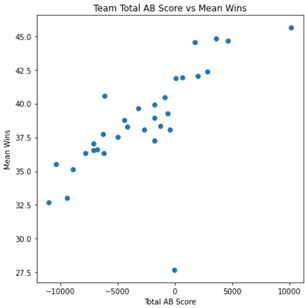
The scatterplot provides visual evidence of this relationship. Teams with Total AB Scores above 5,000 consistently achieve mean win totals exceeding 40 games per season, reflecting their ability to sustain success over an 82-game schedule. However, this calculation does include the shortened NHL seasons due to the most recent lockout and the Covid-19 pandemic. Conversely, teams with negative AB Scores struggle to surpass 30 wins, often highlighting deficiencies in roster construction, depth, or systemic alignment. The upward trajectory of the graph emphasizes that the AB framework captures not just individual excellence but also the collective impact of the roster. This highlights how the Total AB Score serves as a comprehensive measure of team efficiency, adaptability, and mistake minimization.
For General Managers, this finding provides a clear directive: roster construction should focus on maximizing Total AB Scores by targeting players who can make sustained, measurable contributions. The goal is not merely to add star players but to build balanced rosters where even role players contribute positively to the team’s Total AB performance. Players with high AB Scores typically excel in mistake minimization, intelligent positioning, and adaptability—traits that directly contribute to sustained team success. By prioritizing such players during drafting, trading, and free-agent signings, GMs can ensure that their rosters are aligned with the principles of mistake minimization and systemic strength.
From a coaching perspective, the Total AB Score has direct implications for maximizing Unscored Goals at the Margin (UGM). UGM captures the subtle, non-scoring contributions that influence game outcomes, such as effective puck retrieval, forechecking, and neutral zone control. Coaches can use AB metrics to make lineup decisions that prioritize players who excel in high-leverage UGM scenarios, such as penalty kills or defending late-game leads. This strategic deployment ensures that every shift contributes to the team’s overarching goal of mistake minimization and efficiency. By aligning ice time with players who consistently perform well in AB metrics, coaches can optimize their team’s ability to control the game and tilt outcomes in their favor.
The retrospective predictability of the AB framework further solidifies its value in analyzing team performance. Spearman’s rho calculations conducted over a 17-season span demonstrated a remarkable alignment between Total AB Scores and final standings. This statistical measure of rank correlation evaluates how well the rankings predicted by Total AB Scores correspond to actual team finishes. Across the dataset, the average rho value was calculated to be 0.85, indicating a strong and consistent relationship between the predicted and actual rankings.
For example, in the 2016-17 NHL season, the top five teams by Total AB Score—such as the Washington Capitals and Pittsburgh Penguins—were accurately reflected among the top five teams in the standings, with a rho value of 0.91 for that season. Similarly, in the 2019-20 season, a challenging year impacted by the COVID-19 pandemic, the AB framework still maintained predictive reliability, achieving a rho value of 0.78, despite the disruptions to scheduling and gameplay.
This analysis highlights the practical applications of the AB framework as a decision-making tool. By retrospectively comparing rankings, teams can validate the effectiveness of their roster construction strategies. Moreover, the consistency of rho values across multiple seasons underscores the AB Score’s ability to transcend anomalies, such as expansion team performances or unexpected roster changes. This level of predictability offers hockey operations a robust framework for refining strategies, not only for future success but also for learning from past outcomes.
In conclusion, the consistently high rho values emphasize the power of AB Scores in capturing the nuances of team performance and rank prediction. Teams can use these insights to assess their standing within the league and identify the adjustments needed to climb the rankings. The correlation between AB Scores and actual standings provides a statistically validated roadmap for teams striving for consistent success in the highly competitive NHL landscape. The relationship between Total AB Score and Mean Wins is a testament to the AB framework’s power to quantify the nuanced dynamics of team performance. By leveraging these metrics to guide roster construction, lineup decisions, and long-term planning, both GMs and coaches can align their strategies with the principles of mistake minimization and systemic optimization.
The Relationship Between AB Scores and Playoff Participation
Building upon the correlation between Total AB Scores and regular season wins, the relationship between AB Scores and playoff participation further exemplifies the AB framework’s predictive power. While the regular season provides a broad measure of team consistency, the playoffs demand a higher level of depth, adaptability, and resilience. The box plot illustrates a stark divide between high-playoff-participation teams and their lower-performing counterparts. Teams with greater playoff success consistently boast significantly higher Total AB Scores, reflecting their systemic strength and ability to perform under the unique pressures of postseason hockey.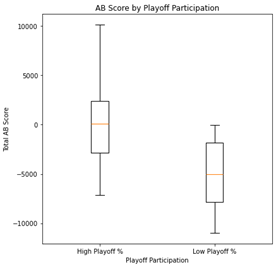
This distinction underscores the multifaceted nature of playoff hockey, where individual brilliance is often insufficient to secure success. Unlike the regular season, where exceptional performances from star players can carry a team, the playoffs emphasize contributions from the entire roster. Players with high AB Scores, including role players, contribute to mistake minimization, effective puck management, and situational awareness—qualities that are critical in the high-stakes environment of the playoffs. Teams with lower Total AB Scores frequently lack the depth required to withstand the inevitable challenges of postseason play, such as injuries, tactical adjustments, and heightened pressure.
Notably, data from the study reveals that the team with the higher Total AB Score in the Stanley Cup Final ended up winning it in all but six years of the 17-season period analyzed. This finding reinforces the importance of systemic strength over individual talent in achieving ultimate success. It also highlights the AB framework’s ability to identify teams that are not only playoff-ready but championship-caliber. The two exceptions underscore the unpredictable nature of hockey but also serve as outliers that prove the rule: teams with higher AB Scores are overwhelmingly more likely to achieve postseason success.
For teams on the playoff bubble, these insights are particularly valuable. By targeting improvements in their Total AB Scores, either through strategic acquisitions or player development initiatives, these teams can shift from mediocrity to playoff contention. Importantly, GMs can achieve significant gains not only by adding high-performing players but also through subtraction—replacing below-replacement-level players with players performing at a baseline level. This incremental improvement, though seemingly minor, can yield substantial benefits in Total AB Score and overall team performance. Such moves are especially critical for teams struggling with depth issues, where upgrading even marginal contributors can have a cascading positive effect on roster efficiency.
The AB framework also provides a lens for understanding why certain teams consistently excel in the playoffs. High-playoff-participation teams often exhibit balanced rosters with few weak links, enabling them to mitigate the risks associated with the intensity of playoff hockey. These teams demonstrate a clear advantage in systemic strength, as reflected in their Total AB Scores, which translates into greater resilience and adaptability in high-pressure scenarios. By maintaining a roster that consistently performs above the league average in AB metrics, these teams position themselves for sustained postseason success.
The box plot further emphasizes the systemic disparities between playoff contenders and non-contenders. Teams with high playoff participation rates typically maintain Total AB Scores well above the league median, while those with minimal playoff appearances are clustered below it. This visualization reinforces the predictive validity of AB metrics, illustrating how Total AB Scores serve as a benchmark for postseason readiness.
In conclusion, the correlation between AB Scores and playoff participation highlights the systemic qualities required for success in the NHL playoffs. By leveraging AB metrics to inform roster adjustments and strategic planning, teams can enhance their ability to compete in the postseason. The fact that the higher AB Score team has won the Stanley Cup Finals in all, but six years of the study further validates the framework’s power to identify championship-level teams. Coaches and general managers alike can use this insight to identify the adjustments necessary to transition from regular-season consistency to playoff dominance.
Total AB Scores vs. Wins with Team Logos
The scatterplot comparing Total AB Scores to total wins over a 17-year period provides a comprehensive lens through which to examine the relationship between roster composition and long-term success. By incorporating team logos into the visualization, the chart offers immediate clarity, highlighting key outliers while drawing attention to overall trends. Teams such as the Boston Bruins and Vegas Golden Knights emerge as examples of success stories, showcasing high Total AB Scores that align with substantial win totals. These franchises reflect the hallmarks of organizational consistency, including strong player pipelines, strategic roster construction, and effective coaching.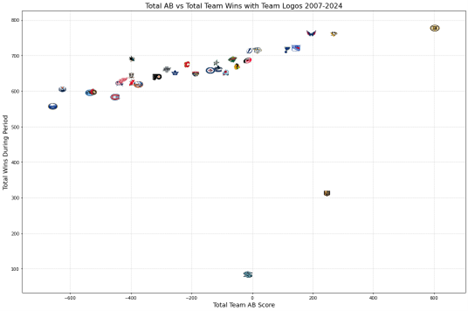
As recent expansion franchises, both the Kraken and Vegas Golden Knights lack the sample size to match the consistency and depth of data available for more established teams. Seattle, in particular, is still in the early stages of constructing a competitive roster, reflected in their lower Total AB Scores and corresponding win totals. These circumstances highlight the limitations of short-term planning, and the inherent difficulties expansion teams face in achieving league-wide parity. In contrast, Vegas, despite their expansion status, benefits from a highly strategic approach to roster building, resulting in a higher Total AB Score than typical for teams at a similar stage.
The strength of the relationship between Total AB Scores and total wins becomes even clearer when statistical outliers are removed. Initial calculations yield a correlation coefficient of 0.1522, indicating a modest relationship when all data points are included. However, refinement of the dataset by excluding certain outliers significantly enhances the correlation. For instance:
- Excluding Seattle, Vegas, and Boston increases the correlation coefficient to 0.9205.
- When only Seattle and Vegas are excluded, the correlation improves even further to 0.9280.
These adjustments validate the robustness of the AB framework while demonstrating its sensitivity to outlier effects. Removing these anomalies provides a more accurate representation of how roster composition, as captured by Total AB Scores, directly influences team success. This underscores the importance of context when interpreting league-wide trends, ensuring that data is appropriately framed to account for unique circumstances like smaller sample sizes or extraordinary dominance.
From an operational standpoint, this graph underscores the critical role of long-term planning and organizational consistency. Teams with high Total AB Scores frequently benefit from cohesive strategies across all levels of hockey operations, including drafting, development, and player retention. In contrast, franchises with persistently low AB Scores often struggle due to fragmented approaches, insufficient player pipelines, or ineffective leadership. By leveraging the insights provided by AB metrics, these teams can identify specific areas for improvement and implement data-driven strategies to optimize roster performance.
The correlation analysis also highlights the potential for GMs to use Total AB Scores as a benchmark for evaluating their progress. By targeting incremental improvements in AB Scores—such as replacing below-replacement-level players with baseline contributors—teams can steadily increase their win totals over time. This approach ensures that even marginal gains in roster construction can compound into significant long-term benefits.
In conclusion, the scatterplot and its refined correlation analysis highlight the predictive strength of the AB framework in understanding team success. While accounting for outliers is essential to contextualize trends, the underlying relationship between Total AB Scores and total wins remains clear and actionable. The graph above visually reinforces the importance of sustained roster quality in achieving long-term competitiveness, offering hockey organizations a reliable roadmap for future success.
Distribution of AB Scores
The histogram of AB Scores provides a detailed examination of player performance across the NHL during the 17-year study period. The near-normal distribution observed in the graph highlights a key insight: most players perform close to replacement level, clustering around a baseline score near zero. This distribution reflects the consistent spread of talent across the league and demonstrates the efficacy of the AB framework in capturing subtle differences in player performance. The high concentration of players near zero indicates a league-wide emphasis on building rosters with contributors who can reliably meet minimum expectations, though the scarcity of players with exceptional AB Scores points to the value of identifying and retaining standout performers.
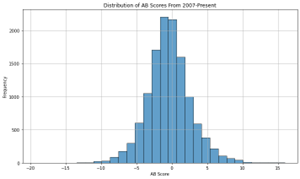
High-AB players whose scores significantly exceed the replacement level—represent a small but impactful group. These individuals are pivotal to team success because they contribute well beyond baseline expectations in areas such as situational awareness, mistake minimization, and game-changing plays at critical moments. For example, forwards with high AB Scores may excel in creating scoring opportunities through disciplined puck management and timely assists, while defensemen with similar scores can consistently suppress high-danger chances and lead transition plays. These players often form the backbone of championship-level rosters, providing consistency and leadership that elevates overall team performance.
Conversely, players with persistently low AB Scores present tangible challenges for their teams. Their inability to meet replacement-level contributions may stem from repeated mistakes, poor positional awareness, or inefficiencies in execution. The histogram’s lower tail, representing these underperformers, underscores the importance of roster management decisions focused on either improving their play or replacing them entirely. For instance, teams struggling with depth issues on their bottom-six forwards or third-pairing defensemen can use AB metrics to identify specific players whose removal or improvement could significantly impact team results.
The symmetry of the histogram validates the AB framework’s design, particularly its ability to evaluate players across all positions and roles without systemic bias. This feature is critical for ensuring that metrics derived from the AB framework are applicable league-wide, allowing general managers to compare players with vastly different responsibilities, such as a scoring winger versus a stay-at-home defenseman. Additionally, the normal distribution supports the reliability of the metric for modeling and predictive analysis, ensuring that the AB framework can function as both a diagnostic and planning tool for hockey organizations.
Another key takeaway from the histogram is the sharp decline in frequency at the positive end of the distribution, where truly elite players are found. This rarity of high-AB players illustrates the competitive advantage held by teams capable of identifying and developing these individuals. For example, the histogram may show that fewer than 10% of players achieve AB Scores exceeding five, yet these players often account for a disproportionate share of team success. The ability to identify such talent through scouting and data analysis can enable teams to maintain consistent playoff contention and reduce reliance on volatile free agency markets.
The histogram also provides actionable insights for roster construction. For teams consistently finishing below the league median in Total AB Scores, the distribution serves as a diagnostic tool to identify inefficiencies. For example, a team with a significant cluster of low-AB players in their roster can use the framework to determine whether specific positions, lines, or even individual players are contributing to their underperformance. General Managers can then address these gaps through strategic acquisitions, player development programs, or roster turnover.
In conclusion, the graph provides an invaluable visual representation of the AB framework’s ability to quantify player performance across the league. The insights gained from the distribution not only validate the robustness of the AB metric but also emphasize the importance of retaining high-AB talent and addressing low-AB liabilities. By leveraging these findings, teams can ensure that their roster-building strategies are grounded in data, maximizing both short-term competitiveness and long-term sustainability.
Change in Average AB Score Over Time
The line graph illustrating changes in average AB Scores over time reveals valuable trends in league-wide performance and highlights the impact of external factors on player development. By examining these fluctuations, we gain a deeper understanding of how systemic changes in the NHL influence player contributions and team success.
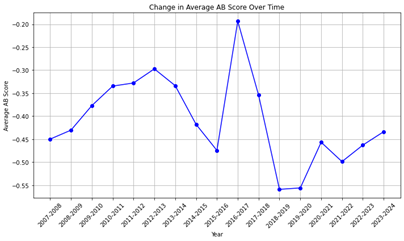
A particularly notable feature of the graph is the pronounced spike during the 2016-17 season. This increase likely reflects a league-wide shift toward prioritizing skill and speed, driven by tactical adjustments and an influx of young, dynamic talent. For example, this period coincided with the emergence of high-impact rookies and a growing emphasis on high-tempo, possession-based hockey. The AB framework captures this transformation by quantifying the rise in player efficiency and adaptability during this time, offering a reliable measure of how these systemic changes affected overall performance.
Conversely, the sharp dip observed during the 2019-20 season aligns with the disruptions caused by the COVID-19 pandemic. The pandemic introduced unprecedented challenges to the league, from interrupted training schedules to condensed seasons and altered competitive dynamics. These factors likely contributed to a decline in player readiness and performance, as reflected in the drop in average AB Scores. The graph underscores how external pressures can significantly impact league-wide trends, providing a quantifiable measure of how the pandemic disrupted player output on a macro scale.
The subsequent recovery in AB Scores over the following seasons highlights the adaptability and resilience of both players and organizations. Teams that demonstrated strong player pipelines and robust developmental systems were better equipped to rebound from these disruptions, maintaining higher AB Scores even during periods of league-wide uncertainty. For example, organizations with well-established scouting and development programs were able to minimize the long-term effects of the pandemic by quickly integrating emerging talent and supporting their rosters through adversity. By analyzing how different franchises performed during this period, we can identify which organizational strategies translated into sustained success despite external challenges.
The graph also offers valuable lessons for future planning. As the league continues to evolve tactically and structurally, tracking changes in average AB Scores can serve as a predictive tool for identifying emerging trends. For example, if a future season were to exhibit a similar spike in AB Scores, it might indicate another shift in league dynamics—such as a new emphasis on speed, defensive structure, or goaltending efficiency. Teams that monitor these fluctuations and align their strategies accordingly will gain a competitive edge.
Moreover, the data underscores the value of long-term investment in youth development. Teams that consistently produce high-AB talent through their development systems are better positioned to navigate periods of disruption and capitalize on shifts in league-wide trends. This reinforces the importance of strong scouting networks and a commitment to nurturing young players, not just as a response to immediate challenges but as a strategy for sustained success.
In conclusion, the line graph of average AB Scores over time illustrates the ability of the AB framework to capture both individual and systemic changes in the NHL. By reflecting the impact of external events, such as the COVID-19 pandemic, and internal shifts, like the 2016-17 focus on speed and skill, the graph provides a dynamic view of league trends. For organizations, this insight underscores the importance of adaptability, consistency in player development, and a forward-looking approach to roster construction. The graph serves as a powerful reminder of how external factors and league dynamics shape player performance and organizational success.
Change in Average AB Score by Career Longevity
The line graph titled Change in Average AB Score by Career Longevity, highlights a critical relationship between career longevity and player performance as measured by AB Scores. The upward trend in the graph shows that players who remain in the NHL longer tend to achieve higher AB Scores, reinforcing the framework’s ability to capture the qualities necessary for sustained success. This trend is particularly significant in understanding how consistency, adaptability, and mistake minimization shape a player’s career trajectory.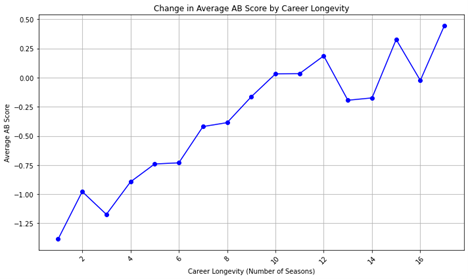
Early in their careers, many players exhibit lower AB Scores as they adjust to the speed, physicality, and strategic demands of the NHL. Rookies and younger players are more likely to make mistakes or struggle with decision-making under pressure, which is reflected in their initial AB metrics. However, players who can steadily improve their AB Scores over time often emerge as reliable contributors, capable of positively influencing team performance. This progression underscores the value of long-term investment in player development, as organizations that successfully nurture high-potential talent are rewarded with consistent, impactful performances.
The graph also reveals that AB Scores plateau for players nearing the later stages of their careers. While veterans bring invaluable experience and leadership to a roster, the data suggests diminishing returns in terms of on-ice performance as they approach their performance ceiling. For teams, this plateau emphasizes the importance of balancing the presence of veteran players with the infusion of youthful energy. Younger players, even if initially less impactful, represent opportunities for growth and long-term contributions, provided they are developed effectively.
One of the key takeaways from this analysis is the importance of identifying young players with high potential AB Scores. Teams that excel at scouting and developing such players gain a significant competitive advantage, as these individuals are more likely to achieve sustained success and provide a high return on investment. For example, a young forward with a relatively low AB Score but consistent year-over-year improvement may be a better long-term investment than a veteran nearing their peak but unlikely to improve further. This perspective highlights how AB metrics can serve as a tool for managing expectations and maximizing player value at different career stages.
The graph also has important implications for contract negotiations and roster planning. AB Scores can help teams evaluate a player’s career trajectory, ensuring that their financial commitments align with expected contributions. By prioritizing players who demonstrate sustained improvement in their AB metrics, organizations can minimize the risk of overpaying for declining veterans or undervaluing emerging talent. For instance, a defenseman whose AB Score steadily improves over the first five years of their career may warrant a long-term contract, as their development trajectory suggests continued contributions.
Moreover, the data highlights the potential risks associated with relying too heavily on veterans whose performance has plateaued. While these players bring intangible qualities such as leadership and experience, teams must ensure that their financial and roster commitments remain proportional to their on-ice impact. AB Scores provide a quantifiable metric to guide these decisions, helping teams strike the right balance between veteran presence and the integration of younger, high-potential players.
In conclusion, the graph demonstrates how the AB framework provides a nuanced understanding of player performance over the course of their careers. By capturing the upward trend in AB Scores as players gain experience, the graph underscores the importance of long-term player development, strategic roster planning, and data-driven decision-making. Teams that leverage these insights are better positioned to build rosters that combine youthful potential with veteran reliability, ensuring both immediate competitiveness and sustained success in the NHL.
Conclusion of Chapter 4: The Evolution of the Advanced Bracton Score (AB)
Chapter 4 chronicles the Advanced Bracton Score’s (AB) progression from an individual player evaluation metric to a comprehensive framework that supports decision-making across all facets of hockey operations. Building upon the foundational principles of mistake minimization and situational awareness outlined in earlier research, the AB framework has evolved to address systemic team dynamics, offering a holistic view of roster construction, coaching strategies, and long-term planning.
The relationship between Total AB Scores and regular season wins highlights the framework’s capacity to translate individual contributions into team success. Retrospective analyses, such as Spearman’s rho values, further validate the AB Score’s predictive power in correlating Total AB Scores with league standings over a 17-year span. These findings reinforce the framework’s ability to adapt to both individual and team-level contexts, offering practical insights for building competitive rosters.
Insights into career longevity and systemic disruptions demonstrate the framework’s adaptability to evolving circumstances. The upward trend in AB Scores with career longevity underscores the value of sustained development, while fluctuations in league-wide averages during key periods, like the COVID-19 pandemic, reveal the framework’s ability to capture external impacts on performance. These advancements reflect natural progression from the AB Score’s early iterations, expanding its scope to address broader organizational challenges.
This evolution mirrors the iterative process of the research itself, with each refinement bringing greater clarity and utility. As the foundation of this study, Chapter 4 sets the stage for deeper explorations into specific applications of the AB framework in the chapters to come.
Chapter 5 – Replacement Level Player Analysis
The concept of a Replacement Level Player (RLP) is foundational to evaluating team construction in hockey. RLP metrics establish a baseline for assessing player contributions, providing a critical reference point for understanding value above or below replacement. This chapter explores the calculation of RLP metrics, trends over time, and their implications for team success, supported by insights derived from Advanced Bracton (AB) Score data.
Defining Replacement Level Player Metrics
Replacement Level Player (RLP) metrics are designed to establish a baseline for assessing the minimum performance threshold that a readily available player must achieve to warrant inclusion in a roster. This benchmark enables teams to identify players whose contributions meet or exceed expectations, as well as those who may hinder overall team success. Calculating this baseline requires a combination of historical averages and adjustments for outliers to ensure that the metric remains robust and reflective of real-world scenarios. By doing so, RLP metrics account for both systemic league-wide trends and positional nuances.
The AB Score is foundational to this evaluation, serving as a comprehensive tool for quantifying player performance across key dimensions such as skill, mistake minimization, and team impact. It facilitates granular analysis, enabling comparisons within and across positions. Forwards, defensemen, and goaltenders are analyzed independently due to the distinct nature of their roles and responsibilities on the ice. Forwards are assessed for their offensive output and ability to influence scoring margins, while defensemen are measured by their contributions to zone control, mistake minimization, and transitional play. Goaltenders present unique challenges due to the variability in their performance metrics, necessitating additional considerations when establishing replacement-level thresholds.
Historical AB Scores provide a longitudinal perspective, illustrating how the definition of replacement level has evolved in response to shifts in game strategies, talent pools, and league-wide trends. For instance, the increasing reliance on puck-moving defensemen in recent years has raised the average replacement-level baseline for this position. Similarly, changes in offensive depth and special teams strategies have influenced replacement-level benchmarks for forwards. These dynamic shifts emphasize the importance of contextual analysis when evaluating players, as what constitutes replacement-level performance is not static but rather a reflection of the game’s ongoing evolution.
The findings in Chapter 4 underscored the negligible correlation between draft position and AB Score performance, highlighting the limitations of traditional evaluation methods that rely heavily on draft status as a proxy for potential. Replacement-level metrics address this gap by focusing on actual contributions rather than perceived potential. By providing a data-driven framework for assessing player value, RLP metrics allow teams to make more informed decisions about roster construction, player development, and resource allocation.
Additionally, RLP metrics enable teams to evaluate the opportunity cost of retaining below-replacement players versus exploring alternatives. This is particularly relevant in the context of salary cap management, where teams must balance the cost of players against their on-ice contributions. The integration of RLP metrics with advanced analytics, such as CABAR and ABAR (Career and Advanced Bracton Above Replacement), further strengthens this framework, offering a multi-dimensional approach to assessing value. These insights are invaluable for identifying undervalued players, optimizing roster efficiency, and maximizing overall team performance.
Trends in AB Scores by Position
An analysis of average AB Scores by position over time uncovers significant trends that highlight the evolving dynamics of hockey and the distinct contributions of each positional group. Forwards consistently display higher average AB Scores compared to defensemen, reflecting their critical role in driving offensive production and influencing scoring margins. This trend underscores the centrality of forwards in determining team success, particularly through their ability to generate and capitalize on scoring opportunities. Moreover, the rise of versatile forwards who contribute to both ends of the ice has further elevated the expectations and standards for replacement-level performance in this position.
Conversely, defensemen, while contributing less directly to offensive outcomes, excel in metrics related to zone control, mistake minimization, and transitional play. These contributions, though less immediately visible, are integral to overall team stability. The influx of elite talent at the position, such as Cale Makar, Adam Fox, and Roman Josi, reflects a broader league-wide shift toward valuing defensemen who can effectively transition the puck while maintaining defensive responsibilities. This evolution has reshaped the baseline for replacement-level performance, with modern defensemen expected to contribute significantly to both defensive structure and offensive facilitation.
Goaltenders, however, present unique challenges in Replacement Level Player (RLP) analysis due to the high variability inherent in their performance metrics. A single outstanding season or a particularly poor performance can disproportionately impact averages, making it difficult to establish consistent benchmarks. The variability in goaltender AB Scores is further influenced by factors such as team defensive systems, quality of opposition, and overall workload. For example, goaltenders playing behind strong defensive cores often achieve higher Save Percentages and lower Goals Against Averages, indirectly boosting their AB Scores.
The context in which goaltenders operate is critical to understanding their contribution relative to replacement level. A goaltender’s performance is deeply intertwined with the team’s defensive strategies, such as shot suppression and rebound control, which can mitigate or amplify their individual impact. This variability necessitates careful adjustments when defining replacement-level thresholds for goaltenders, particularly in multi-year analyses. Additionally, the advent of advanced metrics, such as adjusted save percentages and high-danger save rates, has provided a more nuanced view of goaltender performance, enabling better differentiation between below-replacement and above-replacement players.
These positional differences underscore the importance of tailoring RLP analysis to the unique demands and contributions of each role. The evolution of replacement-level baselines over time reflects broader changes in league dynamics, player development, and team strategies, all of which must be considered when assessing player value and roster construction.
Evolution of Replacement Level Metrics
Over 17 NHL seasons, replacement-level averages have undergone noteworthy changes, particularly in forwards and defensemen, as depicted in the graph. The RLP average for defensemen improved by 13.8%, a remarkable trend influenced by the influx of elite, multi-dimensional defensemen such as Victor Hedman, Roman Josi, Adam Fox, and Cale Makar as mentioned on the previous page. Despite their extensive ice time and higher exposure to potential errors, defensemen have shown a consistent improvement in their ability to positively impact team outcomes.
Forwards also demonstrate an upward trajectory in AB Scores over the study period, underscoring their increasing role in driving offensive depth and generating balanced scoring opportunities. This trend aligns with a league-wide emphasis on dynamic offensive strategies, where even third- and fourth-line forwards are expected to contribute meaningfully. Teams have prioritized developing forwards who excel in creating scoring chances, avoiding penalties, and maintaining possession, leading to higher replacement-level baselines for this position.
Interestingly, while both forwards and defensemen have shown improvement, their RLP averages remain slightly negative throughout the study period. This challenges the theoretical expectation that replacement-level performance would hover around zero. Instead, it underscores the significant value brought by players who perform even marginally above replacement level. Such players often provide intangible benefits, such as strong hockey IQ, adaptability to team systems, and consistent effort, which contribute to team success beyond traditional statistical measures.
The graph below also reveals notable fluctuations in AB Scores, particularly for defensemen. The spike during the 2016-2017 season suggests an anomaly, potentially linked to rule changes, league-wide strategic shifts, or the emergence of standout performances in that year. By contrast, forwards exhibit a steadier upward trend, reflecting the gradual evolution of their role in modern hockey as previously discussed.
For skaters as a whole, the graph highlights a narrowing gap in AB Scores between forwards and defensemen over time. This trend points to league-wide improvements in player development systems, scouting accuracy, and roster construction strategies. The graph also reinforces the importance of analyzing replacement-level contributions within the context of team strategies and league-wide trends. The incremental improvements in AB Scores over time demonstrate how systemic changes in coaching philosophies, player development, and analytics integration have elevated the baseline performance of players across all positions. This evolution not only highlights the growing sophistication of hockey management but also underscores the value of using metrics like the AB Score to refine roster construction and maximize competitive advantages.
In conclusion, the graph offers a comprehensive view of the progression of RLP metrics over time. It illustrates how advancements in player development, strategic adjustments, and the emergence of elite talent have collectively driven improvements in AB Scores across positions. These insights reinforce the critical role of above-replacement-level players in achieving sustained team success and the importance of leveraging analytics to uncover and maximize their contributions.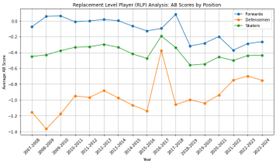
Career Advanced Bracton Above Replacement (CABAR)
Expanding upon the RLP (Replacement Level Player) framework, Career Advanced Bracton Above Replacement (CABAR) serves as a cumulative measure of a player’s contributions above replacement level throughout their career. Unlike single-season evaluations that provide a snapshot of player performance, CABAR aggregates Advanced Bracton Above Replacement (ABAR) scores across multiple seasons, offering a longitudinal view of a player’s sustained impact. This cumulative approach allows for a more comprehensive assessment of a player’s value, emphasizing consistency and durability as key factors in determining long-term success.
The significance of CABAR lies in its ability to differentiate between short-term peak performers and players with sustained excellence. Many players may have a single breakout season where they exceed replacement level, but only a small percentage consistently maintain a high ABAR across multiple seasons. The fact that only 42% of players analyzed in the 17-year study had positive CABARs reinforces just how difficult it is to remain above replacement level for an extended period. Additionally, the 47% of players who exceeded the replacement-level skater average suggest that nearly half of all NHL players provide at least some value above the league’s replacement threshold, but only a select group truly separates themselves as elite contributors.
The top CABAR performers—Patrice Bergeron (+95.71), Brad Marchand (+73.53), and Pavel Datsyuk (+70.76)—underscore the exceptional impact of players who not only contribute above replacement level but do so over prolonged careers. These players exemplify the ability to maximize team success through mistake minimization, high hockey intelligence, and adaptability to different playing styles and team systems. Bergeron’s two-way dominance, Marchand’s elite transition play and special teams impact, and Datsyuk’s ability to control puck possession and defensive contributions highlight why they consistently maintained high CABAR values. Their longevity and ability to sustain high-impact play across multiple eras of NHL hockey showcase the true value of CABAR as a metric for measuring all-time greats versus transient contributors.
One of the most revealing insights from CABAR analysis is the disparity between players who exceed replacement thresholds early in their careers versus those who build upon their ABAR gradually over time. Some high-performing rookies burst onto the scene with strong AB Scores but fail to maintain those levels due to injuries, diminishing skills, or system changes. Conversely, elite players with high CABAR tend to show a pattern of gradual and sustained growth, adapting their playstyle to remain effective even as they age. This is particularly evident in defensive-minded forwards and elite playmakers, whose ability to think the game at a high level allows them to remain above replacement level long after their physical prime.
The rarity of high CABAR players also suggests a major inefficiency in roster construction, particularly for teams that rely too heavily on replacement-level skaters instead of prioritizing players with sustained AB contributions. Since high-CABAR players demonstrate prolonged effectiveness, GMs who successfully identify and retain such players often build more stable, consistently competitive rosters. This aligns with Stanley Cup-winning team trends, where rosters featuring multiple high-CABAR players significantly outperform those relying on short-term peak performers.
Ultimately, CABAR serves as an indispensable tool for evaluating player value beyond surface-level statistics like goals and assists. By considering a player’s impact over their entire career, CABAR ensures that team decision-makers can prioritize long-term excellence over short-term gains, identifying the players who truly drive success at the highest levels of hockey.
High-Performing vs. Low-Performing Teams
To further understand the impact of Replacement Level Players on team success, an analysis comparing high-performing playoff teams to low-performing non-playoff teams was conducted. The heatmap serves as a visual representation of team-level performance across the NHL from 2007 to 2024, comparing aggregate Advanced Bracton (AB) Scores to replacement-level baselines. Each cell reflects how cumulative AB Score compares to the theoretical performance of a roster composed entirely of replacement-level players. Red tones signify teams exceeding replacement levels, indicating strong roster construction and player contributions, while blue tones represent teams falling below replacement thresholds, often highlighting inefficiencies and underperformance. The horizontal axis corresponds to NHL teams, while the vertical axis spans seasons, enabling the identification of trends over time. This format provides a holistic view of league-wide dynamics, showcasing periods of dominance, parity, and rebuilding phases. The heatmap’s color intensity offers immediate insights into relative team success, with deeper reds and blues illustrating extremes of performance. By combining quantitative data with intuitive visualization, the heatmap becomes an essential tool for understanding the impact of replacement-level analysis in team construction. Its application extends beyond identifying strong and weak teams, revealing broader league trends, such as the influence of analytics, talent distribution, and competitive balance. This comprehensive perspective highlights the critical role of replacement-level metrics in shaping NHL performance and strategies.

The data reveals that, on average, 53.3% of teams actually maintained AB Scores above replacement levels each year, while 46.7% fell below. This relatively even split highlights the NHL’s efforts to maintain parity, yet clear disparities emerge when examining specific teams, seasons, and broader league trends. The heatmap vividly captures the fluctuating fortunes of franchises, the impact of analytics, and the importance of resource management in shaping team success.
In the 2007-2008 season, 60% of teams performed above replacement level, with only 40% below—a strong year favoring high-performing teams. This early dominance likely stemmed from established powerhouse franchises such as Detroit and San Jose, whose rosters were filled with above-replacement players, as seen in the heatmap’s red tones for these teams. However, by 2011-2012, the league saw a reversal, with only 43% of teams exceeding replacement levels. This dip reflects uneven roster construction and the growing influence of analytics in reshaping competitive dynamics, as some teams adapted quicker than others.
From 2015 onward, the percentage of teams performing above replacement increased steadily, peaking in the 2019-2020 season when over 63% of teams surpassed replacement baselines. This rise aligns with the widespread adoption of advanced analytics, leading to smarter drafting, improved player development, and more efficient resource allocation. The heatmap’s diminishing blue tones in recent years illustrate this progress, showing that fewer teams are burdened by rosters filled with below-replacement players.
Teams like Tampa Bay, Boston, and Pittsburgh consistently rank among the top-performing franchises, as evidenced by their dominant red tones across multiple years. These organizations have excelled at retaining above-replacement talent and optimizing their rosters through data-driven approaches. The Tampa Bay Lightning’s red shading during their back-to-back championship runs in 2020 and 2021 reflects an almost entirely above-replacement roster, with nearly every player contributing positively to the team’s aggregate AB Score. Boston’s sustained red tones, particularly from 2010 onward, highlight their consistent ability to combine elite talent with strong depth, ensuring long-term competitiveness.
Conversely, franchises like Arizona, Buffalo, and Detroit frequently fall below replacement level, as seen in their persistent blue tones. For these teams, systemic inefficiencies—such as poor draft outcomes, overreliance on below-replacement players, and mismanagement of salary cap resources—have led to prolonged struggles. During 2013-2016, these teams were entrenched in rebuilding phases, yet their failure to identify and develop above-replacement talent resulted in deep blue shading on the heatmap, reflecting their inability to compete effectively.
The heatmap also highlights key seasonal anomalies. For instance, the 2016-2017 season shows stark disparities between high- and low-performing teams. That year, fewer than 50% of teams maintained AB Scores above replacement, reflecting significant gaps in roster construction across the league. The Chicago Blackhawks and Pittsburgh Penguins, marked by bright red tones, exemplified efficient roster management, leading to playoff dominance. In contrast, Detroit and Colorado displayed deep blue tones, indicative of rebuilding phases and poor player contributions. Another notable anomaly is the 2020-2021 pandemic-shortened season, which showed muted variations in team performance. Despite logistical challenges, elite teams like Tampa Bay maintained their red tones, while weaker teams such as Buffalo remained deeply entrenched in blue, exacerbating existing inefficiencies.
Divisional trends also emerge from the heatmap. The Atlantic Division frequently displays stronger aggregate performance, with teams like Boston and Tampa Bay consistently outperforming replacement thresholds. Meanwhile, the Pacific Division struggles to maintain parity, with teams such as Anaheim and Arizona often falling into the blue, signifying below-replacement performance. The Central Division showcases mixed trends, with dominant teams like Colorado moving from blue in earlier years to red in recent seasons as their rebuild culminated in a Stanley Cup championship in 2022.
Periods of league-wide parity are evident in years like 2018-2019, where a relatively balanced spread of red and blue tones across the heatmap highlights increased competition. These seasons often coincide with highly competitive playoff races, reflecting the NHL’s success in fostering a balanced playing field. Conversely, years dominated by deep red tones indicate eras of dominance by specific franchises, such as Pittsburgh in the late 2000s and Tampa Bay in the early 2020s.
The heatmap’s value lies in its ability to encapsulate nearly two decades of league dynamics in a single, intuitive visualization. By identifying teams consistently exceeding replacement thresholds, it highlights the critical importance of roster construction and analytics in sustaining competitiveness. Meanwhile, the presence of persistent blue tones for certain teams serves as a cautionary tale of the consequences of inefficiencies. This analysis underscores the profound impact of replacement-level metrics in shaping NHL success, offering actionable insights for teams seeking to optimize their rosters and achieve long-term performance above replacement.
Relating RLP Metrics to AB Score Framework
The integration of Replacement Level Player (RLP) metrics with the Advanced Bracton (AB) Score framework offers a uniquely detailed view of player value. At its core, the AB Score measures unscored goals at the margin (UGM), quantifying contributions beyond traditional box score metrics. This approach captures the essence of a player’s on-ice impact, including defensive actions, mistake minimization, and strategic positioning. RLP analysis complements the AB Score by establishing a baseline threshold for player performance. This ensures that every evaluation is grounded in a consistent standard, reflecting not just individual roles but also league-wide positional expectations.
Players with AB Scores significantly above replacement level exemplify the characteristics of high-value contributors. Their ability to exceed baselines extends beyond personal statistics; these players enhance team performance by creating ripple effects across line combinations. For instance, a defenseman excelling in puck transitions not only minimizes mistakes but also empowers forwards to focus on offensive strategies. Similarly, forwards with high AB Scores often draw penalties, providing indirect advantages through increased special teams opportunities.
Conversely, players performing below replacement level present clear inefficiencies. Their shortcomings not only detract from their line’s effectiveness but also disrupt overall team cohesion. Such inefficiencies highlight the importance of data-driven improvements, as even minor adjustments—such as replacing a low-performing fourth liner with a marginally above-replacement-level player—can yield significant dividends in competitive environments.
The integration of RLP and AB metrics also facilitates more precise resource allocation under the constraints of the salary cap. Players exceeding replacement thresholds often deliver value that surpasses their financial cost, whereas below-replacement players disproportionately consume valuable cap space. This dynamic emphasizes the importance of identifying high-value contributors, particularly in-depth roles, to ensure that teams maximize their financial and on-ice efficiencies.
In summary, the synergy between RLP metrics and the AB Score framework not only enhances player evaluation but also empowers teams to make more informed decisions in roster construction. By identifying contributors who consistently outperform replacement baselines, organizations can build rosters that maximize competitive potential while minimizing inefficiencies.
Application of RLP Metrics in Team Construction
The integration of Replacement Level Player (RLP) metrics into team construction represents a fundamental shift in how NHL organizations evaluate and optimize rosters. By identifying players who consistently exceed replacement-level thresholds, teams gain a strategic advantage, maximizing their resources to maintain competitiveness while navigating the constraints of the salary cap. This data-driven approach empowers teams to build rosters with precision, leveraging metrics that go beyond traditional measures like goals and assists to quantify a player’s broader impact on team success.
One of the primary benefits of RLP metrics is their ability to highlight inefficiencies within a roster. Players whose AB Scores fall below replacement levels not only fail to meet baseline expectations but also consume valuable ice time and cap space without delivering proportional returns. This inefficiency underscores the importance of targeted roster adjustments. Replacing a sub-replacement-level player with even a marginally above-replacement player can create a cascading effect, improving line performance, special teams efficiency, and overall team competitiveness. Teams like the Tampa Bay Lightning have consistently demonstrated the value of such strategic roster management, with their 2020 and 2021 rosters featuring depth players like Blake Coleman and Barclay Goodrow, who outperformed their financial cost to deliver critical playoff contributions. Those players would then sign lengthy contracts elsewhere making substantially more than they were in Tampa Bay, reinforcing that theory.
Conversely, teams burdened by below-replacement players face significant challenges. Organizations like the Arizona Coyotes and Buffalo Sabres have historically struggled with mismanagement, as reflected in persistent blue tones on league-wide heatmaps. These teams often rely on players who fail to meet replacement thresholds, leading to missed playoff opportunities and prolonged rebuilding phases. RLP metrics provide these teams with actionable insights, enabling them to identify underperforming assets and reallocate resources toward higher-impact contributors.
Beyond individual evaluations, RLP metrics are integral to long-term planning. By examining Career Advanced Bracton Above Replacement (CABAR) and season-level trends, organizations can identify players who consistently exceed replacement thresholds across multiple seasons. For instance, Patrice Bergeron’s sustained high CABAR underscores his value as a two-way player and a cornerstone for the Boston Bruins’ success. Similarly, the Pittsburgh Penguins’ ability to complement stars like Sidney Crosby with above-replacement depth players has been pivotal to their sustained success over the past two decades.
Another critical application of RLP metrics lies in player development and scouting. By analyzing pre-NHL performance data, teams can identify prospects whose playstyle and decision-making align with above-replacement contributions. For example, tracking TAB Scores in junior leagues allows organizations to pinpoint players with potential to transition seamlessly into higher levels of play (which will be discussed further in a later section of this paper). This predictive application of RLP metrics has been instrumental for teams like the Colorado Avalanche, who rebuilt their roster by prioritizing prospects capable of delivering above-replacement value early in their careers.
The use of RLP metrics also extends to situational roster adjustments. In high-stakes playoff scenarios, for example, teams that rely on lineups optimized through RLP analysis often outperform their opponents. This advantage becomes even more critical under the constraints of the salary cap. Teams that allocate resources effectively—prioritizing above-replacement contributors in key roles—gain the flexibility to adapt to injuries, integrate emerging talent, and pursue high-impact trades. The success of teams like Tampa Bay and Colorado highlights how leveraging RLP metrics enables not only sustained success but also adaptability in a rapidly evolving league.
In conclusion, the application of RLP metrics in team construction offers profound advantages. By establishing a clear baseline for player performance and integrating advanced analytics like the AB Score, organizations can optimize their rosters to achieve long-term success. The insights provided by these metrics extend beyond player evaluation, informing decisions on drafting, development, trades, and salary cap management. As the NHL continues to embrace data-driven strategies, RLP metrics will remain at the forefront of innovative team-building approaches, ensuring that competitive advantages are maximized at every level.
Conclusion of Replacement Level Chapter
Replacement Level Player metrics, anchored by the Advanced Bracton Score, provide a powerful framework for evaluating player contributions and optimizing team performance. By establishing clear baselines and leveraging historical trends, teams can make data-driven decisions that enhance their competitiveness and financial efficiency. As the NHL continues to evolve, the integration of RLP metrics into team construction and strategic planning will remain a cornerstone of successful hockey management.
This chapter has expanded upon the groundwork established in Chapter 4, incorporating detailed analyses and visualizations to illustrate the value of RLP metrics. Future sections will delve deeper into the practical applications of these insights, exploring how advanced analytics reshape the landscape of hockey performance evaluation.
Chapter 6 – Tentative AB Score (TAB)
The Tentative AB Score (TAB) represents a foundational metric for early-stage hockey evaluations, offering a data-driven approach to scouting and player assessment. Designed as a precursor to more complex analytics, TAB focuses on measurable indicators that correlate with potential success in junior hockey and the National Hockey League (NHL). Unlike some standalone metrics that aim to replace traditional methods, TAB is explicitly designed to complement established scouting practices. By providing an additional layer of quantitative analysis, it highlights potential talent that may otherwise go unnoticed, allowing scouts to refine their focus and allocate resources more effectively.
This chapter explores the methodology behind TAB, its correlation with key NHL success metrics, and its predictive insights into junior hockey performance. It underscores how TAB can serve as a guiding tool rather than a deciding factor, bridging the gap between raw data and the qualitative judgments that remain central to hockey evaluations. By analyzing findings from Python-based models and Excel-driven data, this chapter establishes TAB’s value as a scouting tool while addressing its limitations and areas for refinement. Ultimately, TAB seeks to enhance—not replace—the traditional art of scouting, reinforcing its critical role in identifying and nurturing hockey talent.
Methodology
The TAB score is derived from a proprietary formula that considers key statistics from a player’s junior or pre-NHL hockey career. This formula can estimate approximately 80% of a player’s AB score based on available data, such as performance metrics, team impact, and positional play. The proprietary nature of TAB ensures that it captures nuanced insights tailored to early-stage evaluations, making it a robust tool for predicting potential success.
Data for this analysis was sourced from the TAB Master Sheet, supplemented by Python scripts and Excel calculations. Python scripts provided statistical modeling and visualization, while Excel was used to calculate percentage differences, enabling direct comparisons between high- and low-TAB players. The integration of these tools allowed comprehensive analysis, ensuring the accuracy and relevance of the findings.
A key strength of TAB lies in its adaptability. The formula can be adjusted to emphasize specific attributes, such as immediate NHL readiness or long-term career potential. However, biases in data—such as the overrepresentation of certain leagues—highlight the importance of continuous refinement to maintain its predictive validity.
TAB and Draft Round Analysis
Draft rounds provide a critical framework for evaluating player potential at different stages of the selection process, and the analysis of TAB scores across these rounds offers meaningful insights into scouting priorities. The “Average TAB Score by Round” graph highlights a distinct trend: players drafted in the first round consistently achieve the highest TAB scores, often exceeding 3.0. This suggests that these individuals are viewed as elite prospects, with teams placing substantial emphasis on their immediate and long-term potential. By contrast, players selected in later rounds see a sharp decline in TAB scores, with averages falling below 1.0 by the sixth and seventh rounds. This decline reflects the diminishing certainty and expectations that teams associate with later-round selections, which often focus on players with more developmental needs or niche skills.
The stark contrast in TAB scores between early and late rounds underscores the role of the draft as a prioritization mechanism. First-round picks are heavily scouted, with organizations investing considerable resources to identify players who can make an immediate impact or possess exceptional potential. In later rounds, however, teams often take calculated risks, targeting players who may have unique attributes or the potential to outperform expectations with proper development. While TAB scores for later-round picks are lower on average, they still provide valuable insights by highlighting overlooked talent that warrants further attention. This dynamic reinforces the importance of TAB as a complementary scouting tool, offering quantitative support to traditional evaluations and guiding resource allocation across all stages of the draft. By bridging the gap between data-driven analysis and qualitative assessments, TAB enhances the scouting process, ensuring that even players with lower initial expectations receive fair consideration.

The “Comparison of NHL Games Played by Draft Round and TAB Score” graph reveals a striking pattern in player outcomes, particularly when examining the influence of positive TAB scores. Across all draft rounds, players with positive TAB scores demonstrate a significantly higher probability of reaching the NHL compared to their peers with negative scores. This trend holds true even in later rounds, such as the fifth and sixth, where scouting tends to focus on players with niche skills or developmental potential. The graph illustrates that positive TAB players in these rounds achieve NHL participation rates comparable to or exceeding those of earlier-round players with negative TAB scores. These findings highlight TAB’s capacity to identify hidden talent and bring attention to players who may have been overlooked in traditional scouting processes.
The utility of TAB becomes particularly apparent in resource-constrained scenarios, such as late-round selections. In these rounds, teams typically have fewer scouting opportunities and must make decisions based on limited information. TAB provides a valuable data-driven lens, allowing organizations to prioritize players who demonstrate strong potential despite their lower draft positions. This not only increases the likelihood of uncovering NHL-caliber talent but also enhances the efficiency of the drafting process by ensuring that resources are directed toward the most promising prospects. By integrating TAB into their evaluation frameworks, teams can refine their focus, balancing the pursuit of high-potential players with the strategic risks inherent in later-round picks. This approach underscores the complementary role of TAB in the scouting ecosystem, offering a robust mechanism for expanding talent pipelines and maximizing the value of each draft pick.
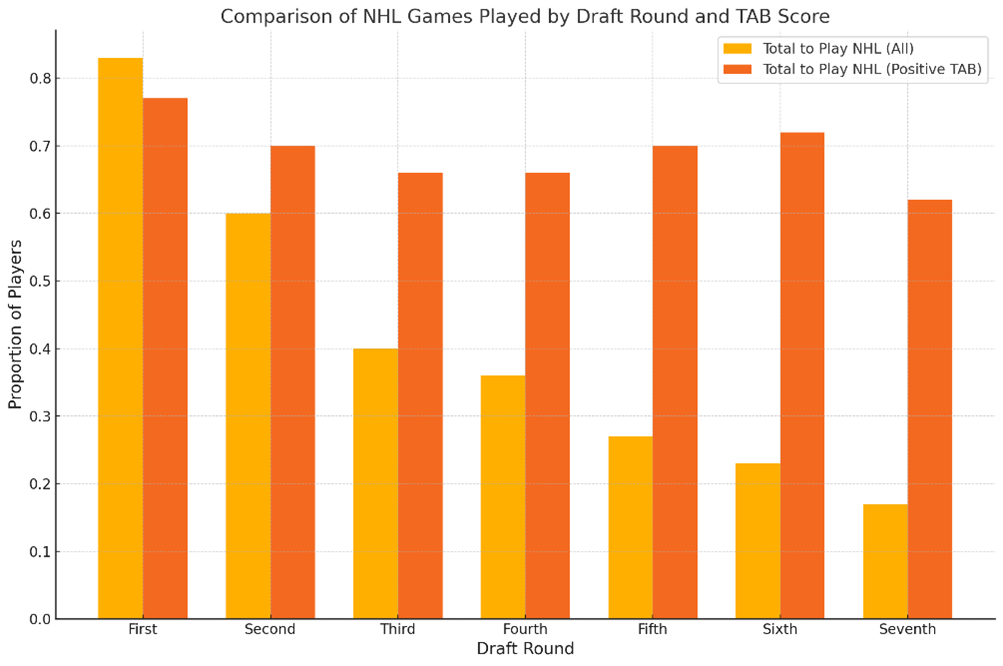
These findings underscore TAB’s critical dual role in modern hockey scouting, where it not only confirms the high potential of first-round picks but also sheds light on overlooked talent in later rounds. By leveraging TAB, teams gain a data-driven perspective that complements traditional scouting insights, enabling a more comprehensive evaluation of player potential. This layered approach ensures that high-profile prospects are thoroughly vetted while also directing attention toward players who may lack immediate visibility but possess untapped potential.
For teams seeking to enhance their drafting strategies, TAB offers a structured framework for resource allocation and decision-making. It allows scouts to focus their efforts on identifying value at every stage of the draft, from securing elite first-round picks to maximizing late-round opportunities. By integrating TAB into their evaluation processes, organizations can achieve a more balanced and efficient approach, ensuring that all draft picks—whether top prospects or hidden gems—are given due consideration. This dual utility highlights TAB’s transformative potential as a tool that enriches traditional scouting methods and drives long-term success in player development.
Temporal Trends in TAB Scores
The evolution of TAB scores over time offers critical insights into the shifting dynamics of player development and scouting methodologies in hockey. The “Distribution of TAB Scores Over Time” graph demonstrates notable fluctuations that align with variations in the quality of draft classes and potential advancements in evaluation practices. Peaks in years such as 2011 and 2016 indicate particularly strong draft pools or improvements in the metrics used to assess player potential. These high-performing years suggest that TAB’s methodology was particularly effective in capturing the traits associated with future success in these cohorts. In contrast, valleys in years like 2014 and 2018 may reflect weaker draft pools or inconsistencies in scouting approaches, where the available talent may not have aligned well with the metrics prioritized by TAB.
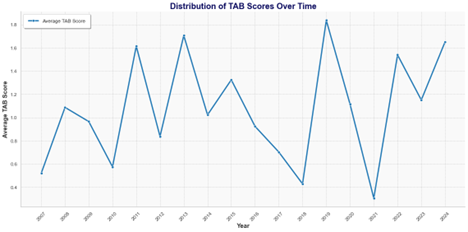
These fluctuations highlight the importance of continuously refining the TAB methodology to adapt to the evolving landscape of hockey talent evaluation. Temporal trends like these also underscore how TAB provides a lens through which organizations can evaluate the effectiveness of their scouting efforts over time. For instance, an unusually low average TAB score in a given year might prompt deeper investigation into that draft class, including external factors such as league representation, developmental structures, or changes in scouting priorities. Similarly, the recurring peaks may point to opportunities for identifying transferable best practices from strong draft years. By analyzing these trends, teams can gain a broader understanding of how to align their scouting strategies with the changing dynamics of the sport.
Moreover, these temporal insights emphasize the value of TAB as a flexible and adaptive tool. As hockey continues to evolve with shifts in player demographics, league compositions, and developmental systems, TAB’s ability to identify meaningful trends ensures its relevance in both short- and long-term scouting strategies. This adaptability enables teams to refine their talent pipelines, ensuring that their scouting methodologies remain robust in the face of a constantly changing environment. Ultimately, the distribution of TAB scores over time reinforces its role as a key component of a modern, data-driven approach to player evaluation.
The “Yearly Comparison of +TAB and -TAB Players Making NHL” graph provides a compelling visualization of TAB’s predictive strength across draft years, illustrating the consistent outperformance of players with positive TAB scores over their negative counterparts. Positive TAB players demonstrate higher percentages of NHL participation, with notable peaks in years like 2011 and 2016, where the differences reached 16% and 13%, respectively. These years highlight TAB’s effectiveness in identifying top-tier talent within strong draft classes, reinforcing its utility as a complementary scouting tool. The upward trends in these years are likely to reflect the alignment of TAB’s metrics with player qualities that translated well into NHL success, including readiness, adaptability, and developmental potential.
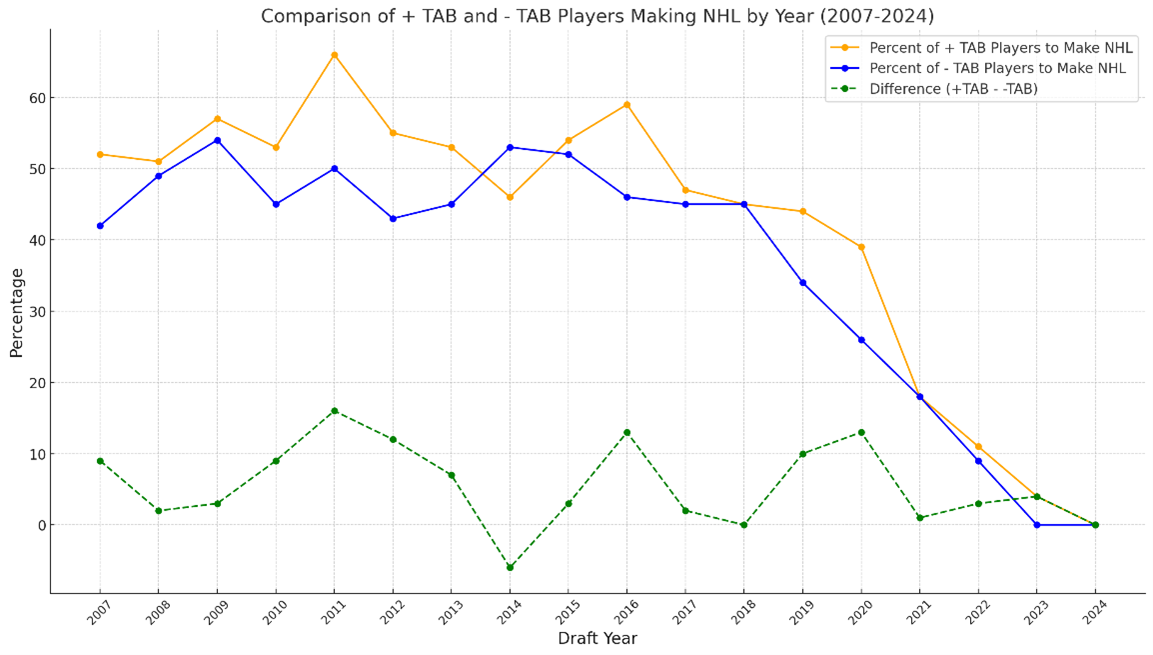
However, the graph also reveals critical anomalies that underscore the complexity of scouting and talent development. For instance, in 2014, negative TAB players slightly outperformed their positive counterparts, suggesting that certain external factors, such as unique development paths, injuries, or even atypical scouting strategies, influenced the outcomes. These exceptions highlight the importance of integrating TAB into a broader, multifaceted scouting framework that accounts for variables beyond what the score can predict. The year-by-year comparison further emphasizes that while TAB is a powerful predictive tool, it is not infallible. Its greatest strength lies in its ability to guide attention to high-potential players, but the final evaluation must always incorporate traditional scouting insights and contextual factors.
These year-to-year disparities also provide valuable feedback for refining the TAB formula. The variations in predictive accuracy suggest opportunities to adjust the score’s weightings to better align with evolving trends in player performance and development. By addressing anomalies and leveraging successful years as benchmarks, teams can enhance TAB’s effectiveness, ensuring its relevance in an increasingly analytics-driven scouting landscape. Overall, this graph reinforces the role of TAB as a dynamic and adaptive tool, capable of providing actionable insights while working alongside traditional evaluation methods.
Correlations with NHL Success Metrics
The “Correlation Between TAB Scores and NHL Games Played” graph provides a valuable perspective on TAB’s predictive capabilities, demonstrating a moderate positive relationship (Pearson r = 0.16). This correlation suggests that players with higher TAB scores tend to participate in more NHL games, validating TAB’s utility as a tool for identifying talent with immediate potential. While the relationship is not overwhelmingly strong, it highlights TAB’s role in complementing traditional scouting methods by narrowing the focus to players with a higher likelihood of professional success.
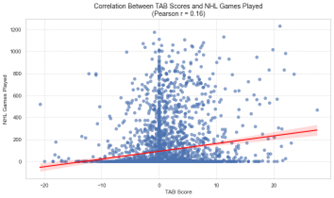
This moderate correlation underscores TAB’s value in the early stages of player evaluation, particularly for scouts aiming to identify prospects ready to transition to the NHL. Players with elevated TAB scores may already exhibit the foundational skills, consistency, and adaptability required to thrive at the professional level. However, the distribution of points on the graph also emphasizes the variability inherent in predicting NHL participation. While many high-TAB players achieve significant game totals, there are exceptions where lower-TAB players also succeed, reflecting the influence of external factors such as coaching, team fit, and individual growth. This variability reaffirms the importance of TAB as a supplementary tool rather than a standalone metric, working best when integrated into a broader scouting framework.
The “Correlation Between TAB Scores and Career AB Scores” graph highlights the relatively weak relationship between these metrics, reflected in a Pearson correlation coefficient of 0.10. This finding suggests that while TAB scores may indicate a player’s short-term potential, they are less predictive of long-term career success. The scattered points across the graph reinforce the variability in career AB outcomes, even among players with similar TAB scores. This variability highlights the multitude of factors influencing career trajectories, including team dynamics, coaching quality, physical health, and personal adaptability.
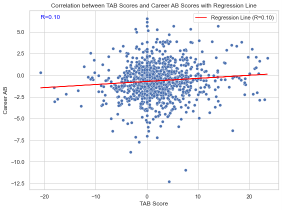
While TAB offers a valuable framework for early-stage evaluations, these findings underscore its limitations in forecasting sustained success over a player’s career. Career AB scores often reflect a combination of skill, opportunity, and long-term development, which are difficult to encapsulate in a single metric. This reinforces the importance of pairing TAB with additional evaluation tools, such as psychological assessments, advanced performance analytics, and qualitative scouting insights, to form a more comprehensive picture of a player’s potential. By addressing these limitations, TAB can remain a key component of a holistic scouting approach, supporting teams in identifying talent that may thrive over the long term while acknowledging the need for supplemental metrics.
The boxplot titled “Correlation Between TAB Scores and Making It to the NHL” provides additional insights into TAB’s predictive capabilities. Players who made it to the NHL display a slightly higher median TAB score compared to those who did not, indicating a modest relationship between TAB scores and NHL success. However, the extensive overlap in TAB scores between the two groups illustrates the inherent complexity of player evaluation. While higher TAB scores correlate with increased potential, they are far from definitive predictors of NHL participation.

This overlap underscores the influence of external factors, such as injuries, team dynamics, coaching quality, and personal circumstances, in shaping a player’s career trajectory. The presence of low TAB players who achieved NHL success, and high TAB players who did not, reinforces the value of using TAB as part of a broader, multifaceted scouting framework. By identifying potential talent through TAB while factoring in qualitative assessments, teams can better navigate the unpredictability of player development and maximize their ability to identify future NHL contributors. This boxplot effectively highlights TAB’s role as a supplementary tool, bridging quantitative analysis with traditional scouting methods.
These findings reinforce the idea that TAB should be used as part of a holistic scouting approach. By combining TAB with traditional scouting methods teams can gain a comprehensive view of player potential. This integrated approach ensures that decisions are informed by both quantitative data and qualitative insights, maximizing the effectiveness of the scouting process.
Distribution and Outliers
The “Distribution of TAB Scores Across All Years” histogram provides valuable insights into the variability and overall landscape of player potential as assessed by TAB. The distribution follows a normal curve, with the majority of scores clustering around the mean and tapering off at the extremes. This bell-shaped pattern reflects the general distribution of talent, where most players demonstrate average potential, and only a small number stand out as either exceptional or significantly underperforming.
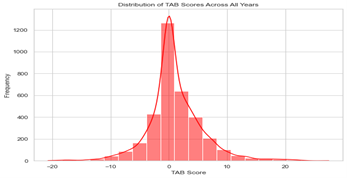
This normal distribution is crucial for understanding the role of TAB as a scouting tool. It highlights the consistency of TAB in evaluating players within a standardized framework, ensuring that outliers—those at the far ends of the spectrum—can be identified for closer evaluation. Exceptional TAB scores often signal high-potential players who may require additional scrutiny to confirm their readiness for the next level, while very low scores could indicate developmental gaps or underlying issues. By focusing on these outliers, scouting teams can allocate resources more strategically, ensuring that high-potential players receive the attention they deserve while addressing red flags in lower-scoring individuals.
The histogram also underscores the adaptability of TAB in capturing the nuances of talent distribution across multiple draft years. This consistency ensures that TAB remains a reliable metric for longitudinal analyses, enabling scouts to track trends and shifts in player potential over time. By identifying patterns within this distribution, organizations can fine-tune their scouting strategies to align with broader talent trends, further enhancing the efficiency and effectiveness of the drafting process.
Team-Level Insights
The “Comparison of Drafting Metrics by Team” graph highlights the substantial variability in how organizations utilize TAB and their corresponding outcomes. Teams like Nashville stand out with an impressive average TAB score of 2.03, reflecting their ability to identify high-potential players consistently. Similarly, Calgary demonstrates exceptional success in converting positive TAB scores into NHL participation, achieving a conversion rate of 90%. These results underline the importance of integrating TAB as part of a team’s overall scouting strategy, emphasizing its potential to spotlight talent that traditional methods might overlook.
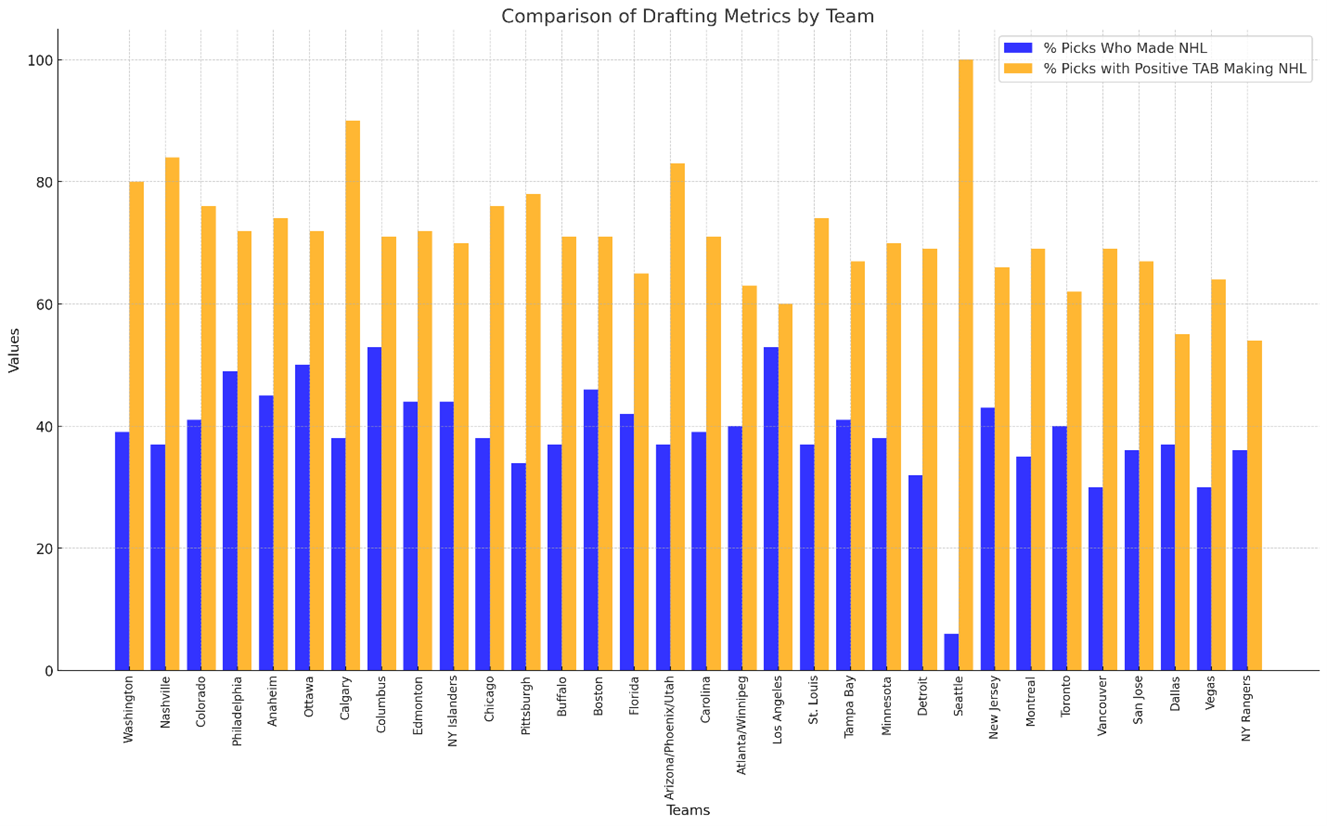
This graph also sheds light on the effectiveness of organizational scouting systems and development pipelines. High-performing teams like Nashville and Calgary have likely invested in analytics-driven scouting frameworks and robust player development programs, ensuring that prospects with strong TAB scores are given the necessary support to transition into NHL roles successfully. On the other hand, teams with underwhelming results, such as those with consistently low TAB averages, may benefit from reallocating resources toward better analytics integration and long-term player monitoring. By learning from the practices of leading organizations, teams can refine their processes to maximize the utility of TAB and boost their overall drafting efficiency.
The actionable insights derived from this analysis provide a roadmap for teams aiming to enhance their talent identification and development strategies. Comparing performance metrics across organizations not only highlights best practices but also underscores the areas requiring improvement. For example, Calgary’s conversion rate of positive TAB scores into NHL participation can serve as a benchmark for other teams striving to improve their success rates. Similarly, Nashville’s ability to maintain high average TAB scores across drafts suggests a systematic approach to scouting that prioritizes data-driven evaluations. Teams that embrace these insights and adapt accordingly will likely see marked improvements in their drafting outcomes and overall competitiveness in the NHL.
The “Impact of Team on TAB and Career AB Scores” graph further emphasizes the role of organizational strategy in leveraging TAB to enhance long-term player success. Teams like Nashville and Calgary excel not only in producing players with high TAB scores but also in fostering environments where these players can achieve strong Career AB scores. This dual success underscores the importance of a cohesive approach that integrates effective scouting, development programs, and on-ice opportunities. In contrast, teams like San Jose and Vegas, which struggle in both TAB and Career AB metrics, may need to address systemic gaps in their scouting and development systems.
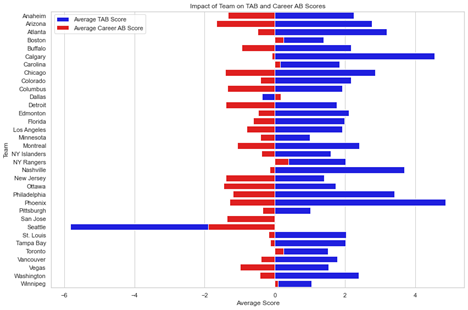
This graph also highlights the interplay between scouting methodologies and player development strategies. Teams with high TAB scores but lower Career AB scores may face challenges in converting potential into sustained performance, suggesting room for improvement in their post-draft player support systems. Conversely, teams with moderate TAB scores but high Career AB outcomes may excel in nurturing and developing players beyond their initial assessments. These variations reveal the multifaceted nature of player success, reinforcing the need for a balanced approach that combines analytical tools like TAB with robust developmental infrastructure.
Predictive Analysis and Percentage Differences
The predictive analysis of TAB scores sheds light on the significant disparities between high-TAB and low-TAB players in terms of their likelihood of achieving NHL success and positive Career AB scores. On average, high-TAB players are 5.44% more likely to play NHL games compared to their low-TAB counterparts. This advantage underscores TAB’s ability to identify players who exhibit traits critical to making the professional transition, such as adaptability, skill, and developmental readiness. Furthermore, the consistency of this advantage across most draft years reinforces TAB’s robustness as a complementary tool in the scouting process.
Beyond NHL participation, TAB also demonstrates its utility in predicting long-term potential, as high-TAB players are 5.61% more likely to achieve positive Career AB scores than low-TAB players. While this advantage is slightly more pronounced than for NHL participation, the weaker correlation with Career AB scores reflects the broader complexity of evaluating long-term success. Career longevity and performance are shaped by a multitude of variables that TAB alone cannot fully capture. Factors such as injury history, mental resilience, and the quality of developmental environments often play a pivotal role in a player’s career trajectory. These findings emphasize the importance of integrating TAB with traditional scouting methods and other advanced analytics to form a holistic picture of player potential.
Temporal trends in the data also reveal key insights about how TAB’s predictive power varies across draft years. In most years, high-TAB players consistently outperform their low-TAB counterparts, but the margin of difference fluctuates. For instance, years like 2011 and 2016 show significant gaps favoring high-TAB players, aligning with strong draft classes where TAB’s metrics were particularly effective at identifying NHL-caliber talent. Conversely, the diminishing differences in more recent years, particularly post-2020, may be attributed to the limited time frame for these players to establish themselves or evolving dynamics in player development and league systems. These variations highlight the importance of continuously refining TAB’s methodology to maintain its relevance and effectiveness in an ever-changing hockey landscape.
These findings reaffirm TAB’s role as a vital supplementary tool in modern hockey scouting. By quantifying the likelihood of success, TAB equips teams with actionable insights to prioritize high-potential players and uncover hidden talent. However, it is crucial to acknowledge that TAB works best in conjunction with qualitative evaluations and other metrics. Its strengths lie in its ability to complement traditional methods, enhancing decision-making without overshadowing the nuanced judgment that remains central to the scouting process. As organizations continue to embrace data-driven approaches, TAB’s adaptability and predictive utility will make it an indispensable asset in building competitive and sustainable talent pipelines for the NHL.
Conclusion of TAB Chapter
The Tentative AB Score (TAB) has emerged as a transformative tool in hockey analytics, providing a data-driven foundation for evaluating player potential. Its ability to quantify early-stage indicators of success makes it an invaluable complement to traditional scouting, bridging the gap between qualitative assessments and actionable data. While its predictive power is most pronounced in identifying NHL readiness, TAB’s weaker correlations with long-term metrics like Career AB scores highlight opportunities for refinement. By integrating additional variables such as mental resilience, adaptability, and injury history, TAB can evolve to capture a more comprehensive picture of player potential. Moreover, regular recalibration will ensure its methodology aligns with the dynamic nature of hockey development and league systems.
TAB’s role in modern scouting frameworks is both complementary and indispensable. By identifying overlooked talent and streamlining decision-making, it enables teams to maximize their draft strategies and build sustainable talent pipelines. However, its greatest strength lies in its adaptability; by combining TAB with advanced analytics and traditional evaluations, teams can foster a balanced approach that respects the nuances of scouting while embracing the potential of data-driven insights. This intersection of tradition and innovation ensures that TAB remains a cornerstone of modern hockey evaluation, empowering teams to make informed, strategic decisions.
As we transition to the next chapter, the focus shifts to the Junior Hockey Analysis, a critical segment of this research. This section builds upon the foundational insights provided by TAB, extending the analysis to evaluate the programs and development paths that excel in fostering high-potential talent. By examining the intersection of player origins, development environments, and long-term success, the Junior Hockey Analysis aims to identify the most effective pathways to NHL readiness. This exploration not only contextualizes TAB’s findings but also provides a comprehensive view of how development programs contribute to a player’s journey, setting the stage for actionable insights that extend beyond individual evaluation.
Chapter 7 – Junior Hockey Analysis
Junior and pre-NHL hockey plays a transformative role in developing future NHL-caliber talent, acting as a critical bridge between foundational training and professional play. It is during this phase that the skills nurtured in youth programs are refined and tested against highly competitive environments, laying the groundwork for long-term success. This chapter builds on the foundational insights of the TAB metric, which quantifies early-stage player potential, to evaluate how pre-NHL organizations contribute to the development of players with high AB scores.
In the context of today’s globalized hockey landscape, junior leagues across North America, Europe, and emerging nations play an increasingly significant role in shaping future NHL stars. Regions like Ontario and Michigan continue to dominate, producing players with consistently high TAB scores, while professional leagues in emerging nations such as Germany and Switzerland are gaining recognition for their ability to produce early-impact talent. These junior leagues serve as the proving ground for players, with metrics like Mean First Year AB reflecting immediate readiness for professional hockey, while Mean Career AB gauges a program’s ability to sustain long-term success. The insights drawn from the TAB chapter form the basis of this analysis, linking individual potential identified through TAB to the developmental effectiveness of pre-NHL programs. This chapter explores how these organizations not only amplify the potential identified by TAB but also shape players into high-impact professionals through structured and strategic development pathways.
Research Objectives
The Junior Hockey Analysis is grounded in three interconnected objectives, building on the foundational insights of the TAB metric and emphasizing the critical role of junior hockey programs in shaping future NHL talent. First, the study evaluates the effectiveness of 178 pre-NHL organizations in producing successful players, with a specific focus on the AB metric as a measure of player performance. This metric, derived from key factors such as First Year AB and Career AB scores, allows for a nuanced understanding of how pre-NHL programs contribute to both short-term and long-term player success. By examining these metrics, the analysis highlights the organizations that consistently excel in fostering elite talent while identifying potential gaps in developmental systems.
Second, the study leverages advanced data techniques, including clustering and regression analysis, to uncover patterns and trends across regions and programs. These methods enable a deeper exploration of how different systems—whether in traditional strongholds like Ontario or emerging regions like Germany—contribute to player development. Clustering provides insights into the variability of outcomes among similar organizations, while regression analysis identifies the factors most strongly correlated with long-term success. Together, these techniques create a detailed picture of the strengths and weaknesses of junior hockey systems worldwide.
Third, the study develops a composite ranking system to highlight the most effective programs and regions for cultivating NHL-ready talent. This ranking incorporates a range of metrics, including Total Players Produced, Full AB Players, Mean First Year AB, and Mean Career AB, to provide a holistic evaluation of program performance. By balancing these components, the composite score offers actionable insights for scouts, teams, and governing bodies aiming to refine their strategies for identifying and nurturing future stars. These objectives not only provide a comprehensive framework for evaluating junior hockey programs but also set the stage for the methodology section, where the specific approaches used to achieve these goals are detailed. The integration of data-driven techniques with practical applications underscores the importance of this analysis in guiding the next steps in hockey development.
Methodology
This study employs a robust and multi-faceted methodology to evaluate the performance of junior hockey programs globally, leveraging a combination of proprietary TAB metrics and advanced statistical techniques. The primary data source for this analysis is AB Research, which provides a comprehensive database of player performance metrics, including Total Players Produced, Full AB Players, Mean First Year AB, and Mean Career AB. These key variables form the foundation of the analysis, enabling the study to quantify both the immediate and long-term success of players developed by pre-NHL organizations.
To uncover meaningful trends and relationships within the data, the study employs several analytical techniques. Heatmaps are used to visualize geographic trends in player development, highlighting regions and programs that excel in producing high-performing players. K-means similar programs to clustering groups based on performance metrics, providing insights into the characteristics that define successful and underperforming organizations. For instance, clustering allows the identification of programs that prioritize quality over quantity, as well as those with consistent but moderate outcomes. Regression analysis further complements this approach by identifying the specific factors most strongly associated with long-term success. The analysis focuses on variables such as Mean First Year AB, which reflects early NHL readiness, and Total Players Produced, revealing the trade-offs between player volume and development quality.
A central feature of this methodology is the composite scoring system, which integrates multiple performance metrics into a single actionable ranking. This composite score weights Total Players (45%), Mean Career AB (30%), Mean First Year AB (25%), and Full AB Players (5%) to provide a balanced evaluation of program effectiveness. The weighting system reflects the study’s priorities: recognizing programs that produce high volumes of NHL players, emphasizing long-term player success, and accounting for immediate readiness and data completeness. By incorporating these diverse metrics, the composite score ensures that the analysis captures a holistic view of each program’s contribution to player development.
This methodology also builds on the insights established in the TAB chapter, connecting individual player evaluations with organizational outcomes. The use of TAB scores as an initial benchmark enables the study to trace how programs maximize or underperform relative to a player’s potential. For example, organizations with high TAB players who consistently achieve strong Career AB scores demonstrate their ability to refine and develop identified talent. Conversely, programs that fail to elevate TAB players may indicate inefficiencies or systemic gaps in their development systems. The integration of TAB metrics into this methodology creates a seamless link between individual potential and organizational effectiveness, highlighting how junior hockey programs contribute to the overall success of NHL-caliber talent.
By combining cutting-edge data analysis with practical evaluation tools, this methodology offers actionable insights for teams, scouts, and governing bodies seeking to optimize player development pathways. It not only identifies the characteristics of successful programs but also provides a framework for underperforming organizations to benchmark their performance and implement targeted improvements. This comprehensive approach ensures that the study not only evaluates existing systems but also contributes to the broader conversation on advancing hockey development worldwide.
Heatmap Analysis
The heatmap analysis aims to uncover regional trends and developmental patterns in junior hockey by visualizing the geographic distribution of player outcomes. Using data derived from AB Research and TAB metrics, this study evaluates both short-term readiness, as indicated by First Year AB scores, and long-term success, reflected in Career AB scores. By mapping these metrics, the analysis seeks to identify regions and programs excelling in talent development while highlighting areas for improvement. This approach allows for a comparative understanding of how developmental systems in North America, Europe, and emerging hockey nations contribute to NHL player success. The heatmaps serve as a critical tool for interpreting these trends, offering actionable insights into the effectiveness of hockey ecosystems worldwide.
The Career AB and First Year AB heatmaps reveal pivotal geographic trends in hockey talent development, highlighting both established powerhouses and emerging contributors. Scandinavia, in particular, stands out as a leader, with Sweden and Finland employing contrasting yet effective approaches. Sweden excels in fostering players with sustained long-term success, as evidenced by high Career AB scores. Its programs emphasize a holistic development model, preparing players for longevity in professional hockey. Finland, on the other hand, demonstrates an ability to produce NHL-ready players with higher First Year AB scores, reflecting a more targeted focus on early-stage readiness. Together, these approaches create a compelling blueprint for other nations aiming to optimize their junior hockey pipelines.
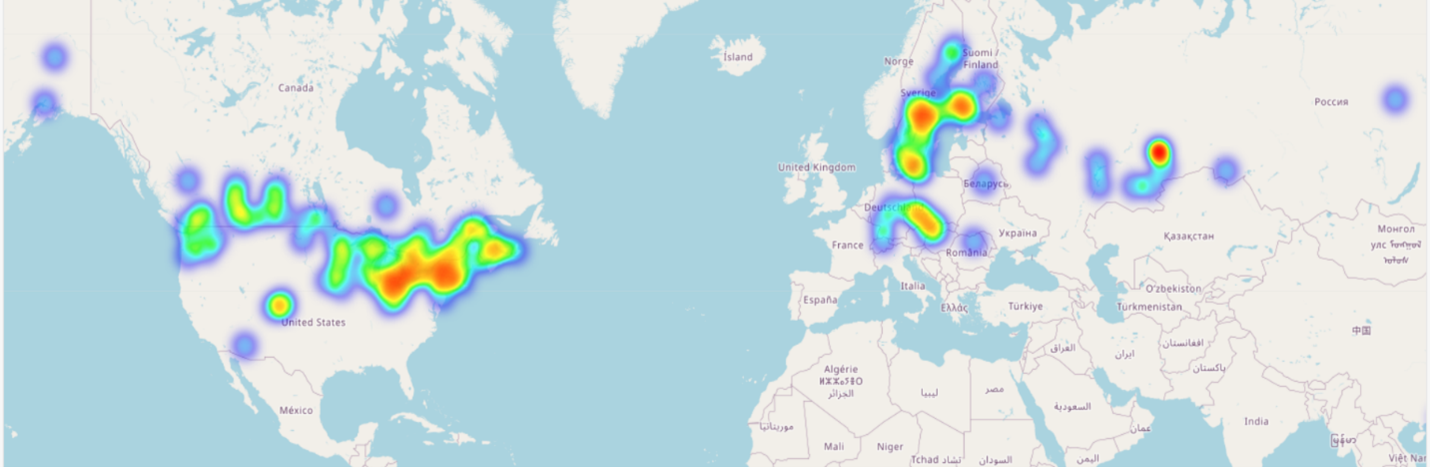
The Career AB heatmap above sheds light on the development disparities in Central Europe, providing a detailed visual representation of player success over time. While countries like Czechia and Slovakia are notable for consistently producing NHL-ready talent, their struggles with long-term player development highlight systemic challenges. These gaps could stem from limited access to advanced coaching resources, outdated training methodologies, or insufficient investment in player well-being and development post-junior leagues. For example, while Czechia excels in identifying raw talent, the lack of specialized programs for transitioning players to professional leagues may hinder their career longevity. Addressing these structural issues could transform Central Europe into a more robust and competitive pipeline for elite hockey players.
Furthermore, the emergence of Germany and Switzerland as contributors to NHL talent reflects an encouraging trend in Central Europe’s hockey ecosystem. Over the past decade, both countries have made significant investments in their professional leagues and development programs. For instance, the Deutsche Eishockey Liga (DEL) has enhanced its infrastructure and international scouting efforts, allowing for the identification and cultivation of high-potential players. Similarly, Switzerland’s National League has increasingly become a hub for developing NHL-ready talent, with its emphasis on high-quality coaching and competitive opportunities for young players. These efforts are reflected in Germany and Switzerland’s increasing Career AB scores, positioning them as rising stars in the hockey world.
The Career AB heatmap also underscores the importance of maintaining momentum in emerging hockey markets. While Germany and Switzerland are making significant strides, sustaining this growth will require continuous innovation and investment. Implementing data-driven analytics, like the TAB metric, into their player development systems could help identify and nurture high-potential talent more effectively.
Lastly, the career outcomes of players from Central Europe emphasize the need for tailored developmental pathways. Players from this region often show early promise but require additional support to translate their potential into sustained professional success. Customized player development programs, mentorship from seasoned professionals, and enhanced access to international tournaments could bridge this gap. By learning from the success stories of Sweden and Ontario, which demonstrate holistic approaches to player development, Central European nations could solidify their place as reliable contributors to the NHL talent pool.
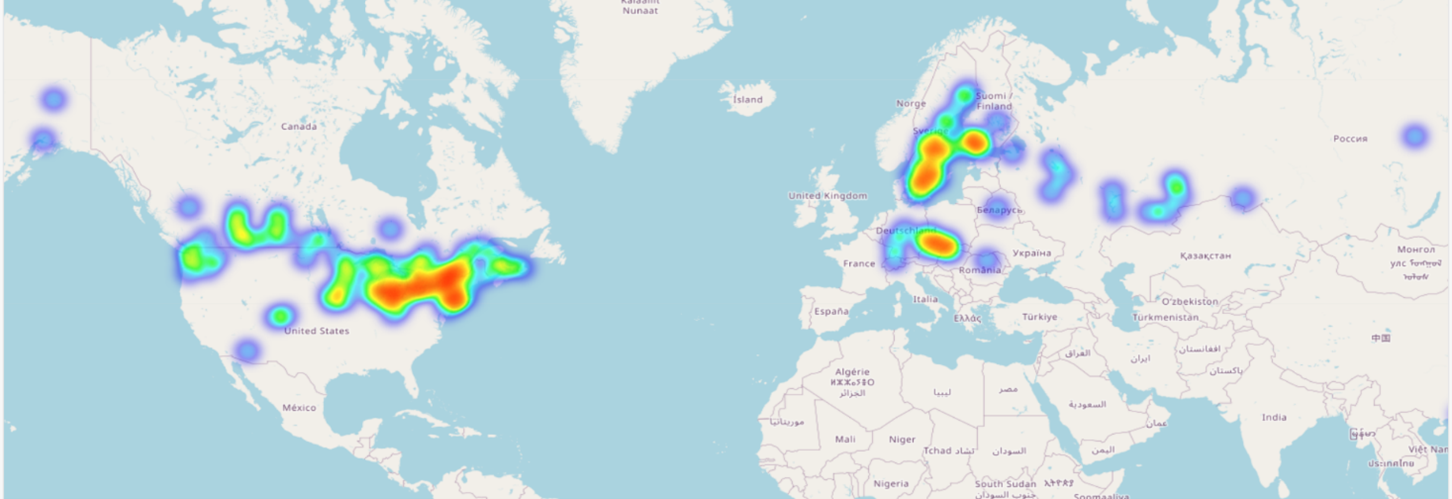
The First Year AB heatmap above reinforces several key insights while offering new perspectives on regional development strategies. North America continues to excel in preparing players for immediate professional success, but the heatmap also highlights nuances within its regions. While Ontario and Michigan remain dominant, regions like Alberta and Quebec also showcase strong First Year AB performance, reflecting the depth of talent across the continent. These findings suggest that while Ontario and Michigan set benchmarks, other regions are narrowing the gap, benefiting from improved coaching systems and cross-regional competition. The TAB chapter findings further validate this trend, with high TAB scores serving as a precursor to the strong First Year AB metrics observed across North America.
Germany and Switzerland continue to emerge as rising hockey nations, but the First Year AB heatmap reveals an interesting divergence. While both nations exhibit strong early performance, Switzerland shows a more consistent pattern, suggesting a streamlined developmental pipeline. Germany, on the other hand, displays greater variability, possibly due to regional disparities in coaching quality and infrastructure. These differences indicate that while both countries are advancing, Switzerland may serve as a model for Germany to address inconsistencies. Insights from the TAB chapter can support this effort by identifying specific areas where Germany’s development system could be optimized to align with Switzerland’s more consistent readiness-first approach.
In Scandinavia, the heatmap reinforces the contrasting philosophies of Sweden and Finland, but it also uncovers subtle patterns. Finland’s readiness-first approach not only yields higher First Year AB scores but also indicates a broader range of talent emerging from non-traditional regions within the country. This suggests that Finland’s development strategy may be more inclusive, tapping into untapped talent pools. Sweden, while focusing on long-term player growth, shows a more concentrated success pattern, reflecting its emphasis on centralized excellence. These findings suggest opportunities for both nations to learn from each other: Sweden could explore ways to broaden its talent base, while Finland could consider incorporating long-term growth strategies to complement its early success.
Central Europe offers a more complex narrative in the context of First Year AB performance. While Czechia and Slovakia continue to produce NHL-ready talent, the heatmap reveals pockets of underperformance within these regions. These discrepancies point to the importance of localized development initiatives that address regional disparities. Additionally, emerging contributors like Austria are beginning to make their mark, suggesting that Central Europe’s hockey ecosystem is diversifying. By leveraging the lessons from TAB scores, regional programs can focus on improving their consistency and transitioning early success into long-term outcomes, thus strengthening their overall impact on NHL player development.
Clustering Analysis
The Junior Hockey Analysis would be incomplete without a deeper dive into how pre-NHL programs cluster based on their performance outcomes. Building on the Career AB and First Year AB heatmaps, this chapter evaluates the developmental effectiveness of these programs by clustering them into groups based on performance metrics. By identifying shared characteristics among programs within clusters, the analysis provides a framework for understanding the nuances in player development approaches.
The clustering method groups programs into five clusters based on similarities in their outputs, such as Total Players Produced, Average Career AB, and other relevant metrics. This process highlights distinctions between programs that excel in producing NHL-ready talent and those that struggle with consistency or player longevity. Understanding these patterns not only validates insights from the TAB chapter but also establishes a benchmarking system for programs aspiring to improve their results. The clustering analysis below divides 178 pre-NHL programs into five distinct clusters, each reflecting unique developmental characteristics and outcomes.
Cluster 0 consists of programs that exhibit high variance and moderate results, such as Clarkson University and CSKA Moscow. These organizations show variability in their ability to develop players, with inconsistent resource allocation and developmental strategies contributing to mixed performance outcomes. The teams that are included in this cluster are Krylja Sovetov, Kladno, Des Moines Buccaneers, Cherepovets Severstal, Tolyatti Lada, Bratislava Slovan, Pembroke Lumber Kings, Victoria Royals, Sherbrooke Phoenix, Sparta Praha, Malmo IF, Plzen, Mora IK, Brno Kometa, Zug EV, Union College, Slavia Praha HC, Prince Edward Island Rocket, Clarkson University, Timra IK, Ferris State University, Colgate University, Umass-Lowell, Victoriaville Tigers, Assat Pori, Chelyabinsk Traktor, Dartmouth College, HPK Hameenlinna, U. of Vermont, Shawinigan Cataractes, Kamloops Blazers, Ilves Tampere, KalPa Kuopio, Michigan Tech, U. of Maine, Blainville-Boisbriand Armada, Linkopings HC, Yale University, U. of Nebraska-Omaha, Tri-City Americans, MODO Hockey Ornskoldsvik, Saint John Sea Dogs, Cape Brenton Eagles, Quebec Remparts, CSKA Moscow, U. of New Hampshire, Brynas IF Gavle, Gatineau Olympiques, Northeastern University, Karpat, Miami University (Ohio), Spokane Chiefs, Farjestads BK Karlstad, Cornell University, North Bay Battalion, Niagara IceDogs, Ohio State University, St. Petersburg SKA, Umass-Amherst, HV71 Jonkoping, U. of Alaska-Anchorage, Mannheim Eagles, Sodertalje, Jokerit Helsinki, Minnesota State U- Mankato, HIFK Helsinki, and Rimouski Oceanic.
Cluster 1 represents balanced success. These organizations are notable for their consistent approach to player development, achieving moderate but reliable outcomes across the board. Their steady performance makes them benchmarks for other programs aiming to achieve balanced development. The teams that are included in this cluster are Ottawa 67s, U. of Minnesota, Michigan State University, Hamilton Bulldogs, Halifax Mooseheads, Djugardens IF Stockholm, Sudbury Wolves, Mississauga Steelheads, Moose Jaw Warriors, Medicine Hat Tigers, Providence College, Harvard University, Flint Firebirds, Vancouver Giants, Moncton Wildcats, Calgary Hitmen, Red Deer Rebels, Sarnia Sting, Peterborough Petes, Winnipeg Ice, Notre Dame, Brandon Wheat Kings, St. Cloud State, Owen Sound Attack, Guelph Storm, Erie Otters, Skelleftea AIK, Oshawa Generals, Barrie Colts, Frolunda HC, U. of Denver, Soo Greyhounds, Windsor Spitfires, Kelowna Rockets, U. of Minnesota-Duluth, Portland Winterhawks, Boston University, U. of Wisconsin, Kitchener Rangers, Boston College, U. of North Dakota, U. of Michigan, London Knights, Rouyn-Noranda Huskies, U.S. National Development, and Swift Current Broncos.
Cluster 2 includes programs that are known for exceptional consistency despite lower player production volumes. These organizations emphasize quality over quantity, focusing on the specialized development of high-potential players. While their overall output may appear limited, their ability to maximize individual talent demonstrates a deliberate and effective developmental strategy. The teams that are included in this cluster are Oskarshamn IK and Zvolen HKm.
Cluster 3 is characterized by mixed outcomes, with both high and low performers. This variability highlights areas for improvement, as these organizations struggle to maintain consistent standards of player development. Targeted investment in coaching, facilities, and resources could help stabilize their results. The teams that are included in this cluster are Litvinov, Ceske Budejovice HC, Minsk Dynamo, Nitra MHC, Liberec Bili Tygri HC, Vitkovice HC, Zlin ZPS AC, DEG Metro Stars, Oakville Blades, Ufa Salavat Yulayev, Green Bay Gamblers, St. Lawrence University, Kazan Ak-Bars, Northern Michigan University, Bowling Green State University, Yaroslavl Lokomotiv, Zurich SC, Baie-Comeau Drakkar, Princeton University, AIK, Leksands IF, Lake Superior State University, Acadie-Bathurst Titan, Omsk Avangard, Lulea HF, TPS Turku, Prince George Cougars, Brown University, Saskatoon Blades, Val d’Or Foreurs, Kingston Frontenacs, Edmonton Oil Kings, Colorado College, Drummondville Voltigeurs, Everett Silvertips, Chicoutimi Sagueneens, Prince Albert Raiders, Western Michigan University, Saginaw Spirit, Regina Pats, Seattle Thunderbirds, Orebo HK, Merrimack College, and Lethbridge Hurricanes.
Cluster 4 comprises programs with high potential but lower player production. These organizations demonstrate promising developmental frameworks but require refinement to fully capitalize on their potential. With focused strategies to increase player output and consistency, Cluster 4 programs could ascend to higher levels of success. The teams that are included in this cluster are Vastra Frolunda HC, Sioux City Musketeers, Arizona State University, Sodertailje SK, Yekaterinburg Automobilist, R.P.I, Trencin Dukla, Rogle BK Angelhokm, Moscow Dynamo, Chicago Steel, Quinnipiac University, Vasteras IK, Pardubice HC, Vaxjo HC, Magnitogorsk Metallurg, Chomutov Pirati, Tappara Tampere, U. of Alaska-Fairbanks, and Bemidji State University.
The clustering analysis reveals critical insights into the distribution and relationships between pre-NHL organizations by evaluating intra-cluster and inter-cluster distances, providing a deeper understanding of how these programs align and diverge in terms of development outcomes. The “Maximum Intra-Cluster Distances for Each Cluster” graph highlights the internal diversity within clusters, offering a view of how consistent or variable the organizations are within each group. Cluster 4 stands out as having the most significant variation (5.01), reflecting the breadth of the developmental approaches employed by its members. This cluster includes programs like Moscow Dynamo and Chicago Steel, which operate under different constraints and objectives but still manage to contribute to NHL talent pipelines. By contrast, Cluster 2 has minimal internal diversity (2.53), attributed to its limited membership of just two programs, Oskarshamn IK and Zvolen HKm. These programs are characterized by their consistency in developmental outcomes, though their overall performance metrics are relatively low compared to other clusters. Higher intra-cluster distances, such as those seen in Cluster 4, suggest that some programs within these groups might benefit from adopting best practices from their more successful peers, thus narrowing the variability in performance.
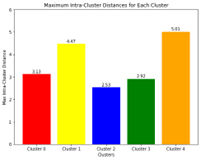
This variation underscores the differing developmental strategies and focuses of each cluster. Clusters with high internal variability might indicate a need for more standardized training or scouting methodologies to achieve consistent results across programs. Conversely, the low variation in Cluster 2 suggests that its programs adhere to a more uniform developmental philosophy, though their limited ability to produce elite players highlights the need for systemic improvements. Metrics like Career AB and Total Players Produced are pivotal in understanding these dynamics, as clusters with higher variability may include outlier programs that skew overall performance.
The “Inter-Cluster Distances Between Centroid Pairs” graph emphasizes the relative separability of the clusters and highlights the distinctiveness of their developmental approaches. For example, the greatest distance (8.47) between Clusters 2 and 4 illustrates a stark divergence in player outputs and development philosophies. Cluster 4 includes programs that show potential but lack consistency, while Cluster 2 focuses on a small pool of players with highly predictable, albeit lower, outcomes. These distinctions reveal how different strategic priorities—whether it be specialization, volume, or consistency—shape developmental results. Meanwhile, the smallest inter-cluster distance (2.51) between Clusters 0 and 3 indicates that these groups share overlapping developmental strategies or comparable player outputs. Programs in these clusters, such as Clarkson University (Cluster 0) and Saginaw Spirit (Cluster 3), may employ similar methodologies, which could account for their proximity in the clustering analysis.
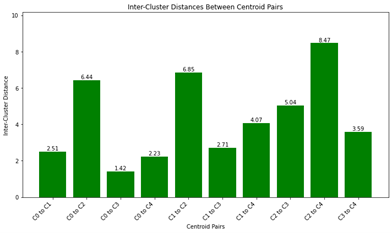
These findings are instrumental in illustrating how clusters differentiate in terms of critical performance metrics, such as First Year AB and Career AB. Clusters with greater inter-cluster distances, such as Clusters 2 and 4, offer an opportunity for cross-cluster learning, as the contrast in their developmental models may inspire innovative approaches. Programs within overlapping clusters, such as Clusters 0 and 3, could refine their strategies by identifying and emulating the strengths of high-performing peers in their shared space. These actionable insights not only inform individual program development but also highlight the broader systemic shifts required to optimize talent pipelines. The clustering analysis, supported by the “Maximum Intra-Cluster Distances for Each Cluster” and “Inter-Cluster Distances Between Centroid Pairs” graphs, serves as a foundational tool for evaluating pre-NHL programs and guiding strategic improvements.
Regression Analysis
The regression analysis aims to identify the factors that significantly influence career success among pre-NHL hockey players, providing a data-driven foundation for understanding how early development correlates with long-term performance. The “Actual vs. Predicted Mean Career AB” graph illustrates the model’s predictive power, with a strong alignment between actual and predicted Career AB values along the red “perfect fit” line. The clustering of points around this line underscores the model’s accuracy in capturing the underlying relationships between variables. This analysis leverages metrics such as Mean First Year AB, Total Players Produced, and Full AB Players to understand how these factors contribute to long-term success. Among these, Mean First Year AB emerged as the most significant predictor, highlighting the importance of early performance as an indicator of a player’s career trajectory. The consistency of these results emphasizes the value of robust junior hockey programs in developing players who can transition seamlessly into professional play.
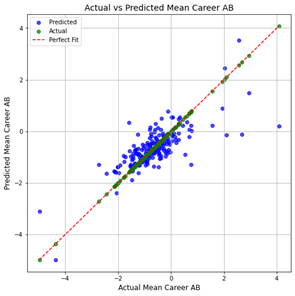
This regression analysis serves a dual purpose: it validates the relevance of the metrics included in the TAB and AB frameworks and offers actionable insights for hockey organizations aiming to optimize their development strategies. For instance, the strong correlation between early performance (Mean First Year AB) and career success highlights the need for organizations to invest in coaching, training, and support systems that maximize player readiness during their initial years. At the same time, the slight negative correlation with Total Players Produced suggests that focusing too heavily on volume can dilute the quality of development, underscoring the importance of a balanced approach. By analyzing the “Actual vs. Predicted Mean Career AB” graph, teams can identify areas for refinement in their talent evaluation and development processes. This analysis also provides a roadmap for leveraging analytics in scouting and drafting, ensuring that metrics like TAB scores and Career AB outcomes are integrated into decision-making frameworks. As the hockey landscape evolves, regression analyses like this one will remain critical in bridging the gap between quantitative insights and actionable strategies.
Organization Ranking
The organization rankings provide a comprehensive evaluation of the developmental impact of pre-NHL programs, shedding light on their relative effectiveness in producing elite hockey talent. At the top of the rankings, the London Knights (0.7757) solidify their position as a model organization, combining consistent player output with high-performance outcomes. Similarly, powerhouse college programs such as the University of Michigan (0.7436) and University of North Dakota (0.6951) underscore the success of collegiate hockey in fostering professional-ready players through strong academic-athletic balance and advanced developmental resources. Other prominent organizations, like Boston College (0.6918) and Portland Winterhawks (0.6604), illustrate the value of strategic coaching and robust support systems in achieving sustained success. These high-ranking teams reflect the benchmarks for excellence, combining metrics such as Total Players Produced, Mean First Year AB, and Career AB to maintain their competitive edge.
Mid-tier programs like the Erie Otters (0.5563) and Kelowna Rockets (0.5697) showcase balanced player production with consistent developmental success. These organizations excel in transitioning players to professional environments but lack the overall dominance of top-tier teams. Conversely, emerging programs such as Skelleftea AIK (0.4823) and Vasteras IK (0.4791) reflect the impact of targeted regional approaches, especially in Scandinavia, where long-term investments in youth systems are paying dividends. Lower-ranked organizations, such as Merrimack College (0.2476) and Zvolen HKm (0.0306), struggle to match the developmental outcomes of their counterparts, emphasizing the need for infrastructure and systemic improvements. The rankings highlight not only the excellence of established hockey powerhouses but also the potential of underperforming programs to enhance their developmental strategies through the adoption of best practices seen in elite organizations. The integration of metrics like TAB scores into scouting and player development processes could be pivotal for bridging performance gaps. Below is the entire organization ranking list and each program’s composite score.
|
Rank |
Team |
Composite Score |
|
1 |
London Knights |
0.775745724 |
|
2 |
U. of Michigan |
0.743575503 |
|
3 |
U. of North Dakota |
0.695086057 |
|
4 |
Boston College |
0.691788407 |
|
5 |
U. of Minneosta |
0.661957466 |
|
6 |
Portland Winterhawks |
0.660385722 |
|
7 |
U. of Wisconsin |
0.651965185 |
|
8 |
Boston University |
0.609052615 |
|
9 |
Kitchener Rangers |
0.595651558 |
|
10 |
Windsor Spitfires |
0.573167377 |
|
11 |
Kelowna Rockets |
0.569741893 |
|
12 |
U. of Minnesota-Deluth |
0.56114049 |
|
13 |
Erie Otters |
0.556384215 |
|
14 |
Soo Greyhounds |
0.555220201 |
|
15 |
Ottawa 67s |
0.533455321 |
|
16 |
Guelph Storm |
0.531224919 |
|
17 |
Oshawa Generals |
0.530026013 |
|
18 |
Brandon Wheat Kings |
0.520423066 |
|
19 |
U. of Denver |
0.519099295 |
|
20 |
Yekaterinburg Automobilist |
0.518499924 |
|
21 |
St. Cloud State |
0.511770682 |
|
22 |
Barrie Colts |
0.509728231 |
|
23 |
Owen Sound Attack |
0.509019208 |
|
24 |
Peterborough Petes |
0.507914221 |
|
25 |
Notre Dame |
0.506584735 |
|
26 |
Calgary Hitmen |
0.504193176 |
|
27 |
Moose Jaw Warriors |
0.496405007 |
|
28 |
Flint Firebirds |
0.490102857 |
|
29 |
Sudbury Wolves |
0.489838148 |
|
30 |
Swift Current Broncos |
0.48523022 |
|
31 |
Medicine Hat Tigers |
0.484967512 |
|
32 |
Michigan State University |
0.482350609 |
|
33 |
Skelleftea AIK |
0.482287506 |
|
34 |
Red Deer Rebels |
0.481972621 |
|
35 |
Sarnia Sting |
0.48172216 |
|
36 |
Djugardens IF Stockholm |
0.480970609 |
|
37 |
Vasteras IK |
0.47913886 |
|
38 |
Moncton Wildcats |
0.478258511 |
|
39 |
Vancouver Giants |
0.474662357 |
|
40 |
Quinnipiac University |
0.471833203 |
|
41 |
Hamilton Bulldogs |
0.470813786 |
|
42 |
Halifax Mooseheads |
0.467131836 |
|
43 |
Mississauga Steelheads |
0.463913976 |
|
44 |
Kamloops Blazers |
0.461154108 |
|
45 |
Arizona State University |
0.460976358 |
|
46 |
U.S. National Development |
0.460665651 |
|
47 |
Umass-Amherst |
0.456940431 |
|
48 |
Gatineau Olympiques |
0.454637422 |
|
49 |
Frolunda HC |
0.454373206 |
|
50 |
Harvard University |
0.453078341 |
|
51 |
Winnipeg Ice |
0.450155915 |
|
52 |
HV71 Jonkoping |
0.438476472 |
|
53 |
Rouyn-Noranda Huskies |
0.437762698 |
|
54 |
Providence College |
0.435184857 |
|
55 |
Jokerit Helsinki |
0.431656528 |
|
56 |
Miami University (Ohio) |
0.430907679 |
|
57 |
North Bay Battalion |
0.430722137 |
|
58 |
Karpat |
0.427356737 |
|
59 |
Rimouski Oceanic |
0.426946986 |
|
60 |
Ohio State University |
0.426738832 |
|
61 |
CSKA Moscow |
0.424309186 |
|
62 |
Niagara IceDogs |
0.420468542 |
|
63 |
St. Petersburg SKA |
0.419011458 |
|
64 |
MODO Hockey Ornskoldsvik |
0.418977256 |
|
65 |
Vaxjo HC |
0.418954788 |
|
66 |
Moscow Dynamo |
0.418755919 |
|
67 |
Spokane Chiefs |
0.417562975 |
|
68 |
Cornell University |
0.415851806 |
|
69 |
Farjestads BK Karlstad |
0.415793819 |
|
70 |
Sodertailje SK |
0.415622343 |
|
71 |
Regina Pats |
0.415287104 |
|
72 |
U. of New Hampshire |
0.414482204 |
|
73 |
Saginaw Spirit |
0.413675739 |
|
74 |
Quebec Remparts |
0.4120579 |
|
75 |
Sioux City Musketeers |
0.410462364 |
|
76 |
Vastra Frolunda HC |
0.410291612 |
|
77 |
U. of Vermont |
0.410052284 |
|
78 |
Kingston Frontenacs |
0.408642551 |
|
79 |
Tappara Tampere |
0.40848165 |
|
80 |
Linkopings HC |
0.408377746 |
|
81 |
Tri-City Americans |
0.406229499 |
|
82 |
Northeastern University |
0.405231951 |
|
83 |
HIFK Helsinki |
0.405226616 |
|
84 |
Shawinigan Cataractes |
0.404964794 |
|
85 |
Seattle Thunderbirds |
0.403468103 |
|
86 |
Rogle BK Angelhokm |
0.402684125 |
|
87 |
U. of Nebraska-Omaha |
0.402309832 |
|
88 |
Prince Albert Raiders |
0.399817098 |
|
89 |
Brynas IF Gavle |
0.398577043 |
|
90 |
Drummondville Voltigeurs |
0.396286439 |
|
91 |
Chicago Steel |
0.396196714 |
|
92 |
Western Michigan University |
0.395597879 |
|
93 |
U. of Maine |
0.395284317 |
|
94 |
TPS Turku |
0.394046084 |
|
95 |
Chomutov Pirati |
0.387376641 |
|
96 |
Pardubice HC |
0.386751391 |
|
97 |
Clarkson University |
0.38498646 |
|
98 |
Magnitogorsk Metallurg |
0.384907647 |
|
99 |
Minnesota State U- Mankato |
0.384733042 |
|
100 |
Val d’Or Foreurs |
0.383664731 |
|
101 |
Lethbridge Hurricanes |
0.382821131 |
|
102 |
KalPa Kuopio |
0.373015844 |
|
103 |
Saint John Sea Dogs |
0.372059674 |
|
104 |
Cape Brenton Eagles |
0.371309484 |
|
105 |
Trencin Dukla |
0.371229397 |
|
106 |
Dartmouth College |
0.371054288 |
|
107 |
Yale Univeristy |
0.368978035 |
|
108 |
Bemidji State University |
0.368579431 |
|
109 |
Everett Silvertips |
0.367505871 |
|
110 |
Colorado College |
0.367335519 |
|
111 |
Chicoutimi Sagueneens |
0.367099552 |
|
112 |
Michigan Tech |
0.366579258 |
|
113 |
Blainville-Boisbriand Armada |
0.36279676 |
|
114 |
HPK Hameenlinna |
0.362686591 |
|
115 |
Prince George Cougars |
0.362069057 |
|
116 |
U. of Alaska-Fairbanks |
0.358622035 |
|
117 |
Victoriaville Tigers |
0.358579116 |
|
118 |
Brno Kometa |
0.357397879 |
|
119 |
Saskatoon Blades |
0.35708665 |
|
120 |
Timra IK |
0.356667639 |
|
121 |
Ferris State University |
0.3562984 |
|
122 |
Acadie-Bathurst Titan |
0.355941766 |
|
123 |
R.P.I |
0.353420205 |
|
124 |
Assat Pori |
0.35154505 |
|
125 |
Sodertalje |
0.349817855 |
|
126 |
Chelyabinsk Traktor |
0.345727784 |
|
127 |
Kladno |
0.339497958 |
|
128 |
Lulea HF |
0.335105197 |
|
129 |
Sparta Praha |
0.334369556 |
|
130 |
Ilves Tampere |
0.333234612 |
|
131 |
U. of Alaska-Anchorage |
0.332971945 |
|
132 |
Victoria Royals |
0.332171877 |
|
133 |
Mora IK |
0.332159244 |
|
134 |
Lake Superior State University |
0.332081856 |
|
135 |
Zug EV |
0.328114437 |
|
136 |
Des Moines Buccaneers |
0.327738969 |
|
137 |
Sherbrooke Phoenix |
0.325699424 |
|
138 |
Brown University |
0.32534247 |
|
139 |
Prince Edward Island Rocket |
0.32379286 |
|
140 |
Colgate University |
0.320767132 |
|
141 |
AIK |
0.32007687 |
|
142 |
Union College |
0.319551124 |
|
143 |
Cherepovets Severstal |
0.318309813 |
|
144 |
Princeton University |
0.31767189 |
|
145 |
Tolyatti Lada |
0.317434533 |
|
146 |
Krylja Sovetov |
0.317432124 |
|
147 |
Umass-Lowell |
0.316774104 |
|
148 |
Malmo IF |
0.312504522 |
|
149 |
Plzen |
0.310074618 |
|
150 |
Leksands IF |
0.309313886 |
|
151 |
Slavia Praha HC |
0.308427202 |
|
152 |
Pembroke Lumber Kings |
0.306172851 |
|
153 |
Ceske Budejovice HC |
0.30392682 |
|
154 |
Yaroslavl Lokomotiv |
0.302824368 |
|
155 |
Edmonton Oil Kings |
0.29957317 |
|
156 |
Omsk Avangard |
0.298830607 |
|
157 |
Mannheim Eagles |
0.295254051 |
|
158 |
Bratislava Slovan |
0.295125336 |
|
159 |
Baie-Comeau Drakkar |
0.294445147 |
|
160 |
Bowling Green State University |
0.286409718 |
|
161 |
St. Lawrence University |
0.283228921 |
|
162 |
Northern Michigan University |
0.280281871 |
|
163 |
Green Bay Gamblers |
0.279619993 |
|
164 |
Vitkovice HC |
0.279272031 |
|
165 |
DEG Metro Stars |
0.273505322 |
|
166 |
Oakville Blades |
0.256520398 |
|
167 |
Zurich SC |
0.254887104 |
|
168 |
Merrimack College |
0.247617708 |
|
169 |
Litvinov |
0.242998142 |
|
170 |
Kazan Ak-Bars |
0.238418965 |
|
171 |
Ufa Salavat Yulayev |
0.223956121 |
|
172 |
Orebo HK |
0.213610571 |
|
173 |
Minsk Dynamo |
0.213143981 |
|
174 |
Zlin ZPS AC |
0.21228551 |
|
175 |
Liberec Bili Tygri HC |
0.202433807 |
|
176 |
Nitra MHC |
0.191967314 |
|
177 |
Oskarshamn IK |
0.065037615 |
|
178 |
Zvolen HKm |
0.030555064 |
Conclusion of Junior Hockey Analysis
The junior and pre-NHL hockey landscape is undergoing a significant transformation with the NCAA’s recent decision to allow Canadian Hockey League (CHL) players to maintain their eligibility for NCAA Division I hockey. Previously, participation in major junior leagues such as the Ontario Hockey League (OHL), Western Hockey League (WHL), and Quebec Major Junior Hockey League (QMJHL) disqualified players from NCAA competition due to their classification as professional leagues. However, starting August 1, 2025, this policy change will enable athletes to compete in major junior hockey without sacrificing the opportunity to play collegiate hockey in the United States. This shift is expected to heighten competition among development programs, as players will now have greater flexibility in determining their developmental paths.
This new dynamic aligns closely with our research, which examines the effectiveness of pre-NHL organizations in fostering elite hockey talent. The inclusion of CHL players in NCAA programs introduces additional complexities into our analysis, as players’ developmental trajectories may now include both major junior and collegiate experiences. Furthermore, our clustering and regression analyses must account for potential overlaps in developmental strategies between major junior and NCAA programs. As these systems become more interconnected, our composite scoring and rankings will play a crucial role in assessing how these changes influence the development of NHL-caliber players.
Chapter 8 – AB Score, Goaltender Edition
Goaltending is widely regarded as the backbone of a hockey team, a position that can single-handedly define a season’s success or failure. The pivotal role of goaltenders lies not only in their ability to stop pucks but also in their capacity to influence game dynamics by instilling confidence in their teammates. A strong goaltender has the unique ability to mask systemic weaknesses, allowing teams with less-than-perfect rosters to remain competitive. Conversely, a struggling goaltender can undermine even the most well-constructed teams, as frequent lapses in net often lead to diminished morale and increased pressure on skaters. Recognizing the immense importance of this position, the Goaltending AB metric was developed as a specialized analytic tool to quantify a goaltender’s contribution.
Unlike the skater-specific AB metric, which evaluates mistake minimization and overall impact for forwards and defensemen, the Goaltending AB is designed exclusively for the unique responsibilities of goaltenders. It incorporates key performance indicators such as Save Percentage (Save%), Goals Against Average (GAA), and shutouts—metrics that are intrinsic to a goaltender’s role. In addition to this, a portion of the team’s AB performance is credited to said goaltender based on the number of games he appeared in. By integrating these factors, the Goaltending AB provides a more comprehensive and precise measure of a goaltender’s effectiveness, capturing not only their individual performance but also their ability to positively impact team success. This tailored approach allows for deeper insights into goaltender performance, addressing the distinct challenges and contributions of this position.
This chapter delves into the applications of the Goaltending AB by exploring the historical distribution of scores, which reveals the variability and challenges inherent in the position. It also examines the correlation between Goaltending AB scores and team success, underscoring the critical role goaltenders play in achieving competitive outcomes. The analysis of performance trends over time adds a dynamic perspective, shedding light on how the position has evolved and how systemic factors such as coaching, analytics, and rule changes influence goaltender performance.
Additionally, this chapter leverages clustering analysis to categorize goaltenders into distinct profiles based on their AB scores, Save%, GAA, and shutouts. These clusters—ranging from elite performers to underperformers—offer actionable insights for teams. For example, franchises aiming to build championship-caliber rosters can prioritize elite Cluster 2 goaltenders, while those with tighter budgets may focus on maximizing the value of solid contributors in Cluster 0. This categorization not only guides roster construction but also informs decisions regarding contract negotiations and player development strategies. By identifying strengths and weaknesses within each cluster, teams can better align their strategies with the profiles of goaltenders that fit their organizational goals.
Ultimately, the Goaltending AB metric bridges the gap between individual performance evaluation and team strategy, offering a holistic understanding of one of the game’s most crucial positions. By analyzing historical trends, identifying performance clusters, and examining correlations with team success, this chapter provides a roadmap for teams to optimize their goaltending resources and enhance their overall competitiveness.
Historical Context and Trends
The distribution of Goaltending AB scores, as depicted in the Histogram of Goaltending AB Scores graph below, highlights the inherent variability in goaltender performance. The bell-shaped curve is centered around a mean of -0.13, indicating a slight negative bias that suggests the average goaltender marginally detracts from a team’s ability to minimize mistakes. This could reflect the challenges and complexities of the position, as even small lapses in performance can have outsized effects on outcomes. The standard deviation of 1.92 points to moderate variability among goaltenders, with the majority scoring between -3 and +3. However, outliers exist at both ends of the spectrum, emphasizing the range of talent and contextual factors influencing performance.
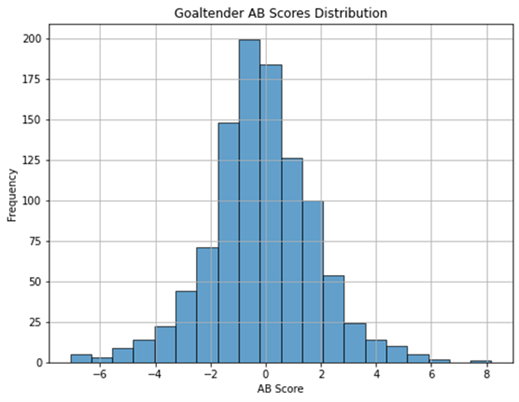
At the upper end of the spectrum, goaltenders with AB scores exceeding +5 represent elite performers who consistently deliver value to their teams. These individuals excel in mistake minimization, maintain exceptional Save% and GAA metrics, and frequently make clutch saves in critical moments. Their contributions often serve as the backbone of team success, elevating their teams’ competitiveness and securing victories, particularly in high-stakes situations. Conversely, goaltenders with AB scores below -5 highlight performance challenges. These goaltenders often struggle with inconsistency, which may stem from individual deficiencies, poor defensive support, or systemic issues within their teams. Understanding these extremes is crucial for evaluating both the individual skill set of a goaltender and the broader team context in which they play.
While this snapshot of goaltender performance provides valuable insights, analyzing trends over time adds a layer of depth to the understanding of the position’s evolution. Median Goaltending AB scores have remained relatively stable, indicating consistent evaluation standards across seasons. However, certain spikes in scores during specific years may reflect league-wide changes, such as rule adjustments, shifts in offensive strategies, or the emergence of exceptional individual performers. For example, advancements in analytics and coaching techniques in recent years may have contributed to a narrowing of the score range, as teams adopt more structured systems and goalies refine their positioning and technique.
Future analyses could delve deeper into these trends by incorporating external variables such as shot quality, defensive systems, and game context. Examining how factors like high-danger shot frequency or team turnover rates correlate with Goaltending AB scores may uncover additional drivers of performance. Furthermore, as the league continues to evolve, tracking the impact of these factors over time could shed light on how goaltenders adapt and how teams can better support them to maximize their contributions.
Goaltending AB as a Predictor of Success
The Goaltending AB score serves as a critical indicator of the relationship between individual goaltender performance and overall team success, with its positive correlation to both team AB scores and team wins revealing key dynamics. The scatterplot of Goaltending AB vs Team AB below demonstrates how strong goaltending complements skaters’ contributions to mistake minimization. Teams with high Goaltending AB scores benefit from more cohesive defensive systems, where reliable netminding reduces the pressure on skaters to cover for potential errors. This allows skaters to play more assertively, maximizing their contributions in both defensive and offensive situations. Conversely, teams with low Goaltending AB scores often experience an imbalance, where poor goaltending forces skaters into overly conservative play, limiting their ability to take risks and impacting overall team AB scores negatively. These findings suggest that strong goaltending doesn’t just prevent mistakes but also enables a more dynamic and effective team-wide strategy.
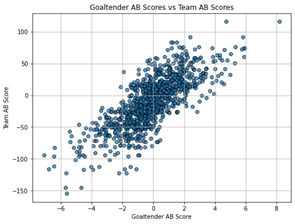
The correlation between goaltender performance and team outcomes is further reinforced in the scatterplot of Goaltending AB vs Team Wins shown below, which highlights the foundational role of goaltending in driving success. Teams with high Goaltending AB scores typically secure more wins, as strong netminding provides consistency and confidence during critical moments, such as overtime games or playoff series. Elite goaltenders in these situations often deliver game-changing performances, making key saves that maintain their team’s momentum or stave off defeat. However, the scatterplot also reveals notable outliers. Some teams with low Goaltending AB scores achieve high win totals, often by relying heavily on exceptional offensive production to outscore opponents despite weak netminding. On the other hand, teams with high Goaltending AB scores but fewer wins frequently struggle with scoring inefficiencies or gaps in other areas, such as special teams or roster depth, which prevent them from converting goaltending success into broader team success.
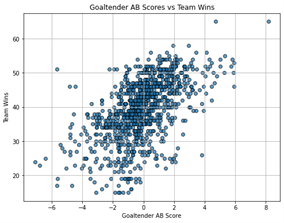
These findings emphasize that while goaltending is a critical factor, it does not operate in isolation. The interplay between goaltenders, skaters, and overall team systems is vital for optimizing performance. Teams aiming for long-term success must focus not only on acquiring strong goaltending but also on constructing rosters that support their goaltenders through effective defensive systems and mistake minimization strategies. By leveraging the Goaltending AB score, teams can identify areas for improvement and better align their strategies to maximize both individual and collective contributions.
Clustering Analysis of Goaltender Performance
The Goaltender Performance Clustering Analysis, as shown in the heatmap, identifies three distinct profiles of goaltenders based on their AB scores, GAA, Save%, and shutouts. This classification provides actionable insights into goaltender effectiveness, offering teams a strategic framework for roster management and decision-making. Each cluster represents a unique category of goaltender, catering to different team needs and priorities.
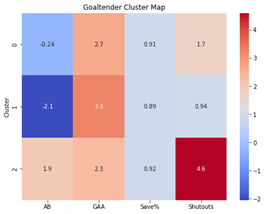
Cluster 2, comprising Elite Performers, highlights goaltenders who are invaluable assets to their teams. These players achieve an average AB score of +1.9, maintain a stellar Save% of 0.92, and deliver an impressive 4.6 shutouts per season. Their low GAA of 2.3 underscores their ability to minimize scoring opportunities, making them the backbone of championship-caliber rosters. Elite goaltenders in this cluster thrive under pressure, consistently delivering high-impact performances during both the regular season and playoffs. Investing in Cluster 2 goaltenders, even at premium salaries, provides teams with the stability and reliability needed to contend for titles. These players often anchor defensively sound teams and offer a foundation around which franchises can build.
Cluster 0 represents Solid Contributors, goaltenders who deliver dependable but unspectacular performances. With an average AB score of -0.24, a Save% of 0.91, and 1.7 shutouts per season, these players excel in structured defensive systems where their workload is manageable. While they may lack the game-changing impact of Cluster 2 goaltenders, their consistency makes them valuable for teams with tight cap situations or strong skater depth. Solid contributors can provide cost-effective solutions for teams looking to allocate resources across multiple areas without compromising stability in net.
Finally, Cluster 1 identifies Underperformers, goaltenders who struggle to minimize mistakes. These players exhibit an average AB score of -2.1, a below-average Save% of 0.89, and only 0.94 shutouts per season. Their higher GAA of 3.3 reflects challenges in limiting scoring chances, often due to poor defensive support or individual inconsistencies. Teams employing Cluster 1 goaltenders may need to reassess their defensive strategies, provide targeted coaching, or invest in development to unlock their potential. Identifying these players early allows franchises to decide whether to improve their support systems or pursue alternative goaltending options.
This clustering analysis provides valuable insights into team strategy. Teams aiming for elite performance should prioritize acquiring or retaining Cluster 2 goaltenders, while those with tighter budgets or strong defensive systems may focus on maximizing the contributions of Cluster 0 players. Conversely, understanding the weaknesses of Cluster 1 goaltenders can guide teams in developing improvement plans or making more informed roster decisions. By aligning team priorities with these profiles, franchises can better position themselves for success.
Goaltender Economic Value- Salary vs AB Score Analysis

The Salary vs AB Score scatterplot illustrates the complex relationship between goaltender performance and salary allocation, revealing inefficiencies in how NHL teams distribute their financial resources. While an ideal scenario would see higher AB scores consistently correlated with higher salaries, the scatterplot shows a scattered distribution, highlighting a lack of uniformity in compensation practices. Three key patterns emerge from the data: elite goaltenders who are appropriately compensated, underpaid high performers, and overpaid low performers.
In the top-right quadrant of the scatterplot, elite goaltenders deliver exceptional performance and are appropriately compensated for their contributions. These players, with AB scores above +4 and salaries in the $7–$10 million range, serve as the foundation of their teams. They consistently minimize mistakes, post elite Save% and GAA numbers, and are often crucial to their teams’ playoff success. These contracts represent sound investments, as these goaltenders provide stability and high-impact performances that justify their compensation. However, the limited number of players in this category underscores the rarity of elite goaltending talent across the league.
The top-left quadrant highlights underpaid high performers—goaltenders who achieve high AB scores while earning below-market salaries. This group typically includes younger goaltenders on entry-level or bridge contracts who outperform expectations early in their careers, as well as veterans who sign undervalued deals due to previous inconsistencies. These players offer significant value to their teams, as their affordable contracts allow resources to be reallocated to other roster needs. However, these goaltenders often renegotiate for higher salaries once their contracts expire, potentially shifting them into other compensation categories depending on their sustained performance.
The bottom-right quadrant presents a critical inefficiency: overpaid low performers. These goaltenders earn substantial salaries despite delivering below-average AB scores, often due to overestimations during free agency or performance declines over time. For instance, aging goaltenders or those recovering from injuries may fail to maintain the level of play expected when they signed their contracts. Players in this category, with salaries exceeding $6 million but AB scores below -2, can become substantial liabilities for their teams, reducing cap flexibility and forcing difficult decisions such as buyouts or trading assets to offload their contracts.
This analysis highlights the importance of aligning salary allocation with performance metrics like the Goaltending AB score. Teams can optimize their cap space by prioritizing goaltenders who consistently deliver value relative to their contracts. Additionally, identifying underpaid high performers early can allow teams to maximize their contributions while negotiating contracts that balance fair compensation with sustained performance expectations. Conversely, avoiding overcommitting to low performers can prevent long-term cap complications, ensuring that resources are used effectively to build competitive rosters.
Team-Level Contributions
Analyzing team-level averages of Goaltending AB scores provides valuable insights into which franchises consistently produce strong goaltending performances, and which teams face persistent challenges. The bar chart of average Goaltending AB scores by team illustrates stark differences in performance across the NHL, highlighting the strategic importance of investing in elite goaltenders and building strong defensive systems.
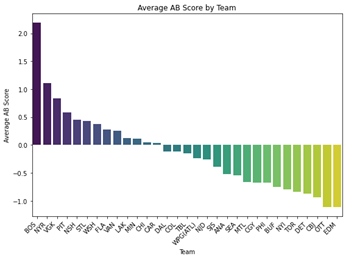
At the top of the chart, teams like the Boston Bruins (BOS), New York Rangers (NYR), and Vegas Golden Knights (VGK) boast consistently high average AB scores, reflecting their ability to foster environments where goaltenders thrive. These teams often benefit from robust defensive systems that limit high danger scoring opportunities, elite coaching, and a focus on mistake minimization throughout the roster. For example, the Bruins’ long-standing success can be attributed to their disciplined defensive play and their investment in high-performing goalies like Tim Thomas and Tuukka Rask during their tenures. Similarly, the Rangers’ resurgence the last several years has been fueled by outstanding performances from Igor Shesterkin, whose Save% and clutch saves in critical moments have translated into consistent wins.
Conversely, teams at the bottom of the chart, such as the Edmonton Oilers (EDM) and Columbus Blue Jackets (CBJ), reveal systemic challenges that hinder their ability to support goaltenders. The Oilers, despite boasting elite offensive talent, have historically struggled to address their defensive vulnerabilities, leaving goaltenders exposed to high danger scoring chances. This trend is reflected in their low average AB scores, as even skilled netminders have difficulty succeeding in such environments. Similarly, the Blue Jackets have faced challenges in maintaining defensive consistency, which has often left their goaltenders to shoulder an unsustainable workload.
Middle-tier teams, such as the Winnipeg Jets (WPG) and Calgary Flames (CGY), highlight the variability of goaltending performance. These teams have produced solid goaltending seasons but lack the consistency seen in top-tier franchises. For example, the Jets have benefited from exceptional performances by Connor Hellebuyck in recent years, yet fluctuations in their defensive system have prevented them from consistently competing at the highest level.
This team-level analysis underscores the importance of roster construction and systemic support for goaltenders. Top-performing teams often combine elite talent in net with strong defensive systems and mistake-minimizing skaters, creating an environment that allows goaltenders to excel. In contrast, underperforming teams reveal the impact of inadequate defensive support or inconsistent goaltending development pipelines. Identifying and addressing these trends can enable struggling teams to prioritize improvements in their scouting, development, and defensive strategies.
Additionally, this analysis highlights the interconnected nature of team success and goaltender performance. While elite goaltending can mask certain weaknesses within a roster, sustainable success often requires a holistic approach to roster construction. Teams aiming to improve their Goaltending AB scores should focus not only on acquiring skilled netminders but also on creating systems that limit mistakes and high danger scoring opportunities. By doing so, franchises can maximize the contributions of their goaltenders and position themselves for long-term success.
Challenges and Limitations
The Goaltending AB metric provides valuable insights into goaltender performance but, like any analytic tool, it is subject to limitations that require careful consideration. One of the most significant limitations is its reliance on context-dependent factors. A goaltender playing behind a defensively structured team, for instance, may post higher AB scores due to reduced exposure to high danger scoring chances. Conversely, an equally skilled goaltender on a weaker defensive team may face a higher volume of difficult shots, which could negatively impact their AB score even if their overall skill and execution are comparable.
Another limitation lies in the variability of shot quality and game situations. Not all saves carry the same weight; a routine save on a low-danger shot from the perimeter does not equate to a crucial stop on a breakaway or a high-danger chance in the slot. By treating all saves and goals equally, the Goaltending AB metric can occasionally obscure the nuanced contributions of goaltenders who excel in challenging scenarios. Moreover, certain game contexts—such as penalty kills, overtime periods, or playoff games—place significantly different demands on goaltenders, yet these factors are not currently differentiated in the metric.
To address these challenges, future iterations of the Goaltending AB metric could incorporate more granular data to better capture the context of a goaltender’s performance. One promising direction is the integration of shot quality metrics, such as expected goals against (xGA). By accounting for the probability of a goal being scored based on the location and type of shot, xGA can provide a more accurate measure of a goaltender’s impact. For example, a goalie who consistently outperforms their xGA demonstrates a heightened ability to make difficult saves, which is a critical dimension of elite performance.
Additionally, high danger save percentage could be included to isolate a goaltender’s effectiveness in preventing goals from the most dangerous places on the ice. This metric not only reflects raw skill but also captures a goaltender’s capacity to perform under pressure, particularly in tight or high-stakes games. Weighing these saves more heavily in the AB score would provide a clearer picture of a goalie’s value in key moments.
Lastly, integrating team defensive metrics into the evaluation could further contextualize AB scores. By accounting for factors such as defensive zone turnovers, blocked shots, and time spent in the defensive zone, the metric could adjust for the quality of support a goaltender receives. This would ensure that goaltenders playing in difficult environments are not unfairly penalized.
While the Goaltending AB metric has proven to be a valuable tool for evaluating goaltender performance, acknowledging its current limitations is essential for its continued evolution. By incorporating advanced metrics like xGA, high danger save percentage, and contextual game data, the Goaltending AB score could provide an even more nuanced and comprehensive understanding of a goaltender’s impact. These refinements would not only enhance the accuracy of the metric but also empower teams to make more informed decisions about their goaltending strategies and overall roster construction.
Conclusion of Goaltending AB
The Goaltending AB metric provides a powerful framework for evaluating the unique contributions of goaltenders to their teams. By analyzing salary trends, team-level averages, and individual outliers, this chapter has demonstrated the metric’s ability to uncover inefficiencies, contextualize performance, and guide decision-making. High Goaltending AB scores are not only a reflection of a goaltender’s individual talent but also the effectiveness of the team environment around them. The analysis underscores that team success and goaltender performance are deeply interconnected, influenced by factors such as defensive systems and overall roster construction.
Teams can leverage Goaltending AB scores to optimize their roster strategies, ensuring that resources are allocated to players who consistently deliver high-impact performances. Importantly, the Goaltending AB metric highlights that goaltending success does not occur in isolation. Surrounding goaltenders with players who minimize mistakes, both defensively and in transition, creates an environment where goalies can thrive. For example, strong defensive pairings and disciplined forwards who excel at backchecking not only limit high-danger scoring chances but also reduce the overall burden on goaltenders, leading to higher AB scores.
Constructing teams with mistake minimization in mind allows the entire roster to function as a cohesive unit, naturally improving the goaltender’s ability to perform. In essence, when teams prioritize skaters with high AB scores across their lineup, the goaltending AB often falls into place as a byproduct of a well-constructed team. This holistic approach to roster management enables franchises to maximize their competitive advantage.
Furthermore, addressing inefficiencies in salary allocation and focusing on clusters of elite performers ensures that resources are invested wisely. Continued refinements to the Goaltending AB metric—such as incorporating shot quality or context-sensitive metrics—promise to enhance its utility even further, enabling teams to make more informed decisions about their goaltenders and overall roster construction in the future.
Chapter 9 – Advanced Bracton Coaching Evaluation Metric
One of the fundamental challenges that the Advanced Bracton (AB) metric has faced over the years is its inability to accurately predict how a player would perform when transitioning to a new coaching staff or system. This limitation often resulted in significant discrepancies in player performance. For instance, players who consistently posted positive AB scores under one coach could suddenly become negative performers after moving to a different team, while others with historically negative scores showed marked improvement in a new environment. These patterns suggest that coaching and system dynamics play an outsized role in shaping player success. Recognizing this critical gap, the development of the Coaching AB Score became a cornerstone of efforts to expand the AB metric family, introducing a layer of analysis dedicated entirely to understanding the role of coaching in player development and performance.
This chapter provides a comprehensive evaluation of coaching effectiveness, leveraging an unprecedented dataset that spans every head coach and interim head coach in the NHL from 2007 to the present. A total of 113 coaches were included in this study, each evaluated not only by their team’s performance but also by their ability to elevate individual player outcomes. The full list is included in the graphic below.
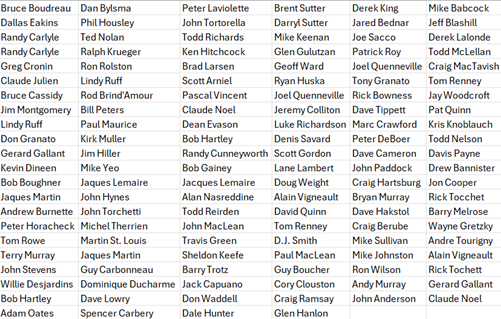
The dataset includes over 12,000 unique player entries, enabling an in-depth examination of how coaching decisions and systems influenced AB performance at both individual and team levels. The inclusion of interim coaches provides additional granularity, ensuring that even partial-season impacts are accounted for when evaluating coaching influence.
The methodology for the Coaching AB Score is rooted in a player-centric approach, analyzing shifts in AB performance under various coaching tenures. By tracking how players’ scores changed when they moved to different teams or when their teams changed coaches, this metric captures the nuanced role of coaching in shaping player outcomes. Beyond individual AB performance, the study also introduces novel statistics such as Advantage Percentage, Return Improvement Percentage, and Average Improvement Number to provide a more holistic evaluation of coaching impact. These tools allow for the analysis of broader trends, such as whether players are more likely to improve under new coaches or how often returning players demonstrate sustained growth.
While the Coaching AB Score is primarily designed for NHL use, its principles and methodologies are universally applicable across professional and developmental hockey leagues. The insights gained from this metric extend beyond evaluating individual coaches to informing organizational decision-making. For example, general managers can use these findings to identify coaches who excel at developing younger players or transitioning struggling teams into playoff contenders. Moreover, by understanding how coaching stability or turnover affects long-term player development, organizations can adopt more strategic hiring practices. In this way, the Coaching AB Score not only addresses long-standing gaps in the AB metric but also establishes a robust framework for evaluating coaching effectiveness in hockey at every level. This chapter will detail the formula’s methodology, explore key findings, and discuss its far-reaching implications for both professional and developmental hockey systems worldwide.
Methodology & Calculation of the Coaching AB Score
The Coaching AB Score is calculated using a comprehensive formula that evaluates various aspects of a coach’s effectiveness, including player development, sustained performance, and systematic impact. This formula incorporates factors such as Return Improvement Percentage (RIMP %), Advantage Percentage, Improvement per Player, Average Draft Round, Average Player Age, Average Player AB, Total AB, and the Sum of Ranges. Each of these components is weighted to reflect its relative importance: Return Improvement Percentage (20%), Advantage Percentage (20%), Improvement per Player (30%), Average Draft Round (10%), Average Player Age (2%), Average Player AB (20%), Total AB (20%), Sum of Ranges (30%), and Years Coaching (2%). These weights do not sum to 100%, as the purpose is to emphasize the relative importance of specific metrics rather than enforce a normalized distribution. This approach allows critical factors like Improvement per Player and the Sum of Ranges to carry more influence, while context-based metrics such as Years Coaching or Average Player Age play a more supportive role.
Return Improvement Percentage (20%) measures the percentage of players who improved their AB scores after returning to a coach they had previously played under. This metric identifies coaches who consistently bring out the best in their returning players, showcasing their ability to foster sustained development. Similarly, Advantage Percentage (20%) quantifies the percentage of players who showed improvement when transitioning to a new coach. This factor highlights which coaches can elevate player performance immediately upon hiring, offering a glimpse into their adaptability and developmental capabilities. Improvement per Player (30%), carrying the highest weight in the formula, assesses the average improvement of individual players under a coach. Negative values are penalized with a 1.5x multiplier to ensure that coaches who consistently oversee regression are not rewarded.
Other components of the formula provide additional context. Average Draft Round (10%) evaluates the caliber of players a coach typically works with, rewarding those who can develop under-the-radar talent from later draft rounds. Average Player Age (2%) reflects whether a coach tends to develop younger players or manage veteran rosters, ensuring that these dynamics are considered without overwhelming the evaluation. Average Player AB (20%) and Total AB (20%) measure the overall impact a coach has on their roster’s cumulative performance, with penalties applied for negative totals to discourage strategies that yield net-negative player impact. Lastly, the Sum of Ranges (30%) is derived from the Junior Hockey study and assigns point values to AB scores within specific ranges, ensuring a fair evaluation of coaching performance across varying tiers.
By assigning these weights strategically, the Coaching AB Score prioritizes the most critical aspects of coaching performance, such as player improvement and long-term development, while still accounting for contextual factors. This ensures a balanced and data-driven approach to evaluating coaching effectiveness across different scenarios and coaching styles.
Data Insights & Visualization Analysis
One of the primary objectives of this study is to visually present coaching effectiveness through multiple analytical perspectives. Each of the following subsections highlights a specific insight, supported by data visualizations that illustrate key trends and findings.
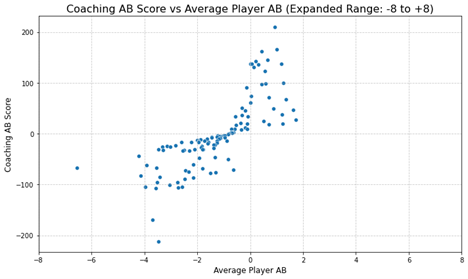
The scatterplot titled Coaching AB Score vs. Average Player AB (Expanded Range: -8 to +8) shown above provides critical insights into the relationship between coaching effectiveness and player performance. The observed strong positive correlation indicates that coaches with higher Coaching AB Scores tend to have players with higher Average Player AB, reinforcing the idea that strong coaching can significantly influence individual player development. This suggests that coaching is not just a peripheral factor but a central determinant in shaping player success over multiple seasons. Coaches who consistently score well in the Coaching AB Score metric appear to cultivate environments where players develop at an accelerated rate, maximizing their potential over time.
However, within this pattern, a number of notable outliers emerge. Some coaches achieve relatively high Coaching AB Scores despite overseeing rosters where players have lower-than-expected AB values. This could indicate that these coaches are improving players beyond what their initial skill level or previous performance suggests, meaning their coaching impact is more pronounced than raw player AB scores would imply. These cases may be reflective of coaches who thrive in developing underappreciated or lower-drafted players, turning them into key contributors despite their statistical starting point. This would align with findings from other sections of this study, which indicate that some coaches specialize in maximizing player potential regardless of initial expectations.
Conversely, another set of outliers represents coaches with strong player AB values but comparatively low Coaching AB Scores. This suggests that while their players are performing well, the coaching impact itself may be minimal or even negative. This could be the result of factors outside the coach’s control, such as an already talented roster, strong front-office decision-making, or favorable team situations that naturally elevate player performance. In these cases, the Coaching AB Score serves as a more precise indicator of coaching impact, ensuring that the credit for player performance is accurately attributed rather than being solely reliant on raw AB values.
Another important insight from this scatterplot is the varying levels of consistency among different coaches in terms of player development. While many of the high Coaching AB Score coaches also display consistently strong Average Player AB values, others show a wider distribution, indicating volatility in their impact from season to season. This suggests that some coaches may have a more systematic approach to development, ensuring that their players improve at a relatively uniform rate, while others may rely more on specific players excelling under their guidance. The presence of extreme negative Coaching AB Scores further underscores the importance of proper coaching evaluation, as some coaches appear to have an actively detrimental effect on player progression. These cases could be the result of poor tactical implementation, ineffective player utilization, or an inability to adapt strategies to fit their roster’s strengths. Additionally, the graph reveals that coaches with mid-range Coaching AB Scores tend to have a more dispersed spread in Average Player AB values, potentially indicating that their coaching styles produce inconsistent results. This could be due to an inability to tailor player development strategies to individual athletes, leading to mixed outcomes across different seasons. By analyzing these patterns, teams can not only identify the most effective coaches but also determine which ones may need to refine their approach to create more sustainable, long-term player development success.
Coaching AB Score vs. Years Coaching
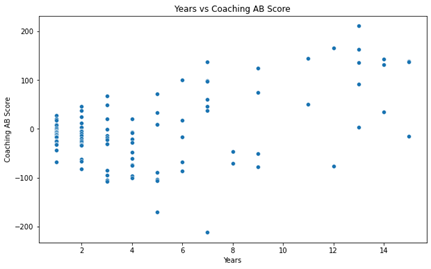
The “Years vs. Coaching AB Score” scatterplot shown above offers an in-depth examination of the relationship between coaching tenure and effectiveness, revealing that longevity does not always equate to superior coaching performance. While some long-tenured coaches maintain strong Coaching AB Scores, others show clear signs of stagnation or regression over time. This trend suggests that a lengthy coaching career does not inherently guarantee continued success, as factors such as evolving league dynamics, strategic adaptability, and player development philosophies play significant roles in sustaining effectiveness. Some long-standing coaches appear to rely on outdated systems that fail to maximize player potential, leading to declining AB Scores despite their extended presence behind the bench.
On the other end of the spectrum, several newer coaches exhibit exceptionally high Coaching AB Scores, reinforcing the idea that fresh perspectives and innovative coaching strategies can yield immediate and substantial results. These findings suggest that modern coaching approaches—particularly those emphasizing analytics, player-specific development strategies, and adaptable game plans—may offer distinct advantages over traditional coaching philosophies that have remained static over time. This also highlights the importance of a team’s willingness to embrace change, as organizations that remain hesitant to integrate modern coaching principles may struggle to keep pace with evolving player needs and competitive landscapes.
Another critical takeaway from this analysis is the identification of long-tenured coaches with weak Coaching AB Scores. These cases offer a window into potential inefficiencies in team hiring and retention practices, as organizations that continually employ underperforming coaches may be inadvertently sacrificing both player development and overall team success. The persistence of some of these underwhelming coaching tenures suggests that hiring decisions in professional hockey are not always purely merit based. Instead, factors such as prior relationships with front-office personnel, past achievements, or perceived stability may play a role in keeping ineffective coaches employed, even when their impact on player progression is demonstrably negative.
The data from this scatterplot reinforces the need for teams to re-evaluate the criteria they use to assess coaching effectiveness. Simply relying on tenure as a measure of success can lead to stagnation, as organizations may fail to recognize when a coach’s impact has plateaued or begun to decline. The presence of high-performing newer coaches suggests that teams willing to take risks on fresh coaching hires may see rapid improvements, particularly if they prioritize candidates with proven track records in player development and analytical adaptability. These findings have significant implications beyond the NHL, as professional leagues worldwide can apply similar methodologies to ensure they are maximizing coaching impact rather than defaulting to tenure as an indicator of success. By integrating Coaching AB Score data into hiring and retention strategies, teams can make more informed decisions, ensuring that their coaching staff actively contributes to both short-term performance and long-term player growth.
Another crucial insight from this analysis is the potential disparity between coaching longevity and organizational patience. Some teams may be too quick to dismiss a coach before they have had a chance to fully implement their system, while others may hold on to underperforming coaches for too long out of fear of instability. Striking the right balance between giving a coach time to develop their players and recognizing when change is necessary is critical for sustained success. Additionally, the presence of newer coaches with high Coaching AB Scores suggests that organizations placing emphasis on data-driven decision-making and adaptability are reaping the benefits of modern coaching methodologies. This underscores the growing importance of analytical tools like the Coaching AB Score in evaluating coaching effectiveness beyond traditional metrics. Ultimately, teams that align their hiring decisions with empirical performance data rather than outdated notions of tenure and experience will be better positioned to achieve long-term success.
Another important observation from this scatterplot is the clustering of coaching AB Scores within certain experience ranges. Coaches with fewer than five years of tenure show a wide dispersion in Coaching AB Scores, suggesting that early coaching careers can be highly volatile. Some first-time coaches quickly establish themselves as effective developers of talent, while others struggle to make a lasting impact. This variability highlights the risk-reward nature of hiring inexperienced coaches, where teams may uncover hidden coaching talent but also face the possibility of making a misstep that sets back player development.
Additionally, the data suggests that mid-tenured coaches (around six to ten years) tend to have more stable Coaching AB Scores, with fewer extreme outliers on both the high and low ends. This could indicate that coaches who survive in their roles for this length of time are generally competent but may not necessarily be transformative figures in player development. Teams evaluating coaching hires should recognize that while longevity can suggest competency, it does not always indicate elite coaching ability.
Finally, a significant trend emerges among the longest-tenured coaches—those with over ten years of experience. While a handful of these coaches maintain high Coaching AB Scores, others see noticeable declines, reinforcing the notion that sustained success requires continuous adaptation. Some of the lowest Coaching AB Scores belong to long-tenured coaches who may be struggling to evolve with the modern game. This further underscores the importance of regularly assessing coaching performance through metrics like the Coaching AB Score, rather than allowing tenure alone to dictate job security. Teams that fail to recognize declining coaching effectiveness may find themselves at a disadvantage in player development and overall performance.
Coaching AB Score by Draft Round Group
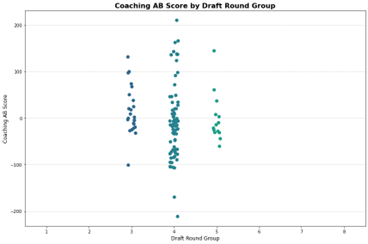
The Coaching AB Score by Draft Round Group scatterplot shown above provides a critical look into how coaching effectiveness correlates with the quality of players coaches typically work with, based on their draft position. The x-axis represents the average draft rounds of each coach’s player list, offering insight into whether a coach primarily develops early-round talent or specializes in refining lower-drafted players. A strong clustering effect around Rounds 3-5 suggests that many of the most well-developed players originate from this range, reinforcing the idea that coaches who consistently work with mid-round selections may have the most refined developmental strategies. Conversely, coaches working with late-round picks (Rounds 6-8) tend to have lower Coaching AB Scores, indicating that player development at these levels is inherently more difficult due to the lower initial skill level of these players.
However, standout cases exist where certain coaches defy expectations, producing high Coaching AB Scores despite working primarily with later-round draft picks. These outliers suggest that specific coaching methodologies may be particularly effective for developing under-the-radar talent. This insight holds significant implications for teams aiming to maximize player development value from mid-to-late round selections. Organizations with limited access to top-tier draft talent can benefit from identifying and hiring coaches who have demonstrated a consistent ability to develop lower-round players into impactful contributors. By leveraging this analysis, teams can shift their scouting and coaching strategies to focus on long-term player development rather than relying solely on early round draft selections to build competitive rosters.
Coaching AB Score and Career Longevity
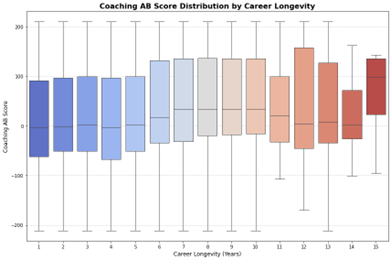
The “Coaching AB Score Distribution by Career Longevity” boxplot provides a comprehensive view of the long-term impact coaches have on player development and retention within the NHL. The data suggests a clear relationship between higher Coaching AB Scores and extended career longevity, reinforcing the idea that strong coaching contributes significantly to a player’s ability to sustain a long professional career. Players who remain in the NHL for 10 or more years often come from coaching environments where development, system adaptability, and player utilization are optimized. These coaches not only help players succeed in their early years but also equip them with the skills and hockey intelligence necessary for long-term success at the professional level.
However, there are key outliers in this dataset that warrant further exploration. While the general trend suggests that coaches with high Coaching AB Scores produce players with longer careers, there are instances where highly rated coaches have developed players who do not sustain long-term NHL careers. This suggests that certain coaching styles may be more effective in generating short-term gains rather than fostering longevity. For example, some coaches may prioritize immediate system execution and high-impact performance over gradual player growth. These short-term strategies may benefit younger players early in their careers but fail to translate into long-term sustainability. This is particularly relevant for teams that need to balance player development with immediate competitiveness.
Conversely, there are cases where coaches with lower Coaching AB Scores have developed players who still manage to maintain long NHL careers. This could be an indication that some players succeed in spite of their coaching environments, either due to their own adaptability, external development resources, or team circumstances. It is also possible that these players experience significant development under subsequent coaching staffs, mitigating the effects of weaker coaching early in their careers. Understanding these nuances is essential for teams seeking to optimize their player development strategies, as it highlights that coaching influence extends beyond just on-ice performance metrics.
Additionally, the distribution of Coaching AB Scores within each career longevity group indicates that variability exists at every level. Even among players who last 10+ years in the NHL, there is a spread of Coaching AB Scores, suggesting that different developmental paths can lead to sustained careers. Some players thrive under highly structured coaching, while others may succeed in more flexible, player-driven systems. Identifying the characteristics of coaches who consistently produce long-tenured players can be a valuable asset for teams looking to build sustainable success.
From an organizational hiring perspective, this data allows teams to evaluate coaching effectiveness beyond traditional win-loss records. If a franchise is focused on long-term roster sustainability, hiring coaches with a track record of developing players who remain in the league for extended periods may be a priority. On the other hand, teams seeking short-term success or immediate competitive advantage may favor coaches who can extract high-impact performances from players in a shorter window. This information also has implications beyond the NHL, as junior teams, college programs, and international leagues can apply similar methodologies to assess coaching effectiveness in preparing players for professional careers. Understanding how different coaching philosophies impact player longevity provides a new dimension to evaluating coaching success, moving beyond surface-level metrics and into deeper, long-term developmental trends.
Organizational Coaching Stability & Hiring Practices
Beyond individual coaching impact, broader organizational trends in coaching stability reveal significant differences in how teams approach leadership behind the bench. Coaching stability is a critical factor in player development, team culture, and long-term success, as frequent turnover can disrupt strategic continuity, while consistency can foster a well-defined system that benefits players over multiple seasons. When a team consistently employs the same coaching staff, players are given the opportunity to refine their skills within a structured system, enabling gradual and sustained improvement. In contrast, teams that cycle through coaches rapidly often struggle with inconsistent philosophies, leading to difficulties in player adaptation and performance fluctuations. The ability of a team to establish a culture of stability can be seen in the development of its players, particularly in how well young talent is integrated and nurtured within the system.
The Coaching Stability by Organization bar graph below highlights the stark contrast between teams that maintain long-term coaching commitments and those that frequently make changes. Organizations like the Detroit Red Wings and Boston Bruins exhibit strong coaching stability, with their average coaching tenure significantly higher than the league median. This suggests that these teams prioritize continuity and long-term system implementation over short-term performance shifts. Stability allows for a structured approach to player evaluation, recruitment, and development, as coaches can gradually refine their team’s identity without the constant pressure of an impending dismissal. Additionally, it fosters stronger relationships between players and coaching staff, allowing for the implementation of more tailored developmental strategies that fit the unique strengths and weaknesses of the roster.

In contrast, teams like the Edmonton Oilers and Ottawa Senators have struggled with coaching stability, frequently changing head coaches and creating environments where players must continuously adapt to new systems, expectations, and leadership styles. This constant upheaval can hinder player development and prevent teams from establishing a clear identity on the ice. With each new coach comes a different approach to tactics, ice-time distribution, and locker-room culture, which can be especially challenging for younger players trying to establish themselves in the league. Frequent coaching changes also disrupt the natural progression of team chemistry, as players must continuously adjust to shifting line combinations, playing styles, and leadership dynamics. Furthermore, organizations that make reactive coaching changes rather than calculated, long-term hires may inadvertently create a cycle of instability, making it harder to attract top-tier coaching talent. Teams that find themselves in this position must evaluate whether their approach to hiring fosters long-term success or merely provides short-term relief, as coaching stability has proven to be a foundational element of sustained competitiveness.
The impact of frequent coaching changes is further emphasized in the Number of Coaching Changes Per Team (2007-2024) bar graph below , which quantifies how often each organization has replaced its head coach over the last 17 seasons. The high numbers in some cases are partly due to the inclusion of interim head coaches, as they are still reflective of coaching instability within an organization. Edmonton and Ottawa stand out, having among the highest number of coaching changes, reflecting instability at the leadership level. This lack of continuity may be a symptom of deeper organizational issues, such as inconsistent roster construction, poor front-office decision-making, or an inability to commit to a long-term vision. Teams that frequently change coaches may find it difficult to establish a cohesive system, as players are constantly adjusting to new expectations, systems, and leadership styles.
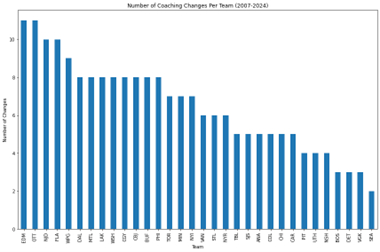
By contrast, teams like Tampa Bay and Boston have demonstrated sustained coaching consistency, indicating that these organizations have successfully identified and retained coaches who align with their long-term philosophies. Tampa Bay, in particular, has benefited from long-term coaching stability, leading to multiple deep playoff runs and a strong developmental pipeline that has consistently produced NHL-ready talent. This stability has allowed the franchise to implement a cohesive vision across multiple seasons, ensuring that their team-building efforts align with coaching strategies. Boston, similarly, has shown that continuity behind the bench allows teams to build a culture where both veterans and younger players can thrive under a well-established system. The presence of fewer coaching changes in these organizations reflects a deliberate hiring approach that prioritizes long-term success over short-term fixes.
Teams with frequent turnover may benefit from reassessing their hiring processes, as excessive changes often correlate with long-term struggles in maintaining a competitive roster. While coaching changes are sometimes necessary to address underperformance, an organization that repeatedly replaces its head coach without achieving sustained improvements must consider whether the issue lies deeper within its front-office structure. Stability does not necessarily mean avoiding coaching changes altogether, but rather ensuring that hires are made with a clear understanding of how they align with the team’s development trajectory and competitive aspirations. A well-planned coaching transition can create an environment where players continue to develop within a structured system, whereas constant instability can disrupt progress and hinder long-term success.
The Shortest vs. Longest Tenures Per Organization scatterplot below provides insights into how teams handle coaching stability and whether their hiring practices support long-term success. Organizations like the Boston Bruins and Detroit Red Wings show a clear pattern of retaining coaches for extended periods, ensuring structured player development and system continuity. In contrast, teams like the Edmonton Oilers and Ottawa Senators frequently change head coaches, creating instability that makes it difficult for players to adapt and succeed.
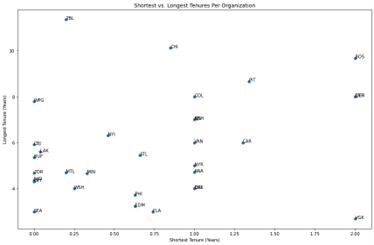
Erratic coaching tenures often stem from reactive decision-making rather than a strategic hiring approach. Teams with short-term coaching stints may prioritize immediate results over long-term fit, leading to constant shifts in playing styles and expectations. This instability hinders player development, as athletes struggle to build familiarity with a consistent system. Conversely, teams that provide coaches with time to implement their vision tend to develop stronger identities and sustained success.
Finally, the “Hiring Trends Over Time” line graph illustrates broader trends in coaching hires across the league from 2008 onward. This graph captures fluctuations in hiring cycles, revealing key peaks and declines in coaching changes over different periods. For example, some seasons see a surge in coaching changes, often following major shifts in league-wide strategies, economic pressures, or front-office philosophies. These peaks may correspond with teams collectively seeking fresh coaching talent after years of similar play styles, while declines in coaching hires may indicate periods where teams opt for stability rather than risk disruption.
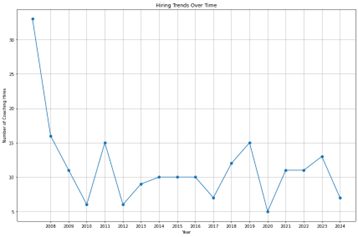
Another significant takeaway from the hiring trends over time is the potential correlation between league-wide performance trends and coaching changes. Periods with high turnover often coincide with shifts in playing style, rule changes, or major league-wide strategic evolutions. For instance, as the game has evolved towards speed and skill over physicality, teams may have sought coaches who better fit this transition, leading to spikes in coaching hires. Additionally, economic factors, such as salary cap fluctuations or organizational financial struggles, can influence hiring trends, as teams might look for cheaper, less-established coaching options during difficult financial periods.
Furthermore, this analysis helps highlight which organizations are trendsetters versus those that are reactionary in their hiring processes. Some teams may proactively seek coaching changes to align with emerging trends, while others make moves in response to league-wide shifts rather than internal strategic planning. Organizations that consistently hire ahead of major shifts tend to sustain competitive advantages, whereas teams that react too late may find themselves stuck in cycles of instability. This underscores the importance of not just understanding hiring trends but also using them strategically to make forward-thinking coaching decisions.
Finally, the hiring trends data can serve as an important predictive tool for future coaching shifts. If teams recognize patterns in previous coaching cycles, they may be better equipped to anticipate the next wave of coaching changes and make more proactive decisions. Understanding when teams tend to make the most changes—and why—can provide insight into whether organizations should commit to stability during a given period or prepare for a potential shake-up. This predictive element of hiring trends can be particularly useful for front offices, allowing them to plan ahead rather than reactively responding to league-wide changes.
Taken together, these visualizations provide a comprehensive look at how organizations approach coaching stability and hiring decisions. Teams that consistently retain coaches tend to build strong developmental environments, while those with frequent turnover often struggle to establish a consistent playing style and culture. Identifying which teams succeed in hiring stability and which one’s falter allows for deeper insights into how coaching decisions influence long-term success. Furthermore, these trends are not limited to the NHL—junior leagues, collegiate programs, and international hockey organizations can apply similar methodologies to analyze coaching stability and refine their hiring practices. The ability to balance stability with adaptability is crucial for sustained success, and these insights provide teams with the data-driven tools needed to make informed coaching decisions.
Active Ranking
The active ranking of coaches based on the Coaching AB Score provides a real-time assessment of which current NHL coaches are making the most significant impact on player development and performance. This ranking is essential for front offices, analysts, and teams looking to evaluate coaching effectiveness beyond traditional win-loss records. By incorporating multiple factors such as player improvement rates, advantage percentage, and total AB impact, this ranking offers a more holistic view of a coach’s ability to maximize their roster’s potential. Notably, Jon Cooper of the Tampa Bay Lightning leads the active rankings, reflecting his ability to sustain high-level player development while maintaining team success. Other top-ranked active coaches, such as Peter Laviolette and Bruce Cassidy, also show strong metrics that align with their respective teams’ sustained competitiveness. These coaches have demonstrated the ability to consistently elevate their players’ AB performance over time, for multiple different franchises, which is reflected in their high Coaching AB Scores.
Conversely, the lower end of the active ranking highlights coaches who have struggled to generate positive player development results. Coaches such as Martin St. Louis and Andre Tourigny rank near the bottom, indicating that their teams have experienced player regression or inconsistent growth under their leadership. While this does not necessarily mean these coaches are ineffective overall, it does suggest that their impact on individual player progression has been weaker compared to their peers. For teams evaluating coaching effectiveness, these rankings serve as an important data-driven tool to determine whether a coaching change may be necessary to enhance player development outcomes. Furthermore, two coaches—Ryan Warsofsky of the San Jose Sharks and Anders Sorensen of the Chicago Blackhawks—do not yet have Coaching AB Score data, as the first full year of their tenure remains unclear or incomplete. Their impact will be assessed as more data becomes available, further refining the active rankings over time. By maintaining an up-to-date ranking system, teams can use this metric to make more informed hiring and retention decisions, ensuring that their coaching staff is optimized for both immediate performance and long-term player development. The full ranking is listed below.
|
Jon Cooper |
TBL |
|
Peter Laviolette |
NYR |
|
Bruce Cassidy |
VGK |
|
Peter DeBoer |
DAL |
|
Mike Sullivan |
PIT |
|
Rod Brind’Amour |
CAR |
|
Jared Bednar |
COL |
|
Paul Maurice |
FLA |
|
Sheldon Keefe |
NJD |
|
Jim Montgomery |
STL |
|
Dan Bylsma |
SEA |
|
Dean Evason |
CBJ |
|
Andrew Brunette |
NSH |
|
Craig Berube |
TOR |
|
Todd McLellan |
DET |
|
Kris Knoblauch |
EDM |
|
Jim Hiller |
LAK |
|
Lindy Ruff |
BUF |
|
Patrick Roy |
NYI |
|
Ryan Huska |
CGY |
|
Spencer Carbery |
WSH |
|
John Tortorella |
PHI |
|
Scott Arniel |
WPG |
|
Greg Cronin |
ANA |
|
Travis Green |
OTT |
|
Joe Sacco |
BOS |
|
Rick Tocchet |
VAN |
|
John Hynes |
MIN |
|
Andre Tourigny |
UTH |
|
Martin St. Louis |
MTL |
Conclusion of Coaching AB
The Advanced Bracton Coaching Evaluation Metric is a groundbreaking tool designed to quantify coaching impact through a comprehensive, data-driven approach. A head coach is one of the most important figures in any hockey organization, directly influencing player development, team performance, and long-term success. Given the significant impact a coach has on a team’s trajectory, making the right hiring decision is crucial. The Coaching AB Score ensures that coaching evaluations go beyond traditional win-loss records, incorporating multiple weighted factors such as Return Improvement Percentage, Advantage Percentage, IMP per Player, and Total AB to provide a more accurate measure of coaching effectiveness.
By standardizing coaching assessment through statistical modeling, the Coaching AB Score identifies which coaches consistently elevate their players and which may struggle to generate lasting improvements. The weighted formula ensures a balanced evaluation, emphasizing aspects like draft round, player age, and systematic development. This method allows organizations to make hiring and retention decisions based on empirical evidence rather than subjective assessments, reducing the risk of making reactionary changes that could destabilize player growth.
Given the long-term impact that coaching decisions have on a franchise, teams must approach these hires with precision and strategy. Coaching AB Score provides teams with a refined method for assessing coaching success, helping to ensure that each hire aligns with the organization’s developmental goals. While initially applied to NHL coaches, the methodology behind this metric is adaptable for other professional hockey leagues looking to quantify coaching impact. Moving forward, refining the Coaching AB Score with additional performance variables and expanded datasets will further enhance its predictive power, making it an essential tool for teams seeking sustained success through intelligent coaching decisions.
The active Coaching AB Score rankings also highlight how newer coaches with limited data, such as Ryan Huska of the Calgary Flames and Spencer Carbery of the Washington Capitals, may see significant jumps in future updates. Because the Coaching AB Score relies on cumulative player development data over multiple seasons, coaches with fewer years behind the bench naturally have less complete evaluations. However, early indicators suggest that both Huska and Carbery are poised to improve in the rankings once a full season’s worth of data is incorporated. Given the promising performances of their respective teams this year, it is likely that their Coaching AB Scores will reflect stronger player development trends once additional data points are added.
This underscores an important aspect of the Coaching AB Score—it is not a static measure, but one that evolves over time as more data is collected. Coaches with limited sample sizes may initially rank lower due to a lack of available data rather than poor performance. As a result, teams must consider the trajectory of newer coaches when interpreting these rankings. Huska and Carbery’s expected improvement serves as a reminder that coaching effectiveness is best evaluated over multiple seasons, and that early success can indicate future long-term impact. This also applies to other recently hired coaches who may currently rank lower but could climb the standings as they establish their systems and generate more sustained player development improvements.
Chapter 10 – AB General Management Evaluation Metric
The analysis presented in this chapter is deeply rooted in the application of Advanced Bracton (AB) principles, which advocate for a balanced integration of data-driven insights and strategic decision-making. These principles emphasize that sustainable success in the NHL is not solely the result of intuitive leadership or short-term gains but instead stems from consistent, evidence-based management practices. The AB framework underscores the importance of leveraging advanced analytics to make informed decisions across critical areas, including trades, drafts, and salary cap management. By identifying patterns and evaluating outcomes through objective metrics, this methodology aims to provide a comprehensive understanding of the factors that define effective general management. It is crucial to acknowledge that while this evaluation relies heavily on quantitative metrics, it may not fully capture the nuanced realities of on-the-ground GM decision-making, such as interpersonal dynamics, organizational culture, or market-specific pressures. GMs often face complex environments where decisions are influenced by factors beyond the data, such as player morale, fan expectations, and ownership priorities. However, the AB framework does not seek to replace these elements but rather to complement traditional methods by providing clarity and structure to the evaluation process. Below is a list of all GMs included in the study
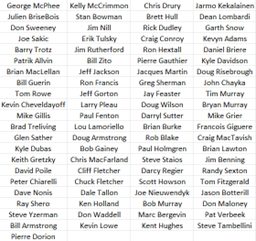
The primary objective of this chapter is to create an objective, reproducible framework for assessing GM performance. Through this framework, key areas such as trade efficiency, draft success, and salary cap management are evaluated not only in isolation but also as interconnected aspects of overall team-building strategy. This approach provides a more holistic understanding of GM effectiveness, going beyond one-dimensional metrics like win-loss records or playoff appearances to highlight how GMs construct rosters that deliver long-term success. By focusing on these elements, this analysis seeks to uncover which GMs operate with a strategic, analytical mindset that aligns with AB principles. In doing so, it provides actionable insights into what makes an effective GM in a modern, analytics-driven NHL. The findings can serve as a guide for aspiring executives, team owners, and analysts, offering a blueprint for building sustainable success in a highly competitive league. A full list of GMs included in this study is shown below.
Purpose of GM Metric
The purpose of the GM metric is to evaluate the overall effectiveness of NHL General Managers by systematically analyzing their decision-making in three key areas: trades, drafts, and salary cap management (free agency). These areas represent the fundamental building blocks of a successful franchise, as each directly influences the team’s ability to remain competitive over time. Trades impact both short-term roster strength and long-term asset accumulation, while drafting determines the pipeline of talent critical to sustaining success. Salary cap management ensures that a team maximizes the value derived from its financial resources, avoiding inefficiencies that could hinder flexibility. By combining these elements, the GM metric provides a comprehensive evaluation of how GMs build and maintain competitive teams.
To achieve this, existing Python analyses have been employed to uncover patterns and correlations in areas such as trade efficiency and player development. However, this study goes beyond surface-level insights, aiming to uncover deeper trends and actionable metrics that distinguish high-performing GMs from their peers. For example, the study identifies specific strategies that successful GMs have used to maximize the return on trades, exploit inefficiencies in the draft, and allocate cap space in ways that maintain roster depth while avoiding long-term liabilities. Through this data-driven approach, the analysis not only quantifies GM performance but also highlights specific practices that lead to consistent success.
Historical data reinforces the idea that GMs who excel in balancing trades, drafts, and salary cap management gain a significant edge over their competitors. Franchises like Tampa Bay Lightning and Colorado Avalanche exemplify the benefits of adopting data-driven strategies to inform decision-making. These organizations have consistently used analytics to identify undervalued players, draft effectively across all rounds, and manage their salary cap efficiently to maintain both flexibility and competitiveness. By following these principles, they have constructed rosters capable of contending for championships over multiple seasons.
The analysis relies on a comprehensive dataset that evaluates how individual managerial decisions translate into long-term success for their teams. Each key component—trade efficiency, draft success, and salary cap management—is measured using specific formulas tailored to capture the nuances of those areas. These formulas account for variables such as player performance, financial impact, and long-term outcomes, ensuring that the evaluation is both thorough and objective. The results of these individual metrics are then aggregated into a Composite GM Score, which provides a single, unified measurement of GM effectiveness. This composite score not only identifies the most successful GMs but also highlights trends, best practices, and inefficiencies that are often overlooked in traditional evaluations.
Ultimately, the GM metric serves as a tool to refine the Advanced Bracton approach to assessing hockey decision-makers. By breaking down complex decision-making into measurable components, this analysis generates insights that can be used to guide both current and aspiring executives in crafting strategies that lead to sustainable success. The findings not only identify outliers and trends but also establish a blueprint for effective management, emphasizing the importance of analytics-driven decisions in modern NHL team-building.
Metrics in GM Evaluation- Trade Efficiency
Trade efficiency is a critical measure of a General Manager’s ability to execute impactful transactions that benefit the team in both the short and long term. The Trade Score evaluates the net impact of trades by incorporating several metrics. These include the net number of draft picks acquired, the number of positive AB players acquired, and the amount of salary cap space freed through trades. At the same time, penalties are applied for negative AB players acquired and positive AB players traded away, ensuring that the score reflects both roster improvement and financial responsibility. This holistic approach ensures that GMs are rewarded for maximizing value while avoiding moves that diminish their team’s long-term outlook.
The formula for the Trade Score is as follows:
- Add the net draft picks acquired, representing the total number of extra picks gained from trade transactions.
- Add the number of positive AB players acquired, capturing the quality of players brought in who are expected to contribute positively to the team’s performance.
- Subtract the number of positive AB players traded away, penalizing GMs for losing impactful contributors.
- Add the net salary space acquired, which represents the total cap savings achieved in trade dealings.
- Add the average AB score of players acquired through trades, emphasizing the importance of acquiring players with higher overall Advanced Bracton ratings.
By combining these components, the Trade Score is calculated to reflect a GM’s overall ability to improve their team through trades while balancing the financial and roster impacts of their decisions. For example, a GM who acquires multiple undervalued players with high AB scores while freeing up salary cap space will achieve a high Trade Score, whereas a GM who trades away impactful players or takes on burdensome contracts will see their score penalized. This approach ensures that transactions improving AB while maintaining cap flexibility receive a higher score.
The correlation matrix for GM Trade Performance Metrics provides a clear visualization of how various trade-related metrics interact, reinforcing the importance of financial efficiency and asset management in evaluating trade success. The strong correlation (r = 0.49) between Trade Score and Net Salary Acquired suggests that GMs who successfully maneuver salary cap constraints tend to improve their teams’ overall trade performance. This highlights the significance of not just acquiring high-value players but also ensuring that these transactions create financial flexibility. Teams that effectively manage their salary cap while making trades have a distinct advantage in maintaining long-term roster balance and avoiding cap-related stagnation.
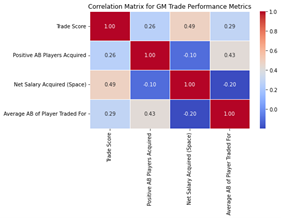
Additionally, the positive correlation (r = 0.26) between Positive AB Players Acquired and Trade Score underscores the importance of securing high-impact players in transactions. While the correlation is not overwhelmingly strong, it suggests that acquiring more players with positive AB scores tends to lead to better trade outcomes. However, the weaker negative correlation (r = -0.10) between Net Salary Acquired and Positive AB Players Acquired implies that financially responsible teams do not always prioritize acquiring high-AB players but rather seek a balance between player impact and cap efficiency. This aligns with AB principles, which emphasize optimizing player contributions relative to salary.
Another key insight from the correlation matrix is the moderate positive correlation (r = 0.43) between Positive AB Players Acquired and the Average AB of Player Traded For. This suggests that GMs who focus on acquiring high-AB players also tend to trade away players with relatively strong AB scores, indicating a more sophisticated approach to asset management. In contrast, the negative correlation (r = -0.20) between Net Salary Acquired and Average AB of Player Traded For indicates that GMs who shed salary cap burden often do so by trading away higher-AB players, reflecting a tradeoff between immediate cap relief and player value retention.
This matrix reinforces the broader AB philosophy that the most effective trades are not solely about acquiring talent but about balancing player impact, financial flexibility, and strategic asset management. A GM with a high Trade Score is likely to have executed transactions that improve roster quality while also optimizing salary cap positioning. As the matrix shows, these factors are interconnected, with financial strategy playing a major role in determining trade efficiency and long-term team success.
The GM Trade Performance Rankings offer a comprehensive view of how NHL General Managers have performed in terms of trade efficiency, providing a ranking based on cumulative trade scores. This ranking provides clarity on which executives consistently generate value through trades, particularly by acquiring undervalued assets and managing financial constraints effectively. At the top of the rankings, GMs like Steve Yzerman and Jeff Gorton have demonstrated a strong ability to execute transactions that not only improve their team’s AB Score but also maintain long-term roster flexibility. Their high placement suggests a strategic approach that prioritizes sustainable roster construction over short-term gains, aligning with the AB philosophy of intelligent asset management.
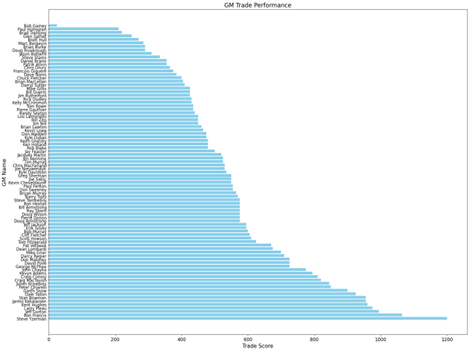
One of the key takeaways from this ranking is the disparity between top-performing GMs and those lower on the list, which suggests that trade efficiency is not just about making high-profile deals but about consistently finding value in the market. GMs with higher trade scores tend to execute trades that maximize positive AB player acquisition while mitigating salary cap burdens, leading to sustained success. Conversely, those ranking lower often fall into patterns of overpaying for talent, trading away high-AB players without sufficient return, or acquiring contracts that create long-term cap inefficiencies.
This visualization also reinforces the importance of balancing immediate roster improvement with long-term development. Some GMs who perform well in trade efficiency tend to be those who recognize hidden-value players, often acquiring assets that may not seem significant at first but later prove instrumental in a team’s success. This is particularly evident in franchises like Tampa Bay and Colorado, which have consistently used strategic trades to supplement their core while maintaining cap flexibility. Additionally, teams that score well in this ranking tend to outperform in overall win totals and sustained playoff contention, demonstrating the link between trade efficiency and long-term team success.
Another insight from this ranking is the role of salary cap strategy in trade performance. GMs who manage to offload inefficient contracts while acquiring valuable assets tend to rank higher. This aligns with the findings from the Trade Performance Correlation Matrix, where the Net Salary Acquired was strongly correlated with Trade Score (r = 0.49), reinforcing that salary management is a fundamental component of trade efficiency. Executives who rank lower may have engaged in short-term, reactionary trades that sacrifice future cap space for immediate gain, a strategy that can hinder long-term success.
Ultimately, the GM Trade Performance Rankings serve as a quantifiable benchmark for evaluating trade efficiency, offering insights into which GMs consistently outperform their peers. The teams that align their trade strategies with AB principles—acquiring positive AB players at efficient salary values while avoiding financial burdens—tend to generate sustainable success. This graph highlights the importance of long-term strategic planning in trade execution, demonstrating that the most effective GMs prioritize financial prudence, roster balance, and high-value asset acquisition in their trade strategies.
Metrics in GM Evaluation- Draft Success
Drafting is often the cornerstone of sustainable success in the NHL, serving as the foundation for long-term roster stability and team competitiveness. While early-round selections receive the most attention due to their immediate impact potential, the ability to consistently find value in later rounds often differentiates elite general managers from their peers. A well-executed draft strategy not only strengthens a team’s prospect pipeline but also reduces reliance on costly free-agent acquisitions and risky trade maneuvers. The Draft Score formula is designed to assess a General Manager’s ability to select players who contribute positively to their team over time, incorporating multiple key variables to provide a comprehensive evaluation. By integrating factors such as player longevity, late-round scouting efficiency, and overall draft success rates, this metric provides a data-driven perspective on the effectiveness of a GM’s draft philosophy. The calculation follows these steps:
- Add the total number of players drafted who have played 100+ NHL games. This represents long-term success in player development, ensuring that GMs are credited for selecting players who sustain professional careers rather than those who make only brief NHL appearances.
- Add the percentage of all draft picks who have reached the NHL. This captures a GM’s overall success rate in identifying talent that can transition to the highest level of play. This percentage-based metric ensures that drafting effectiveness is measured in a balanced way across teams with varying numbers of selections.
- Add the percentage of drafted players who have played at least 100 NHL games. This emphasizes selecting players with lasting impact rather than short-term contributions. It further distinguishes GMs who draft players with staying power.
- Add the number of 6th-round draft picks who have reached the NHL. This rewards GMs who capitalize on inefficiencies in scouting to uncover hidden gems, which can provide cost-effective and impactful roster depth.
- Add the number of 7th-round draft picks who have reached the NHL. Similar to the 6th-round metric, this reinforces the importance of late-round drafting success. Historically, teams that excel in these rounds often gain a long-term competitive advantage, as these picks provide depth and salary cap flexibility.
- Add the average AB score of all drafted players. This ensures that a GM’s draft success is measured not just by the number of NHL players selected but also by the quality of those players in terms of their overall contribution to the team. It accounts for both early-round star potential and late-round value.
The GM Draft Performance Rankings graph provides a comprehensive evaluation of how different general managers have performed in drafting talent. This ranking is based on the Draft Score formula, which incorporates multiple factors, including the number of drafted players who have reached 100+ NHL games, the percentage of all draft picks who have made it to the NHL, and the success rate of late-round picks. The distribution of scores in this visualization highlights the wide variance in drafting effectiveness across the league, with some GMs consistently identifying and selecting impactful players, while others struggle to generate long-term value from their draft classes.
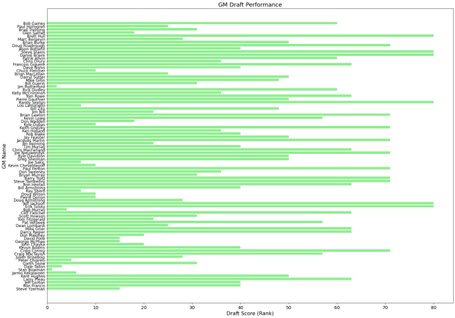
One of the most notable insights from this ranking is the disparity between top-performing GMs and those who rank lower in draft efficiency. The GMs positioned at the top of the ranking have demonstrated a keen ability to identify talent in later rounds, suggesting that their scouting and player evaluation processes extend beyond first-round selections. This is particularly evident in GMs who have maintained high Draft Scores despite not always having access to high draft positions. Their success is often attributed to a combination of strong scouting departments, analytical integration in player evaluations, and a willingness to take calculated risks on players with high potential.
Conversely, the lower-ranked GMs exhibit patterns of drafting inefficiency, often failing to maximize their draft capital. This could be due to an overreliance on early-round selections or a failure to develop later-round players into NHL contributors. Some teams consistently fail to extract long-term value from their draft classes, leading to roster construction issues that force them to rely on trades or free agency to compensate for their drafting shortcomings. This inefficiency creates long-term sustainability challenges, as these teams may lack the depth required for consistent playoff contention.
Additionally, this ranking allows for the identification of outliers—GMs who may not have an exceptionally high Draft Score but still manage to build competitive rosters through other means, such as effective trades or free-agent acquisitions. This underscores the importance of considering drafting in the broader context of team-building rather than as an isolated factor. Some GMs have been able to offset poor drafting with shrewd asset management, but in most cases, strong draft performance correlates with long-term team success.
By examining the trends within this ranking, it is clear that successful drafting is not just about high draft picks but about maximizing value throughout all seven rounds. The best-performing GMs have a track record of consistently selecting players who make an impact at the NHL level, reinforcing the importance of a data-driven, scouting-informed approach to the draft. This ranking serves as an objective benchmark for evaluating drafting ability, offering valuable insights into which GMs have consistently built through the draft and which have relied more heavily on external acquisitions to shape their teams.
The Correlation Matrix for Draft Success by Round provides valuable insights into how late-round draft selections contribute to a team’s overall draft success. The correlation of r = 0.67 between 6th-round picks reaching the NHL and overall Draft Score suggests that general managers who identify hidden talent in later rounds tend to perform better across the board. Similarly, the r = 0.63 correlation for 7th-round picks highlights the importance of extracting value from rounds that historically see fewer NHL-caliber players emerge. These findings reinforce the idea that successful drafting extends far beyond high first-round selections. Instead, teams that demonstrate strong scouting, player development, and analytical evaluation gain a substantial edge by consistently finding contributors in rounds where many other teams struggle to do so.
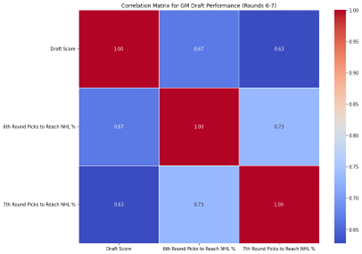
The impact of effective drafting reaches beyond just individual players—it shapes the long-term trajectory of a franchise. Teams that excel in later rounds benefit from a continuous influx of young talent, reducing their reliance on expensive free-agent signings and limiting the need for high-risk trades. This sustainable approach to roster construction not only keeps teams competitive but also ensures flexibility within the salary cap, a crucial advantage in today’s NHL landscape. The ability to draft well in later rounds is often a hallmark of elite general managers, as it reflects superior scouting networks, a deep understanding of player development trends, and the ability to capitalize on inefficiencies in the scouting process.
In conclusion, the data-driven evaluation of draft performance underscores the importance of looking beyond traditional first-round metrics. While early round picks are essential for acquiring high-end talent, it is the ability to extract value from deeper rounds that differentiates the most effective general managers. The correlations presented in this analysis highlight that drafting is not just about securing top prospects but also about maximizing every selection to build a sustainable, winning franchise. Moving forward, NHL teams that integrate analytical scouting techniques with a refined late-round drafting strategy will position themselves for long-term success, reinforcing the fundamental principle that drafting is a cornerstone of elite team building.
Metrics in GM Evaluation- Salary Cap Management
The formula for the Salary Cap Score is designed to assess a general manager’s efficiency in allocating financial resources to maximize team performance while minimizing wasteful spending. This is critical in the salary cap era, where the ability to optimize contracts and maintain financial flexibility can be the difference between sustained success and long-term mediocrity. The calculation follows these steps:
- Average AB of Players Signed: The average Advanced Bracton (AB) score of all players signed by a GM. This measures the overall impact of a GM’s signings and helps differentiate between high-value acquisitions and ineffective contracts.
- Positive AB Players Signed: The total number of free-agent acquisitions or contract extensions involving players with a positive AB score. This rewards GMs who consistently add impact players to their rosters.
- Money Allocated Towards Positive Players: The total cap space dedicated to signing positive AB players. This ensures that teams are evaluated on how effectively they use their financial resources rather than just the volume of signings.
- Negative AB Players Signed: The number of signings involving players with a negative AB score. This penalizes GMs for acquiring or extending underperforming players who contribute negatively to team success.
- Money Allocated Towards Negative Players: The total financial commitment to negative AB players. This factor assesses how much cap space is wasted on contracts that do not provide a positive return on investment.
- Negative Contract Percentage: The proportion of a team’s cap space tied to negative AB contracts, including buyouts, retained salary, and underperforming deals. This penalizes teams that struggle with cap efficiency.
- Positive Contract Percentage: The proportion of a team’s cap space dedicated to high-impact players. This rewards GMs who allocate the majority of their resources toward productive signings.
By integrating these elements, the Salary Cap Score effectively evaluates a GM’s ability to manage cap space while ensuring that their roster is constructed for sustained competitiveness. General managers who minimize wasteful spending, prioritize positive AB acquisitions, and maintain cap flexibility consistently rank higher in this evaluation. Those who fail in these areas—committing substantial resources to underperforming players—find themselves at a significant disadvantage, often leading to long-term struggles in both roster construction and team success.
The Scatterplot of Positive AB Players Signed vs. Money Allocated shown below further demonstrates the relationship between spending efficiency and overall team success, highlighting how general managers allocate financial resources to maximize roster performance. This graph illustrates a clear trend: franchises that invest heavily in acquiring positive AB players tend to outperform their peers both in overall AB Score and long-term competitiveness. The positive correlation between the number of positive AB players signed and the money allocated towards these players suggests that teams willing to spend strategically on high-impact players benefit significantly in the long run.
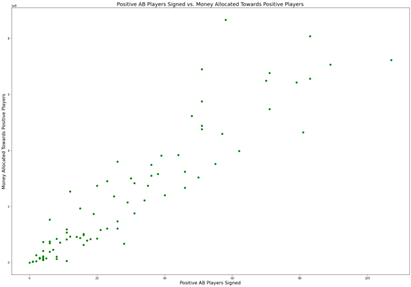
One of the key insights from this visualization is that the most successful general managers do not simply sign the highest number of players; rather, they target high-value acquisitions while ensuring their financial commitments align with performance expectations. The teams that have the highest money allocations tend to have consistently strong AB Scores, reinforcing the principle that financial efficiency is just as critical as identifying talent. Those GMs who allocate cap space to underperforming players or fail to secure high-AB talent within their budget constraints often see diminished returns, leading to salary cap inefficiencies that hinder team-building efforts.
Additionally, this scatterplot reveals the presence of different management strategies across the league. Some GMs adopt a conservative financial approach, focusing on signing fewer but higher-quality players, ensuring that every contract contributes positively to the team’s overall AB Score. Others distribute their spending more evenly across a larger pool of signings, aiming to build depth through volume. While both approaches can yield positive outcomes, the data suggests that the most successful GMs strike a balance between these methods, ensuring that every dollar spent correlates with an increase in team performance.
The spread of data points in this scatterplot also highlights potential inefficiencies in cap allocation. Teams positioned in the upper right quadrant—those that sign many positive AB players while also investing significant financial resources—are generally among the most competitive franchises. However, teams that appear lower on the vertical axis while having a high number of positive AB signings may indicate cases where players were acquired at below-market value, representing efficient spending. Conversely, teams that allocate large sums of money without securing a proportionate number of high-AB players are likely engaging in inefficient spending, committing substantial cap space to contracts that do not yield significant on-ice contributions.
This analysis reinforces the importance of aligning financial strategy with analytical insights. General managers who successfully integrate AB principles into their salary cap management strategies demonstrate the ability to maximize player impact per dollar spent, leading to sustained competitive advantages. Meanwhile, teams that fail to optimize their spending often struggle to remain flexible under the cap, limiting their ability to make key acquisitions when necessary. As a result, the data suggests that financial prudence combined with an analytically driven approach to roster construction is a defining characteristic of the league’s best-performing franchises.
Composite GM Score & Advanced Insights
The Composite GM Score is the sum of all Trade, Draft, and Salary Cap scores into a single, equally weighted measure, providing a comprehensive ranking of GM performance.
This approach ensures that no single factor dominates the evaluation, reflecting the multifaceted nature of front-office responsibilities. Trade Score accounts for a GM’s ability to acquire assets efficiently and maximize trade value. Draft Score evaluates the success of player selections and long-term talent development. Salary Cap Score measures how well a GM manages financial constraints, including contract efficiency, cap flexibility, and long-term financial sustainability.
By integrating these three key components, the Composite GM Score provides a balanced assessment of managerial effectiveness. The Composite GM Scores by Team visualize these rankings, highlighting the league’s best decision-makers and revealing outliers who achieve success despite inefficiencies in one or more areas. This allows for a structured, data-driven comparison across front offices, offering valuable insights into team-building strategies.
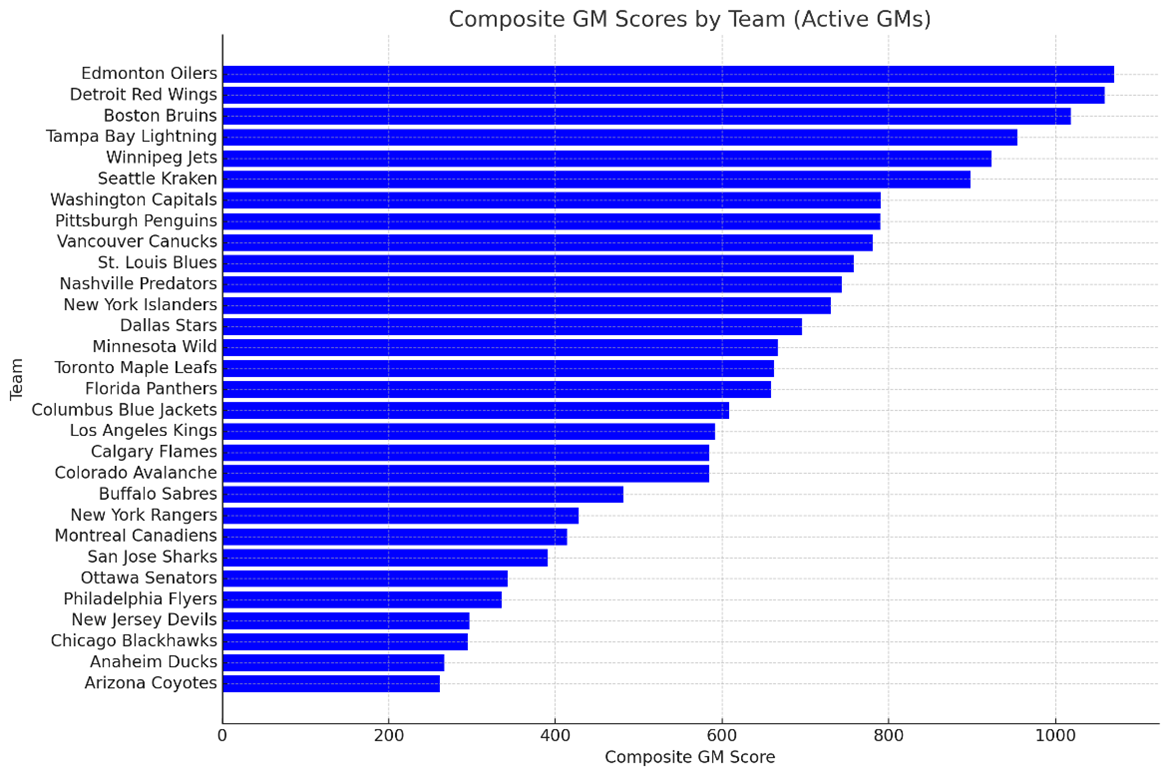
Additionally, this analysis examines hidden metrics, such as arbitration performance and the impact of coaching hires, offering further insight into the broader strategies employed by effective GMs. Arbitration performance reflects a GM’s ability to navigate contract negotiations and player disputes, securing favorable outcomes that maintain roster stability. Coaching hires, on the other hand, influence team performance by aligning leadership with organizational vision and player development goals.
By incorporating both quantitative and qualitative assessments, this methodology provides a comprehensive framework for evaluating GM performance beyond traditional win-loss records. The Composite GM Score serves as a powerful tool for identifying strengths, diagnosing weaknesses, and understanding the strategic decisions that drive long-term success in professional sports management.
Conclusion of GM Score
In conclusion, the Advanced Bracton General Management Evaluation Metric provides a comprehensive, data-driven approach to assessing the effectiveness of NHL General Managers. By evaluating key areas such as trade efficiency, draft success, and salary cap management, this framework offers a holistic understanding of how GMs construct and maintain competitive teams. The integration of these metrics ensures that the evaluation process captures both the immediate and long-term impacts of managerial decisions, emphasizing the importance of strategic decision-making informed by analytics.
This analysis has revealed that the most successful GMs are those who balance short-term roster improvement with long-term sustainability, demonstrating an ability to maximize trade value, draft effectively, and manage financial resources wisely. Teams that excel in these areas tend to build competitive rosters that remain strong over multiple seasons, avoiding the pitfalls of short-sighted moves or inefficient cap management.
Furthermore, the Composite GM Score serves as a powerful tool for identifying the most effective decision-makers across the league, while the insights gleaned from the data can guide future executives in refining their team-building strategies. While the AB approach does not replace traditional scouting or intuition, it complements these methods by providing structure, clarity, and actionable insights. As the NHL continues to evolve, GMs who embrace a data-driven mindset will be better equipped to navigate the complexities of modern team management, ultimately positioning their franchises for long-term success in a highly competitive environment.
Chapter 11 – Arbitration Analyzer and Agency Analysis Research
The integration of Advanced Bracton (AB) metrics into NHL arbitration and agency performance analysis represents a fundamental shift in how player value is assessed, contracts are negotiated, and financial decisions are made. Traditionally, arbitration hearings and contract discussions relied heavily on counting stats, subjective scouting reports, and market trends, often leading to inefficiencies in salary allocation. However, AB metrics provide an objective, data-driven approach that eliminates much of the guesswork, ensuring that teams and agents have a clear, quantifiable understanding of a player’s contributions. By utilizing a sophisticated comparables-based salary projection system, the Arbitration Analyzer sets a new standard for financial fairness and transparency in the NHL. This tool leverages historical performance data, salary benchmarks, and player trajectory analysis to generate contract values that are not only data-supported but also aligned with broader league-wide financial dynamics.
A key feature of the Arbitration Analyzer is its ability to bridge the gap between on-ice performance and salary evaluation, a critical improvement over previous contract assessment methods. By analyzing AB Scores, positional roles, career trajectories, and draft data, the tool ensures that financial decisions are based on more than just raw point production. AB Scores provide a granular evaluation of how well a player minimizes mistakes and maximizes impact, giving teams a clearer picture of a player’s overall efficiency. By incorporating positional roles, the tool accounts for the fact that certain positions, such as defensemen, have different value contributions that may not be captured in traditional statistics. Career trajectory analysis further refines salary projections by considering how a player has developed over time and how their future production is expected to trend. Additionally, the inclusion of draft round data allows teams to measure how a player’s initial selection in the NHL Entry Draft correlates with long-term success and financial expectations, helping to refine the salary models for players in similar situations.
Beyond individual contract evaluations, the Arbitration Analyzer serves as a powerful resource for identifying inefficiencies in salary allocation. By comparing AB Scores with current salaries, the tool helps teams uncover contracts where players are either overpaid relative to their contributions or significantly undervalued despite high levels of performance. This enables management to make smarter roster decisions, ensuring that cap space is allocated effectively. The ability to identify hidden gems—players who outperform their draft position or salary bracket—gives teams a competitive edge, allowing them to build stronger rosters without exceeding financial constraints. Similarly, it helps highlight cases where players may be underperforming relative to their contracts, prompting necessary salary roster decisions and buyouts. These insights are particularly valuable in a salary-cap league like the NHL, where financial efficiency can often be the difference between a championship-contending team and a struggling franchise.
While the Arbitration Analyzer provides teams with a strategic advantage, it also serves as a critical tool for agents advocating on behalf of their clients. In traditional contract negotiations, agents have often relied on subjective comparisons or prior salary precedents to argue for raises or contract extensions. However, AB metrics introduce a new level of sophistication, allowing agents to make compelling, data-backed cases for their clients’ value. By demonstrating how a player’s AB Score compares to similarly paid players across the league, agents can justify salary increases with clear statistical evidence. The tool also integrates return on investment (ROI) calculations, providing a direct measure of how efficiently a player produces relative to their salary. If a player delivers significantly above-average performance at a lower cost, their agent can use this data to push for a more lucrative deal. Furthermore, because the Analyzer accounts for career trajectories, it allows agents to present long-term projections that support the need for multi-year contracts, ensuring financial security for their clients.
Another crucial function of the Arbitration Analyzer is its ability to create comparable contracts based on a player’s statistical and financial profile. In arbitration cases, comparables are one of the most important factors in determining a player’s salary, as arbitrators rely on past contracts to establish market value. The tool enhances this process by identifying players with similar AB Scores, career timelines, and positional impacts, ensuring that contract offers are both fair and reflective of current market conditions. Instead of relying solely on traditional point-based comparisons, the Arbitration Analyzer uses an advanced model that considers efficiency, decision-making, and long-term potential. This significantly reduces the risk of salary disputes by providing a well-structured, unbiased methodology for assessing player worth.
The Arbitration Analyzer also has broader implications for roster construction across the NHL. By identifying inefficiencies in salary distribution, teams can proactively adjust their approach to contract negotiations, preventing costly overpayments while ensuring that key contributors are retained at fair market value. The tool also helps general managers make informed decisions on free agency, allowing them to target undervalued players who provide high returns on investment. Additionally, the insights provided by the Analyzer can influence draft strategies, as teams gain a deeper understanding of how draft position correlates with long-term performance and contract expectations. This data-driven approach to team-building ensures that organizations are not only maximizing their financial resources but also making smarter personnel decisions that contribute to long-term success.
Ultimately, the introduction of AB metrics into arbitration and contract negotiations represents a paradigm shift in how the NHL approaches financial decision-making. With a growing emphasis on analytics in professional hockey, tools like the Arbitration Analyzer are becoming essential in shaping the future of salary structuring and team management. By promoting fairness, transparency, and efficiency, this tool benefits all stakeholders in the league—ensuring that players are compensated accurately for their contributions, teams maintain financial flexibility, and agents have the necessary resources to secure favorable deals for their clients. As the NHL continues to evolve, the use of advanced analytics in contract negotiations will only become more prevalent, leading to a more balanced, competitive, and financially sustainable league.
The Arbitration Analyzer: Constructing Comparable Contracts
The Arbitration Analyzer is a groundbreaking tool revolutionizing how player value is evaluated during contract negotiations. At the heart of the Arbitration Analyzer is its ability to focus on on-ice performance and Advanced Bracton (AB) metrics to deliver precise and reliable evaluations. The tool compares a player’s AB Score relative to others in the same positional group, ensuring that evaluations are grounded in directly relevant benchmarks rather than broader or unrelated comparisons. Rather than incorporating external factors like draft position or age, the Analyzer centers its evaluations on how well a player minimizes mistakes and maximizes impact relative to others in the same role. For example, it may compare the AB Score of a second-line center against those of other second-line centers across the league, highlighting how their performance stacks up in terms of efficiency and impact. This targeted approach ensures that evaluations remain fair and directly applicable to the player’s role, avoiding irrelevant biases that could distort contract discussions.
By relying solely on performance-based metrics, the Arbitration Analyzer establishes a clear and unbiased framework for projecting contract values. The comparables it identifies are rooted in objective data, such as a player’s AB Score and their demonstrated ability to influence outcomes on the ice, creating a transparent and fair basis for negotiations. This focus on performance ensures that contracts reflect actual contributions rather than subjective expectations, providing an equitable process for both teams and players.
In addition to individual performance metrics, the Arbitration Analyzer considers salary trends and league-wide data to create a broader context for its evaluations. By comparing a player’s profile to similar players across the league—referred to as comparables—the tool establishes a benchmark that helps teams understand the market value for a given skill set or role. This comparables-based approach is particularly valuable in arbitration cases, where precedent often plays a significant role in determining contract outcomes. For example, if a player has an AB Score, career progression, and positional role similar to that of another player whose contract has been recently established, the Analyzer can provide a data-backed projection for what the player should earn, ensuring consistency and fairness in the arbitration process.
The overarching goal of the Arbitration Analyzer is to construct contracts that go beyond reflecting a player’s current performance. By accounting for future contributions and growth potential, the tool ensures that all parties enter negotiations with a clear understanding of a player’s true value. This transparency fosters trust between stakeholders and helps mitigate disputes often seen in arbitration hearings. Contracts built on this foundation not only align compensation with performance but also allow teams to manage their salary cap more effectively while providing players with fair and equitable compensation.
By combining AB Scores, positional roles, salary trends, and career trajectories, the Arbitration Analyzer provides an unparalleled level of precision and context. It ensures that each arbitration case is grounded in objective, comprehensive data, bridging the gap between a player’s contributions on the ice and their financial rewards. This innovative tool represents a significant step forward in modernizing arbitration and contract negotiations, providing a framework that is both fair and forward-looking, setting a new standard for financial decision-making in the NHL.
Arbitration Analyzer Case Study Example:
The Arbitration Analyzer is highly effective at projecting contract values by analyzing past data and identifying comparable players. It provides a data-driven foundation for contract negotiations by evaluating a player’s on-ice performance and AB Score relative to historical benchmarks. For example, if one wanted to project what Daniel Winnik should have made during his contract negotiations following the 2015-2016 season, the tool would allow users to input Winnik’s name and season, then select the number of comparables to use in the analysis. If selecting one comparable, the tool would provide the closest match; if selecting five comparables, it would generate a broader range of reference points to guide negotiations based on the information available at the time. This approach offers a baseline salary projection that agents and general managers can use to begin contract discussions.
In Winnik’s case, the Analyzer identified the following top five comparables based on his 2015-2016 performance:
- Matt Stajan (Year: 2012-2013), Salary: $3.50 million
- Brian Boyle (Year: 2014-2015), Salary: $2.00 million
- Tyler Ennis (Year: 2012-2013), Salary: $2.81 million
- Vinny Prospal (Year: 2010-2011), Salary: $2.48 million
- Martin Hanzal (Year: 2012-2013), Salary: $3.10 million
From these comparables, the Arbitration Analyzer projected Winnik’s fair salary at $2.78 million for the 2015-2016 season. However, Winnik actually signed for $2.25 million, indicating that he was underpaid by approximately $500,000. This discrepancy highlights an instance of good asset management by the Toronto Maple Leafs, as they secured Winnik at a value below his projected market rate. Conversely, Winnik’s agent could have used this figure as a negotiation tool to push for a higher salary, arguing that similar players had received more favorable contracts.
The tool also accounts for Entry-Level Contract (ELC) players, offering a separate analyzer specifically designed for younger talent. This ELC-specific system assesses performance levels and projects future contracts, categorizing players based on the level at which they are performing (e.g., “playing at a $5 million level”). By doing so, the Arbitration Analyzer provides valuable foresight into long-term salary expectations, allowing teams to plan contract extensions strategically while helping agents build a case for future negotiations.
This projection-based approach ensures that contract discussions are rooted in historical evidence, eliminating guesswork and subjective biases while fostering fair and efficient salary negotiations between teams and players. By relying on comparables and performance-driven benchmarks, both parties can engage in data-backed discussions that reflect a player’s true market value rather than relying on arbitrary demands or outdated valuation models. This not only streamlines the negotiation process but also promotes long-term financial stability for teams while ensuring that players are fairly compensated for their contributions.
Arbitration Analysis and Agency Analysis: Differentiating the Two Systems
The Arbitration Analyzer and the Agency Analysis Tool are both advanced systems designed to evaluate contract efficiency, but they serve distinct yet complementary purposes. While the Arbitration Analyzer focuses on individual players, determining their fair market value through performance-based comparables, the Agency Analysis Tool assesses agents by evaluating their clients’ return on investment (ROI) and overall contract efficiency. Together, these tools provide teams, agents, and players with a comprehensive data-driven framework for contract negotiations, salary structuring, and long-term financial planning.
A major strength of these systems lies in their ability to standardize evaluations, removing subjectivity from key financial decisions. Historically, contract negotiations have relied heavily on traditional statistics, subjective scouting reports, or team budget constraints, often leading to inconsistencies in salary structures. The Arbitration Analyzer and Agency Analysis Tool mitigate this issue by introducing a systematic, data-backed approach, ensuring that player compensation and agent performance are measured against relevant benchmarks rather than arbitrary standards. This approach fosters greater transparency, fairness, and efficiency across the league.
Both tools function by allowing users to input a specific name, either a player or an agent—and retrieving data-backed insights that guide decision-making. For example, if a team or agent wanted to determine a fair contract value for a player, they would enter the player’s name, select the number of comparables, and generate a salary projection based on similar players in the league. This comparables-based approach ensures that each player’s contract aligns with league-wide trends and performance-based expectations, rather than being disproportionately inflated or undervalued.
Similarly, when analyzing an agent’s performance, the Agency Analysis Tool provides detailed insights into how an agent’s clients perform relative to their salaries, allowing for an objective evaluation of negotiation effectiveness. This data-driven perspective enables teams to assess which agents consistently secure the best deals for their players, while also helping agents refine their negotiation strategies to maximize their clients’ earnings.
Additionally, the Agency Analysis Tool can provide a comparative ranking of agents, showcasing who excel at securing contracts that maximize ROI. Agents who successfully negotiate favorable contracts for a diverse set of clients, including those outside of first-round draft selections—demonstrate their ability to identify talent, advocate effectively, and secure fair market value for their players. By integrating both individual player projections and agent-based contract evaluations, teams can gain a holistic understanding of market dynamics, helping them navigate salary cap constraints and roster-building strategies more effectively.
A crucial aspect of this research is the need to study both sides of the decision-making process—from the general managers (GMs) who structure contracts and allocate cap space to the agents who negotiate on behalf of players to maximize earnings. Each chapter in this research builds upon the previous one, ensuring a comprehensive analysis of the financial and performance-based factors that influence NHL contracts. By evaluating how teams determine player value and how agents advocate for their clients, this study presents a balanced perspective, ensuring that both sides of contract negotiations are understood within the context of modern analytics and market efficiency.
This chapter presents Pat Brisson’s case study as an example of how the Agency Analysis Tool functions. Brisson, one of the NHL’s most well-known agents, represents a diverse roster of players, including several high-profile names. Through the Agency Analysis Tool, we evaluate how Brisson’s clients perform relative to their salaries, their contract efficiency, and how his negotiation strategies compare to other agents across the league. This example serves as a template for understanding the tool’s capabilities, but it is important to note that additional agent reports can be generated upon request to provide further customized insights. For the sake of this work, we focus on Brisson as a key representative in the industry, demonstrating how agent performance can be objectively measured and analyzed using advanced data-driven methods.
Arbitration Analysis: AB Score, Salary Comparisons, and Contract Efficiency
The scatter plot of AB Score vs. Salary highlights the relationship between on-ice performance and contract value, revealing important trends in salary structuring. While a positive correlation between AB Score and salary is evident—indicating that players with higher AB Scores generally receive higher salaries—the wide distribution of data points suggests that salary is influenced by multiple factors beyond pure performance metrics. This variability reinforces the need for a structured arbitration model, such as the Arbitration Analyzer, to ensure that contract negotiations are based on objective, data-driven insights rather than market inefficiencies or subjective evaluations.
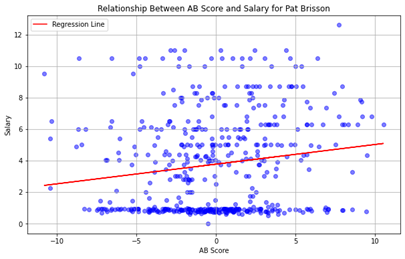
A closer examination of the graph reveals several key observations. Many players with comparable AB Scores have significantly different salaries, suggesting that factors such as contract timing, negotiation leverage, and external market conditions play a role in determining earnings. For example, players with an AB Score around zero have salaries ranging from below $1 million to over $6 million, highlighting disparities that may not be entirely performance-based. Additionally, some players with low AB Scores (negative values) are earning above-average salaries, while others with high AB Scores are making relatively low salaries. These discrepancies underscore the importance of identifying inefficient contracts and ensuring that players are compensated fairly relative to their contributions.
Another notable trend in the graph is the presence of a significant cluster of low-salary players (~$1 million or less) despite their varying AB Scores. This suggests the influence of entry-level contracts, veteran minimum deals, or team-friendly agreements, which may not always align with a player’s true value. In contrast, the regression line (red) confirms a gradual increase in salary with AB Score, reinforcing that players with higher AB Scores tend to earn higher salaries. However, the modest slope of the line suggests that performance alone does not fully dictate earnings, emphasizing the role of contract structuring, agent negotiation skills, and team salary cap constraints in determining final salary figures.
These insights highlight the practical application of the Arbitration Analyzer, which standardizes salary projections by accounting for historical comparables and performance benchmarks. By eliminating guesswork and inconsistencies, the tool ensures that contracts are more reflective of actual contributions rather than being dictated by external market forces or negotiation leverage alone. This structured approach benefits both players and teams, fostering fair, data-driven salary allocations that optimize team spending and player compensation.
The box plot of AB Score by Draft Round provides deeper insights into how player performance varies based on draft position, shedding light on the effectiveness of NHL scouting and player development. While first-round picks generally exhibit higher AB Scores, the wide range of performance levels within each draft round suggests that draft position is not an absolute predictor of success. Although early selections are often associated with higher expectations and greater investment from teams, this graph demonstrates that individual performance outcomes can vary significantly, with some first-rounders underperforming expectations while certain later-round picks emerge as high-impact players.
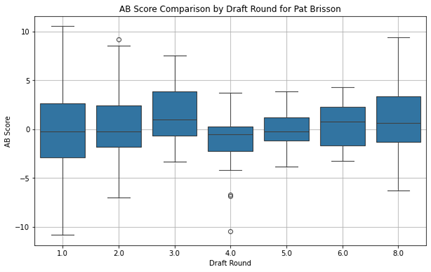
This variability in performance across draft rounds highlights the complexity of player evaluation and the importance of development systems in shaping a player’s career trajectory. While first-round selections receive significant attention and resources due to their perceived potential, their performance is not always guaranteed, as factors such as injuries, adaptability to the NHL level, and team fit play a crucial role in their development. Conversely, later-round selections often enter the league with lower expectations but can exceed projections due to strong work ethic, proper development, and favorable team situations that allow them to thrive. This underscores the value of a data-driven approach like the one used in the Arbitration Analyzer, which focuses on actual performance rather than draft pedigree when assessing a player’s worth.
Additionally, the broad range of AB Scores within each draft round suggests that scouting and drafting are inherently uncertain processes, and that a player’s success is influenced by a combination of skill, opportunity, and development environment. Teams that place too much emphasis on draft position when structuring contracts may risk overpaying for underperforming early picks or undervaluing later-round players who provide strong contributions. By integrating AB metrics into contract evaluations, teams can ensure that performance, rather than draft status, serves as the foundation for salary negotiations, leading to more efficient cap management and better long-term roster decisions.
A key takeaway from this visualization is the considerable overlap in AB Scores across multiple draft rounds, indicating that players drafted in later rounds can still achieve comparable or even superior performance to earlier selections. This is particularly evident in the third and sixth rounds, where several players demonstrate AB Scores similar to those of first-round picks, reinforcing the notion that talent can emerge from any stage of the draft. Additionally, while median AB Scores tend to decline after the first three rounds, outliers remain present in nearly every draft position, further emphasizing that success in the NHL is determined by more than just draft pedigree.
Another important observation is the variability within each draft round, particularly among early selections. The spread of AB Scores among first-round picks suggests that while many top selections meet or exceed expectations, some fail to translate their draft status into consistent NHL performance. Meanwhile, the tight interquartile range (IQR) in later rounds, such as the fourth and fifth rounds, indicates that players selected in these spots often have more predictable but lower average performance levels. However, the presence of outliers in these rounds highlights cases where later-drafted players significantly outperformed expectations, supporting the idea that effective player development and coaching can maximize talent regardless of draft position.
The Salary by Draft Round boxplot further illustrates how contract value is influenced by factors beyond draft position, reinforcing the idea that teams must assess performance holistically rather than relying solely on pedigree. For context, some rounds may be missing due to lack of players represented in that round. Additionally, round 8 is the equivalent of an undrafted free-agent. While first-round picks generally command higher salaries, this does not always correlate directly with on-ice impact, as evidenced by the wide range of salaries seen across multiple draft rounds. Some later-round players have secured contracts comparable to or exceeding those of early-round picks, demonstrating that individual performance and negotiation leverage play a significant role in determining salary outcomes.
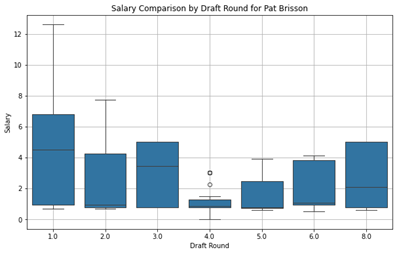
A key insight from this visualization is the variation in salary distribution across rounds. While first-round picks have the highest median salaries, their interquartile range (IQR) is also the widest, indicating greater variability in contract outcomes. This suggests that while some first-rounders secure lucrative deals, others may sign contracts that more closely resemble those of mid-to-late-round selections, depending on factors such as development trajectory, arbitration outcomes, and team salary cap constraints. In contrast, later-round picks tend to have more consistent but generally lower salaries, although some standout performers have secured contracts exceeding $5 million, reinforcing the potential for late-round players to provide high value relative to their draft position.
These salary trends underscore the importance of incorporating AB metrics into contract evaluations, allowing teams to differentiate between players who command high salaries due to draft status versus those who have earned their contracts through sustained on-ice contributions. Advanced analytics help bridge this gap by identifying players whose performance justifies a higher salary, regardless of draft round, ensuring that teams allocate salary cap space efficiently. Additionally, this data-driven approach can help teams uncover undervalued assets, particularly among late-round picks who have demonstrated strong AB Scores but may not yet be compensated in line with their performance. By integrating performance-based contract assessments rather than relying on traditional draft-driven salary structures, teams can optimize roster spending, maximize cap efficiency, and make more informed long-term decisions.
Furthermore, by integrating performance-based analytics into arbitration and salary structuring, teams gain a strategic advantage in salary cap management, ensuring that resources are allocated efficiently without overpaying for perceived value. Agents, in turn, can advocate for their clients more effectively, using quantifiable data to demonstrate a player’s worth in negotiations. This data-driven model reduces the risk of inefficient spending, identifies hidden value across all draft rounds, and enhances long-term financial planning for franchises. By embracing advanced analytics in arbitration and contract structuring, teams can optimize cap space, uncover hidden value, and make smarter financial decisions that contribute to both individual player success and sustainable team performance.
Agency Analysis: Return on Investment (ROI) as a Contract Efficiency Metric
Beyond arbitration, the Agency Analysis Tool plays a critical role in assessing agent effectiveness, providing insights into how well contracts align with player contributions. Unlike traditional assessments that may rely on basic statistics or subjective reputation, this tool quantifies an agent’s ability to negotiate fair and efficient contracts through salary efficiency and Return on Investment (ROI). By incorporating AB Scores into ROI calculations, the tool establishes an objective benchmark that measures a player’s true impact relative to their earnings, ensuring that compensation is tied directly to performance rather than perception or draft pedigree.
ROI, calculated as AB Score divided by salary, provides a clear indicator of contract efficiency, allowing for a transparent evaluation of whether a player’s salary reflects their true contributions on the ice. Players with a high ROI represent valuable assets, as they deliver strong performance while maintaining a relatively lower cap hit, making them highly desirable for teams aiming to optimize financial resources. Conversely, a low ROI value signals a potential inefficiency, indicating that a player’s contract may exceed their on-ice impact, which could pose financial challenges for teams managing salary cap constraints.
By standardizing ROI assessments across agents, the Agency Analysis Tool enables teams, general managers, and front-office decision-makers to make data-driven evaluations of player contracts. It helps teams identify potential areas of concern, such as contracts where a player is underperforming relative to salary, allowing them to adjust future negotiations accordingly. At the same time, agents benefit from these insights by gaining an objective, performance-based argument to advocate for fair compensation for their clients. For example, if a player’s ROI significantly exceeds that of peers in similar roles, an agent can use this data to strengthen contract negotiations, ensuring that their client’s value is properly recognized.
Furthermore, the Agency Analysis Tool provides a broad perspective on agent performance across the league, offering a comparative framework that assesses how different agents secure contracts for their clients. By examining which agents consistently negotiate high-ROI contracts, teams can identify patterns of effective representation, while players can use this data to make informed decisions when selecting representation. In essence, this tool introduces a new level of transparency into the player-agent-team dynamic, reinforcing fair and data-driven contract structures while helping all parties involved make smarter financial decisions.
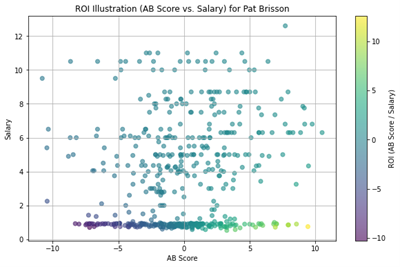
The ROI Illustration for Pat Brisson’s clients provides key insights into the balance between player performance and salary efficiency. The color gradient represents ROI values, where green and yellow points indicate high returns on investment, while purple and dark blue points reflect lower ROI values. The spread of data reveals a wide variance in contract efficiency among Brisson’s clients, with some players significantly outperforming their salary expectations, while others may be overcompensated relative to their contributions. The lower-right quadrant (high AB Score, low salary) showcases undervalued players who deliver strong performances at a cost-effective rate, suggesting that some of Brisson’s clients may be playing on team-friendly contracts. Conversely, players with high salaries but moderate or lower AB Scores appear in the upper-left quadrant, indicating potential inefficiencies in contract negotiations. This visualization highlights the range of contract effectiveness among Brisson’s clientele, reinforcing the importance of data-driven contract evaluation to ensure fair compensation structures while maximizing team financial flexibility.
For teams, these insights are invaluable in salary cap management, allowing them to identify high-ROI players worth retaining and avoid inefficient contracts that could limit financial flexibility. The ability to pinpoint undervalued contracts ensures that teams maximize roster efficiency, giving them a strategic edge in building a competitive lineup while remaining financially responsible.
For agents, this data serves as a powerful negotiation tool, offering an objective, performance-based argument for securing higher salaries for their clients. If a player’s ROI surpasses industry norms, an agent can use this evidence to justify a contract increase, ensuring that their client is compensated fairly for their contributions. Conversely, for players with lower ROI scores, agents may leverage these insights to strategize future contract discussions, emphasizing areas for performance growth that could strengthen their market value.
Ultimately, the ROI metric provides an unbiased framework for evaluating contract efficiency, benefiting both teams and agents by ensuring that salary structures reflect actual player impact. The integration of AB metrics into agent evaluations enhances transparency in contract negotiations and ensures that player compensation is aligned with their true performance value.
Agent Performance: Evaluating ROI Across Representatives
The Agency Analysis Tool provides a comprehensive evaluation of agent performance by analyzing key contract efficiency metrics, including Return on Investment (ROI), contract success rates, and client AB Scores. This system allows users to input an agent’s name and retrieve data on their negotiation effectiveness, ensuring that contract discussions are grounded in objective performance metrics rather than reputation alone. In this analysis, we focus on Pat Brisson, one of the NHL’s most prominent player representatives, to examine how his client portfolio, contract efficiency, and return on investment compared to those of other top agents.
Brisson represents 67 clients who have AB data, including many of the NHL’s biggest stars, with 39 of his clients having been selected in the first round of the draft. This figure highlights his strong presence in securing high-profile contracts for elite talent, reflecting his ability to leverage market demand for top-tier prospects. However, an agent’s success is not solely defined by representing first-round draft picks. The true measure of an agent’s effectiveness lies in their ability to maximize contract value for all clients, regardless of draft position, by ensuring that performance aligns with financial compensation. The Agency Analysis Tool evaluates these dynamics by assessing how well an agent’s clients perform relative to their salaries, shedding light on contract efficiency beyond raw negotiation outcomes.
To objectively measure agent performance, the Agency Analysis Tool incorporates a composite score, which integrates several key factors: ROI, contract success rates, AB Score distributions among clients, and salary cap impact. ROI serves as a primary indicator, calculated as a player’s AB Score divided by their salary, providing a direct measure of how well their on-ice contributions justify their financial compensation. Contract success rates consider an agent’s ability to secure long-term deals, negotiate favorable salary structures, and ensure stability for their clients in terms of contract security. AB Score distributions assess whether an agent consistently represents high-impact players or if there is a wider variance in client performance. Lastly, salary cap impact evaluates how an agent’s negotiated contracts affect a team’s overall cap efficiency, helping determine whether an agent is structuring deals that are beneficial for both the player and the organization. Together, these metrics form a composite ranking that provides an in-depth evaluation of each agent’s effectiveness in securing contracts that maximize value.
While Brisson is widely regarded as one of the most successful agents in hockey, the composite score rankings reveal additional insights. Agents Judd Moldaver and Paul Theofanous emerged as top performers, consistently negotiating high-value contracts for players drafted across multiple rounds. Unlike Brisson, who primarily represents first-round picks, Moldaver and Theofanous have effectively secured lucrative deals for players regardless of draft position, demonstrating the importance of strategic contract structuring beyond just securing high-profile talent. Their high composite scores suggest that they consistently maximize client earnings relative to performance, ensuring that contracts are both competitive and efficient within team salary cap constraints.
Beyond individual agent performance, team-based ROI analysis provides additional insights into how different NHL franchises manage contract efficiency for Brisson’s clients. The Average ROI by Team graph provides insights into how Pat Brisson negotiates contracts across different NHL franchises, revealing how his clients’ contract efficiency varies by team. Teams such as Dallas and Washington exhibit high average ROI, suggesting that Brisson has successfully structured deals for his clients with these organizations, ensuring that their performance aligns well with their salaries. These teams appear to have optimized contract value, resulting in deals where Brisson’s clients provide strong on-ice contributions relative to their compensation.
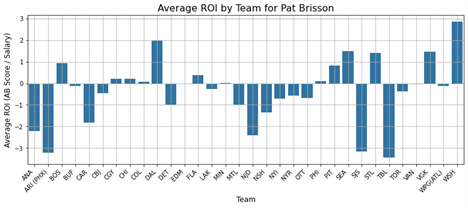
Conversely, teams like Anaheim and St. Louis display negative ROI trends, indicating that Brisson’s negotiated contracts for players on these teams may not be yielding the expected returns based on AB Score. This suggests that either these teams have paid a premium for Brisson’s clients or that certain players have underperformed relative to their contracts. These trends provide valuable insights into how Brisson’s negotiating strategies align with various general managers and front offices, helping identify which teams are more receptive to performance-based contract structuring versus those that may prioritize other factors such as market demand or player reputation.
For agents, this analysis is particularly valuable, as it highlights which teams are most efficient in handling contract negotiations and which franchises may require stronger justification for player salaries. This allows Brisson, and other agents using similar analysis, to tailor their negotiation strategies based on how a particular team evaluates player worth. For general managers, the data helps assess whether they are consistently overpaying specific agents’ clients and provides a roadmap for improving salary cap efficiency moving forward.
The insights generated by the Agency Analysis Tool and Arbitration Analyzer represent a paradigm shift in how NHL contracts are structured, arbitration cases are handled, and agent performance is evaluated. By integrating AB metrics with financial data, these tools ensure that contracts reflect actual player contributions rather than outdated market expectations. Teams benefit by identifying high-ROI contracts, allowing them to avoid overpayment and optimize roster efficiency. Meanwhile, agents gain access to data-driven insights that help justify salary negotiations, ensuring that players receive fair compensation based on performance-driven benchmarks rather than traditional market assumptions.
As the NHL continues to embrace advanced analytics, tools like the Agency Analysis Tool and Arbitration Analyzer will become essential in salary structuring, arbitration cases, and long-term financial planning. By aligning financial decision-making with objective performance data, these systems set a new benchmark for analytically-driven hockey management, ensuring that teams, players, and agents can make informed decisions that promote fairness, efficiency, and long-term success.
Conclusion: The Impact of Analytical Tools on NHL Contract Strategy
The Arbitration Analyzer and Agency Analysis Tool represent a fundamental shift in how NHL teams and agents approach contract structuring, arbitration hearings, and salary negotiations. By integrating Advanced Bracton (AB) metrics with financial data, these tools eliminate much of the subjectivity and inefficiencies that have traditionally influenced contract decisions. Instead of relying on outdated market trends or legacy evaluation methods, teams and agents can now anchor negotiations in quantifiable performance-based insights that ensure salaries align more accurately with player contributions.
The Arbitration Analyzer specifically benefits teams by identifying undervalued talent, preventing costly overpayments, and enhancing salary cap flexibility. By providing precise projections based on historical comparables, it equips general managers with data-driven strategies that improve roster construction. Meanwhile, the Agency Analysis Tool empowers player representatives by offering clear evidence of contract efficiency, allowing them to negotiate stronger deals based on performance rather than reputation or draft position. The ability to assess return on investment (ROI) by team further enhances the negotiation process, helping both agents and teams make more informed, financially sound decisions.
As NHL front offices continue to embrace analytics, tools like the Arbitration Analyzer and Agency Analysis Tool will become cornerstones of modern hockey management. These systems not only bridge the gap between performance and salary but also create a fairer, more transparent landscape for player valuation. By aligning financial decisions with on-ice impact, these analytical tools set a new standard for contract negotiations, arbitration cases, and long-term salary planning, ensuring that the next generation of NHL contracts is shaped by data rather than perception.
Chapter 12 – What Does a Stanley Cup Championship Team Look Like in Terms of AB?
The Advanced Bracton (AB) metric provides a comprehensive lens through which championship teams can be analyzed, offering deeper insight into what separates Stanley Cup winners from their competition. Unlike traditional statistics that focus solely on goals, assists, or plus-minus ratings, AB captures the full scope of a player’s impact, incorporating advanced playmaking, defensive reliability, efficiency in key situations, and overall team contributions. By applying this metric to the last seventeen Stanley Cup champions, clear patterns emerge in how winning teams are constructed, revealing the delicate balance between star power, depth, and role players who maximize their contributions.
While some champions have dominated both the regular season and playoffs with high AB scores, others have defied expectations, winning despite relatively average or even negative AB ratings. This variation underscores that while a strong AB profile can be a key factor in success, it is not the sole determinant. Teams with exceptional defensive structures, elite goaltending, and the ability to adapt to playoff intensity have found ways to overcome statistical disadvantages. At the same time, many of the most dominant champions have leveraged a high percentage of positive AB players, reinforcing the importance of roster balance and player efficiency.
By analyzing team-wide AB distributions, player ratios, and Finals matchups, this chapter pieces together the blueprint of a Stanley Cup-winning team. Whether through top-tier talent, exceptional depth, or a carefully managed balance of both, championship teams tend to share identifiable characteristics that extend beyond just raw skill. This chapter ties together these insights, demonstrating how AB can be used to assess not only past champions but also teams looking to build sustainable success in future seasons. In fact, the findings in this chapter revealed a 0.88 strong positive correlation between having a positive regular season team AB Score and qualifying for the playoffs. In addition to this, there was also a 0.94, very strong positive correlation between registering a positive regular season team AB Score and winning the Stanley Cup, as almost every champion recorded a positive score.
This chapter also delves into the patterns emerging from AB scores among Stanley Cup champions, highlighting key areas such as salary efficiency, player age distribution, and positional AB contributions. Understanding these elements allows us to identify the balance that successful teams strike between elite star power, depth players, and cost-effective role contributors.
To further refine our analysis, we leverage Python-based clustering techniques to categorize players based on their AB performance, salary, and role within their respective teams. This method allows us to distinguish between high-impact superstars, steady middle-tier contributors, and budget-friendly specialists. By comparing these clusters across championship and non-championship teams, we can pinpoint the statistical factors that most strongly correlate with success.
Ultimately, this analysis aims to provide deeper insights into roster construction strategies, shedding light on how championship teams assemble a mix of high-performance players, develop talent, and allocate their resources effectively. Additionally, the findings have implications for scouting, player development, and front-office decision-making, illustrating how AB can serve as a predictive tool in identifying the qualities that contribute to a winning formula in the NHL.
Regular Season AB Scores of Championship Teams
An essential aspect of understanding championship success is analyzing the AB scores of Stanley Cup-winning teams. Over the last seventeen seasons, championship teams have exhibited a wide range of AB scores, with some teams leading the league while others secured the Cup despite having a lower AB score than their competition. This variability suggests that while a strong AB score can be indicative of a team’s ability to dominate the regular season, it is not the sole determinant of playoff success (see table below for insights).
Regular Season Team AB Scores of the Seventeen Stanley Cup Champions of the AB Era
|
Year |
Champion |
Score |
Highest In League? (Y/N) |
|
2007-2008 |
Detroit Red Wings |
+43.30 |
Yes |
|
2008-2009 |
Pittsburgh Penguins |
+9.87 |
No |
|
2009-2010 |
Chicago Blackhawks |
+58.94 |
No |
|
2010-2011 |
Boston Bruins |
+60.48 |
Yes |
|
2011-2012 |
Los Angeles Kings |
-9.33 |
No |
|
2012-2013 |
Chicago Blackhawks |
+53.61 |
Yes |
|
2013-2014 |
Los Angeles Kings |
+25.51 |
No |
|
2014-2015 |
Chicago Blackhawks |
+17.93 |
No |
|
2015-2016 |
Pittsburgh Penguins |
+34.82 |
No |
|
2016-2017 |
Pittsburgh Penguins |
+37.32 |
No |
|
2017-2018 |
Washington Capitals |
+9.80 |
No |
|
2018-2019 |
St. Louis Blues |
+17.90 |
No |
|
2019-2020 |
Tampa Bay Lightning |
+39.62 |
No |
|
2020-2021 |
Tampa Bay Lightning |
+15.18 |
No |
|
2021-2022 |
Colorado Avalanche |
+63.62 |
No |
|
2022-2023 |
Vegas Golden Knights |
+50.56 |
No |
|
2023-2024 |
Florida Panthers |
+58.51 |
No |
A key observation is that having the highest AB score in the league does not always translate into winning the Stanley Cup. Only three of the seventeen championship teams (2007-2008 Detroit Red Wings, 2010-2011 Boston Bruins, and 2012-2013 Chicago Blackhawks) had the highest AB score in their respective seasons. This means that 82% of champions did not lead the league in AB score, suggesting that factors such as team depth, coaching, adaptability, and clutch performance in the playoffs play a significant role in determining the ultimate winner.
The 2011-2012 Los Angeles Kings stand out as a notable exception, winning the Stanley Cup despite finishing with a negative AB score (-9.33) in the regular season. This indicates that while their regular-season performance may not have been dominant, they peaked at the right time and benefited from strong goaltending, defensive play, and key individual performances in the playoffs. Similarly, other championship teams such as the 2008-2009 Pittsburgh Penguins (+9.87), 2017-2018 Washington Capitals (+9.80), and 2018-2019 St. Louis Blues (+17.90) had relatively modest AB scores compared to other champions, reinforcing the idea that strong regular-season performance alone does not guarantee playoff success.
Conversely, some of the highest AB scores among championship teams belong to the 2010-2011 Boston Bruins (+60.48), the 2021-2022 Colorado Avalanche (+63.62), and the 2023-2024 Florida Panthers (+58.51). These teams demonstrated dominant regular-season play and carried that performance into the postseason, leveraging their depth, high-impact players, and consistent production across all lines to secure the Cup. However, the fact that the Bruins and Avalanche had the highest AB scores in their seasons but other teams such as the Panthers and the 2009-2010 Blackhawks (+58.94) did not, highlights that while a strong AB score can be a significant advantage, it is not the sole predictor of championship success.
Overall, this analysis underscores that while teams with high AB scores are often strong contenders, playoff hockey introduces additional variables that influence the outcome. Factors such as defensive systems, goaltender performance, injury management, and the ability to win close games often become just as important as regular-season dominance. As a result, teams looking to build a championship-caliber roster should not solely focus on maximizing their AB score but should also consider roster balance, experience, and adaptability in high-pressure playoff situations.
AB Positive to AB Negative Player Ratio
One way to analyze the composition of championship teams is by examining the ratio of players with positive AB scores to those with negative AB scores. This breakdown helps us understand whether successful teams rely more heavily on high-performing players or if they find success through a balanced mix of contributors, including role players with lower AB scores. The data reveals that while most Stanley Cup-winning teams have a majority of players with positive AB scores, there are significant variations, suggesting that different roster constructions can still lead to championship success.
Across the seventeen-year period, the average percentage of positive AB players on championship teams is approximately 67%, meaning that on average, about two-thirds of a Stanley Cup-winning roster consists of players contributing positively in terms of AB. However, this is not a strict rule, as teams have won with both significantly higher and lower percentages. The 2009-2010 Chicago Blackhawks (91%) and the 2012-2013 Chicago Blackhawks (83%) are prime examples of dominant teams built around an overwhelming majority of positive AB players. Their high percentage of positive AB contributors suggests that these teams not only had elite stars but also received strong performances from their depth players, making them difficult to match in both top-line talent and secondary scoring or defensive depth. Similarly, the 2015-2016 Pittsburgh Penguins (78%) and the 2022-2023 Vegas Golden Knights (74%) had strong majorities of positive AB players, reinforcing the notion that high-performing teams often find success with well-rounded depth.
The AB Positive to AB Negative Player Ratio of the Seventeen Stanley Cup Champions of the AB Era
|
Year |
Champion |
Ratio (Positive/Negative) |
Percentage Positive |
|
2007-2008 |
Detroit Red Wings |
13:9 |
60% |
|
2008-2009 |
Pittsburgh Penguins |
17:11 |
60% |
|
2009-2010 |
Chicago Blackhawks |
21:2 |
91% |
|
2010-2011 |
Boston Bruins |
17:7 |
70% |
|
2011-2012 |
Los Angeles Kings |
7:17 |
29% |
|
2012-2013 |
Chicago Blackhawks |
19:4 |
83% |
|
2013-2014 |
Los Angeles Kings |
14:7 |
67% |
|
2014-2015 |
Chicago Blackhawks |
15:8 |
65% |
|
2015-2016 |
Pittsburgh Penguins |
21:5 |
78% |
|
2016-2017 |
Pittsburgh Penguins |
17:6 |
74% |
|
2017-2018 |
Washington Capitals |
12:6 |
67% |
|
2018-2019 |
St. Louis Blues |
13:13 |
50% |
|
2019-2020 |
Tampa Bay Lightning |
13:12 |
52% |
|
2020-2021 |
Tampa Bay Lightning |
15:6 |
71% |
|
2021-2022 |
Colorado Avalanche |
18:8 |
69% |
|
2022-2023 |
Vegas Golden Knights |
20:7 |
74% |
|
2023-2024 |
Florida Panthers |
17:7 |
71% |
While most teams fit the pattern of having at least 60-70% positive AB players, there are some significant outliers that challenge the idea that a high positive AB ratio is always necessary for success. The 2011-2012 Los Angeles Kings (29%) had by far the lowest percentage of positive AB players among championship teams. With only 7 players posting positive AB scores compared to 17 with negative scores, the Kings’ success can largely be attributed to elite goaltending (Jonathan Quick’s Conn Smythe-winning performance), a strong defensive system, and timely scoring from key players. This suggests that teams with lower overall AB ratings can still succeed if they have exceptional goaltending and a playoff system that emphasizes defensive structure and high-efficiency play.
The 2018-2019 St. Louis Blues (50%) also won with an even split between positive and negative AB players. Much like the Kings, the Blues’ midseason turnaround and eventual championship run were fueled by goaltending (Jordan Binnington’s emergence), disciplined defensive play, and a well-structured, physical style of hockey rather than overwhelming offensive dominance. Most other championship teams fall in the 60-74% range, indicating that while a team doesn’t necessarily need an extreme surplus of positive AB players, having a clear majority generally improves the chances of success.
Notably, the 2020-2021 Tampa Bay Lightning (71%), the 2021-2022 Colorado Avalanche (69%), and the 2023-2024 Florida Panthers (71%) all won the Stanley Cup with a fairly balanced, but still positive-heavy roster, showing that recent championship teams continue to rely on a majority of players contributing positively. Most championship teams, on average, have a majority of positive AB players, but some outliers prove that success is still possible with different roster constructions. Teams with very high percentages (80% or more) of positive AB players, such as the Blackhawks in 2010 and 2013, tend to dominate both the regular season and playoffs, as these teams are built with strong depth and receive positive contributions from nearly every player in their lineup.
However, some teams, like the 2011-2012 Kings (29%) and 2018-2019 Blues (50%), defied the trend by winning despite a lower percentage of positive AB players, relying heavily on elite goaltending and structured defensive systems to compensate for their lower individual player AB scores. Teams in the 60-74% range appear to be the most common championship rosters, suggesting that while depth and balance are important, a team doesn’t necessarily need every player to be a high AB contributor to win. The continued presence of teams in the 70%+ range (like the 2020-2021 Lightning, 2021-2022 Avalanche, and 2023-2024 Panthers) suggests that modern championship teams still rely on a strong core of positively rated AB players to sustain success.
This analysis highlights that while having a high percentage of positive AB players is generally advantageous, teams can still find success with a carefully structured balance of contributors, and playoff-specific factors such as goaltending, defensive structure, and timely performance from key players can sometimes outweigh a team’s regular-season AB profile.
Championship Teams vs. Finalists
To determine whether AB scores provide an edge in the Stanley Cup Finals, a comparison of championship teams’ AB scores versus their runner-up opponents is essential. While one might assume that the team with the higher AB score would have a clear advantage in the Finals, the data suggests that this is not always the case. In multiple instances, the runner-up team had a higher AB score than the eventual champion, indicating that factors beyond raw performance metrics—such as game strategy, coaching adjustments, goaltending, and resilience under pressure—often play a crucial role in determining the Stanley Cup winner. Over the past seventeen seasons, 10 out of 17 champions (58.8%) had a higher AB score than their Finals opponent, meaning that in nearly 41.2% of Finals matchups, the team with the lower AB score still emerged victorious.
This trend is particularly evident in cases like the 2010-2011 Boston Bruins, the 2017-2018 Washington Capitals, and the 2018-2019 St. Louis Blues, where the losing team entered the series with a higher AB score but was ultimately outperformed in key playoff moments. The 2010-2011 Bruins (+60.48 AB) defeated the Vancouver Canucks despite having a lower AB score, reinforcing the notion that high-intensity play, physicality, and elite goaltending (Tim Thomas’ Conn Smythe-winning performance) can overcome an AB disadvantage. Similarly, the 2017-2018 Capitals (+9.80) defeated the Vegas Golden Knights, who had a stronger regular-season AB score, highlighting Washington’s ability to peak at the right time and dominate in key moments. One of the most extreme examples of this phenomenon is the 2011-2012 Los Angeles Kings, who won the Stanley Cup despite having an AB score of -9.33, significantly lower than the New Jersey Devils. This further supports the idea that while regular-season AB scores provide insight into a team’s overall effectiveness, they do not necessarily dictate postseason success. The Kings relied on elite defensive play, dominant goaltending from Jonathan Quick, and an exceptional playoff run where they lost only four total games en route to the championship.
Finals Matchups of The Last Seventeen Stanley Cup Championship Teams
|
Year |
Champion |
Score |
Runner Up |
Higher Score? |
|
2007-2008 |
Detroit Red Wings |
+43.30 |
Pittsburgh Penguins |
Yes |
|
2008-2009 |
Pittsburgh Penguins |
+9.87 |
Detroit Red Wings |
No |
|
2009-2010 |
Chicago Blackhawks |
+58.94 |
Philadelphia Flyers |
Yes |
|
2010-2011 |
Boston Bruins |
+60.48 |
Vancouver Canucks |
No |
|
2011-2012 |
Los Angeles Kings |
-9.33 |
New Jersey Devils |
Yes |
|
2012-2013 |
Chicago Blackhawks |
+53.61 |
Boston Bruins |
Yes |
|
2013-2014 |
Los Angeles Kings |
+25.51 |
New York Rangers |
Yes |
|
2014-2015 |
Chicago Blackhawks |
+17.93 |
Tampa Bay Lightning |
No |
|
2015-2016 |
Pittsburgh Penguins |
+34.82 |
San Jose Sharks |
Yes |
|
2016-2017 |
Pittsburgh Penguins |
+37.32 |
Nashville Predators |
Yes |
|
2017-2018 |
Washington Capitals |
+9.80 |
Vegas Golden Knights |
No |
|
2018-2019 |
St. Louis Blues |
+17.90 |
Boston Bruins |
No |
|
2019-2020 |
Tampa Bay Lightning |
+39.62 |
Montreal Canadiens |
Yes |
|
2020-2021 |
Tampa Bay Lightning |
+15.18 |
Colorado Avalanche |
No |
|
2021-2022 |
Colorado Avalanche |
+63.62 |
Tampa Bay Lightning |
Yes |
|
2022-2023 |
Vegas Golden Knights |
+50.56 |
Florida Panthers |
Yes |
|
2023-2024 |
Florida Panthers |
+58.51 |
Edmonton Oilers |
Yes |
Conversely, there are several cases where the team with the higher AB score did indeed secure the Cup. Dominant teams such as the 2007-2008 Detroit Red Wings (+43.30 over Pittsburgh), the 2009-2010 Chicago Blackhawks (+58.94 over Philadelphia), the 2012-2013 Blackhawks (+53.61 over Boston), and the 2021-2022 Colorado Avalanche (+63.62 over Tampa Bay) had a statistical edge over their Finals opponents and were able to convert that advantage into a championship. These teams tended to be well-rounded, featuring a combination of elite offensive talent, defensive depth, and strong special teams, which allowed them to translate their regular-season dominance into playoff success. One of the most balanced championship matchups occurred in 2014-2015, when the Chicago Blackhawks (+17.93) faced the Tampa Bay Lightning, who had a higher AB score. In this case, the Blackhawks’ experience, strong defensive structure, and goaltending played pivotal roles in neutralizing Tampa Bay’s high-powered offense, illustrating how experience and execution under pressure often outweigh pure statistical superiority.
Looking at more recent years, the trend has remained mixed. The 2022-2023 Vegas Golden Knights (+50.56) and the 2023-2024 Florida Panthers (+58.51) both entered the Finals with higher AB scores than their opponents and went on to win, reinforcing the idea that, while AB scores are not always decisive, having a significantly higher AB rating can indicate a stronger overall roster. However, in 2020-2021, the Tampa Bay Lightning (+15.18) fell behind the Colorado Avalanche in AB score but still managed to win the Cup, showing that even elite statistical teams can struggle in a short series format if their opponent is better prepared for playoff hockey.
This analysis highlights that while having a higher AB score provides an advantage, it is not a guarantee of championship success. In multiple instances, teams with lower AB scores have found ways to win through strong defensive play, elite goaltending, and timely execution in clutch moments. Teams with elite AB scores tend to dominate when they also have depth, experience, and strong special teams, as seen with the 2007-2008 Red Wings, 2009-2010 Blackhawks, and 2021-2022 Avalanche. However, teams like the 2011-2012 Kings and 2018-2019 Blues have demonstrated that structured defensive systems and opportunistic scoring can compensate for lower overall AB ratings. As a result, while AB remains a valuable tool in assessing team strength, it should be considered alongside other factors when evaluating a team’s likelihood of success in the playoffs.
Clustering Insights from Championship Teams
By applying clustering techniques, we can categorize championship players into three primary groups based on their impact, salary, and role within the team. Cluster 0 consists of solid contributors with moderate AB scores who typically fall into the middle salary range and provide essential support roles. These players are valuable for their consistency and ability to complement top performers without commanding significant salary cap space. Cluster 1 includes younger, lower-salary role players who, despite their lower AB scores, contribute efficiently to specialized roles. These players often develop into larger contributors over time or provide cost-effective depth that allows teams to allocate resources elsewhere. Cluster 2 represents high-impact, high-AB, high-salary stars who are typically crucial to a team’s success. These are the players who drive offensive production, control possession, or play pivotal roles in key moments. The presence of a strong core of Cluster 2 players appears to be a key factor in championship success, but no team relies exclusively on them. Instead, successful teams strategically balance elite talent with dependable mid-tier contributors and cost-efficient role players to create a well-rounded roster capable of handling the rigors of a deep playoff run.
Analyzing the overall trends of positive AB teams in the playoffs reveals a strong correlation between positive AB scores and postseason success. Over the seventeen-year period, 93.21% of teams with positive AB scores qualified for the playoffs, while 94% of Stanley Cup champions came from this group. This suggests that while having a positive AB score does not guarantee a championship, it significantly increases a team’s chances of making deep playoff runs. Teams with a high percentage of positive AB players tend to be more structured, efficient, and resilient, which are all critical factors in postseason success. However, as previous championship rosters have demonstrated, success is not solely dependent on AB dominance; teams must also have the right mix of experience, role players, and strategic adaptability to maximize their chances.
Positive Team Overall AB Stats Over Seventeen Year Period
|
Year |
Pos Teams |
Playoffs? |
Percentage |
Champ? |
|
2007-2008 |
13 |
10 |
76.92% |
YES |
|
2008-2009 |
10 |
10 |
100.00% |
YES |
|
2009-2010 |
8 |
8 |
100.00% |
YES |
|
2010-2011 |
13 |
12 |
92.31% |
YES |
|
2011-2012 |
11 |
11 |
100.00% |
NO |
|
2012-2013 |
12 |
10 |
83.33% |
YES |
|
2013-2014 |
12 |
12 |
100.00% |
YES |
|
2014-2015 |
15 |
13 |
86.67% |
YES |
|
2015-2016 |
13 |
13 |
100.00% |
YES |
|
2016-2017 |
13 |
13 |
100.00% |
YES |
|
2017-2018 |
13 |
12 |
92.31% |
YES |
|
2018-2019 |
15 |
14 |
93.33% |
YES |
|
2020-2021 |
13 |
12 |
92.31% |
YES |
|
2021-2022 |
16 |
14 |
87.50% |
YES |
|
2022-2023 |
15 |
15 |
100.00% |
YES |
|
2023-2024 |
15 |
13 |
86.67% |
YES |
|
Totals |
207 |
192 |
93.21% |
94% |
This analysis highlights several key trends in championship team construction. First, championship teams typically feature a blend of high-impact stars, solid mid-tier players, and cost-efficient role players, ensuring both top-end production and depth contributions. Second, while having a high percentage of players with positive AB scores is generally advantageous, teams can still succeed with a carefully balanced roster that maximizes contributions from all levels of the lineup. Clustering results reinforce that successful teams do not rely solely on high-AB players but instead construct their rosters with a strategic distribution across different salary and performance levels. Finally, the consistency of positive AB teams in reaching the playoffs and winning championships underscores AB as a valuable predictive metric, further emphasizing its importance in evaluating team success. With this understanding of team composition, the following section will provide a detailed statistical analysis of championship-winning players, breaking down how these clusters differentiate in terms of salary, age, draft history, and overall impact.
Statistical Analysis of Championship Players
A detailed statistical breakdown of individual players provides further insight into championship roster construction. By analyzing boxplots and histograms of AB scores, salary distributions, player ages, and draft rounds, we can identify clear trends in how championship teams are structured and the types of players that contribute to success. These visualizations allow us to examine not only the distribution of key player attributes but also the relationships between salary, performance, and roster roles.
The distribution of AB scores among championship players highlights a clear reliance on top-performing individuals, but it also emphasizes the importance of depth players who provide critical support. While championship teams often have elite players with high AB scores, a well-rounded roster with effective secondary contributors is equally essential. The spread of AB scores reveals that while some teams have relied on a few dominant players, others have succeeded by distributing responsibility more evenly across the lineup.
Salary distributions provide additional context for roster construction, illustrating how championship teams balance high-paid superstars with cost-effective depth players. Histograms of salary data show that while top-end players command significant salaries, championship teams consistently feature a mix of contracts, with mid-tier contributors playing essential roles. Boxplots comparing salary distributions by player clusters further reinforce the idea that successful teams strategically allocate financial resources across different talent levels, ensuring that they can afford elite talent while maintaining the necessary depth to compete through a long postseason.
Age distributions show that championship rosters tend to skew slightly older, with a concentration of players in their mid-to-late twenties, which aligns with peak performance years in professional hockey. However, teams do not rely exclusively on veteran experience; a mix of younger players on entry-level contracts and established veterans provides the necessary blend of energy, durability, and leadership. The presence of younger players also plays a role in salary efficiency, allowing teams to maximize production while staying within salary cap constraints.
Examining draft round distributions reveals another important factor in championship roster building. While first-round picks often become cornerstone players, many championship teams have relied on players drafted in later rounds or even undrafted free agents who have developed into key contributors. Boxplots of draft round by player clusters show that while high-impact players are typically early-round selections, championship teams find value at all stages of the draft, reinforcing the importance of player development and scouting.
By incorporating these statistical insights, it becomes evident that Stanley Cup-winning teams are built through a combination of elite talent, strong depth, and cost-effective roster management. The blend of high-AB performers, experienced veterans, and younger depth pieces provides the versatility needed to sustain success throughout the playoffs. These findings highlight that while star power is crucial, championship teams also depend on a well-structured supporting cast, demonstrating that roster balance is a critical component in the path to a Stanley Cup.
The distribution of AB scores among championship players shows that while most fall within a moderate range, each team relies on a few high-impact stars, emphasizing the importance of elite performers in securing championships. The histogram reveals a right-skewed normal distribution, with the majority of players clustered around an AB score of 0 to 5, while fewer players exhibit significantly higher AB values. This suggests that most championship teams are composed of players with average to above-average AB scores, with only a select few truly elite performers driving team success.

The peak of the distribution, centered near 0 to 3, indicates that the majority of players on championship rosters contribute positively but are not necessarily dominant forces. These are likely middle-six forwards, second-pairing defensemen, and role players who provide critical support without being the primary drivers of team success. However, the long tail extending toward the 10+ AB range highlights the presence of exceptional players who serve as the cornerstone of championship teams. These high-AB players are often top-line forwards, elite defensemen, or goaltenders who deliver game-changing performances, particularly in key playoff moments.
Interestingly, there is a small but notable presence of players with slightly negative AB scores in the distribution, suggesting that some championship teams have successfully integrated lower-impact players into their lineups. This supports the notion that while strong AB metrics correlate with winning, a roster does not need to be entirely composed of high-AB players to secure a championship. Instead, teams with a strong core of high-AB performers can still succeed by effectively deploying role players in specialized situations, such as penalty killing, defensive assignments, or physical play.
This distribution underscores that while championship teams benefit from a balanced lineup, the presence of elite players at the upper end of the AB spectrum is crucial. These high-AB performers likely take on the heaviest minutes, drive offensive production, and influence game outcomes in a way that lower-AB players cannot. The importance of having a handful of high-impact players surrounded by a structurally sound supporting cast is a key takeaway from this analysis.
The boxplot for AB Score by Cluster further reinforces the idea that championship teams rely on a mix of elite players, solid contributors, and role players. Cluster 2 players consistently show the highest AB scores, with a median well above those in Clusters 0 and 1. This indicates that these players, who are typically the most impactful on their teams, play a significant role in securing championships. The spread in Cluster 2 is also notable, with a few outliers at the upper end of the distribution, showing that some players in this group have exceptionally high AB scores, reinforcing the importance of top-end talent.
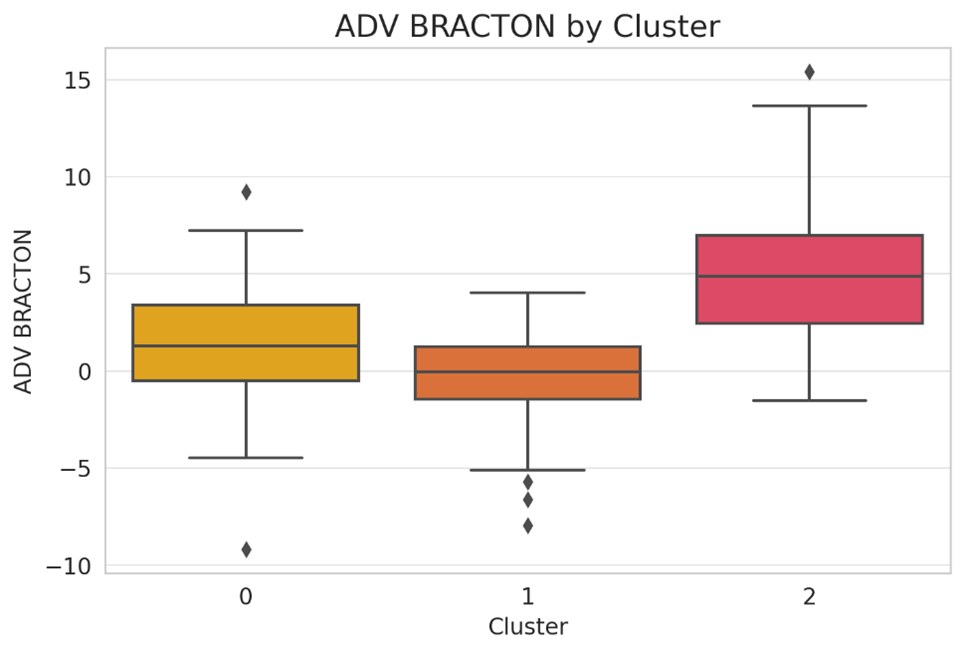
Clusters 0 and 1 contain players with more moderate and lower AB scores, suggesting that while these players contribute to championship teams, they do not drive success at the same level as Cluster 2 players. Cluster 0 players show a fairly wide distribution, with some reaching positive AB scores similar to lower-tier Cluster 2 players, but also containing those with negative scores. This suggests that Cluster 0 consists of reliable mid-tier contributors who play key depth roles but do not necessarily dominate games.
Cluster 1 players have the lowest AB scores on average, with a significant number of negative values and a tighter range around the median. The presence of more negative AB players in this group suggests that these are often younger or lower-salaried role players who may not have the same impact as those in Clusters 0 and 2. However, their inclusion on championship teams highlights that teams still need cost-effective contributors to fill out their rosters, even if they do not individually drive performance.
This analysis supports the idea that while depth is necessary for a successful team, championships are won by teams with a core of high-AB players. The structure of a winning roster is built around elite talent that provides the bulk of the impact, with mid-tier contributors providing necessary support and lower-AB role players filling in key depth roles.
Salary distributions indicate that championship rosters include a mix of highly paid veterans and cost-efficient younger players. The histogram shows a right-skewed distribution, meaning that the majority of players earn lower salaries, while a smaller number of highly paid players make up the upper end of the distribution. The highest frequency occurs in the lowest salary range, suggesting that championship teams rely heavily on cost-effective contributors, many of whom are likely on entry-level or team-friendly contracts.

The spread of salaries shows that while some high earners drive team success, many crucial contributors come from lower salary brackets, reinforcing the importance of depth players who can provide value while taking up minimal cap space. The long tail extending toward the higher salary ranges reflects the presence of elite, well-compensated players who are essential to a team’s core. These players often account for a large portion of a team’s total salary cap, emphasizing the need for teams to find a balance between star talent and supporting depth.
Another important insight from this distribution is that while championship teams do have highly paid stars, they do not rely exclusively on them. The presence of a large number of lower-salary players highlights that teams must maximize salary efficiency, getting valuable production from players on lower or mid-tier contracts. This supports the idea that successful teams are not just built on star power but also on strong scouting, player development, and strategic contract management that allows them to maintain a deep, well-balanced roster.
The boxplot for salary by cluster reveals a clear distinction in how championship teams allocate their financial resources. High-impact players in Cluster 2 command the largest salaries, with a median salary significantly higher than those in Clusters 0 and 1. This reinforces the idea that teams invest heavily in elite talent, as these players often drive offensive production, control possession, or play crucial roles in defensive and special teams situations. The spread of salaries within Cluster 2 is also notable, as it shows that while some of these players are among the highest-paid in the league, there is still some variation in earnings among top-tier contributors.
In contrast, depth players in Clusters 0 and 1 tend to have much lower salaries. Cluster 0 players, consisting of solid mid-tier contributors, have a wider salary distribution, with some players earning moderate salaries comparable to the lower end of Cluster 2. This suggests that teams recognize the value of dependable depth and are willing to allocate some cap space to retain reliable secondary contributors. However, the majority of Cluster 0 players fall into a more affordable salary range, emphasizing the importance of cost-effective depth on championship rosters.
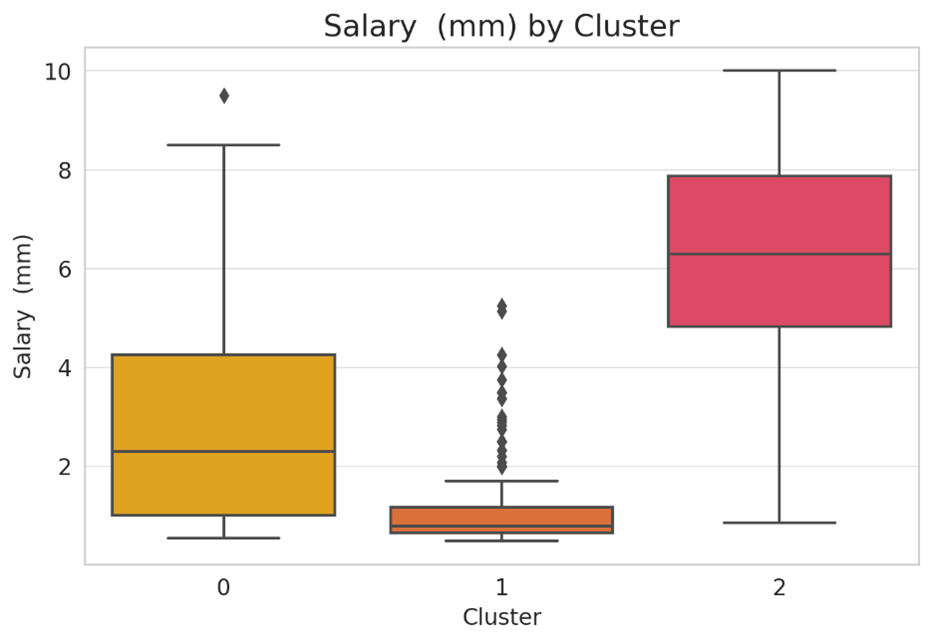
Cluster 1 players, consisting mostly of younger or lower-impact role players, have the lowest salaries, with a tight distribution close to the bottom of the salary scale. The presence of numerous outliers in this group suggests that while most players in this cluster earn minimal salaries, a few exceptions receive slightly higher compensation, possibly due to veteran status or specific skill sets that teams find valuable.
This breakdown supports the notion that while teams invest in superstars, they also depend on lower-cost contributors to maintain roster balance. Championship teams must maximize salary efficiency, ensuring they can afford elite talent while still maintaining enough financial flexibility to support depth players and complementary contributors. The ability to find value at different salary levels is a crucial factor in building a sustainable contender.
The age distribution of championship players is slightly right skewed, indicating that teams tend to lean toward experienced players while still incorporating younger talent. The majority of Stanley Cup winners fall within their prime playing years, typically in the mid-to-late 20s, where players have developed both the physical and mental aspects of their game. The peak of the distribution around ages 26 to 30 suggests that teams rely on players who have reached a balance between skill development, physical conditioning, and game experience.
However, the presence of younger players in the distribution, particularly those in their early 20s, highlights the role of emerging stars and cost-effective contributors on entry-level contracts. These players can provide speed, energy, and depth production while allowing teams to allocate more salary cap space to established stars. Conversely, the long tail extending beyond age 35 shows that some veterans remain effective contributors well into their 30s and even early 40s. These players often bring leadership, playoff experience, and situational expertise, such as penalty killing or shutdown defense, which can be critical in high-pressure postseason moments.
This distribution suggests that while championship teams are primarily built around players in their physical prime, they benefit from a well-structured mix of younger developing talent and seasoned veterans. The ability to maintain this balance allows teams to sustain success across multiple seasons while ensuring that both immediate impact and long-term stability are accounted for in roster construction.
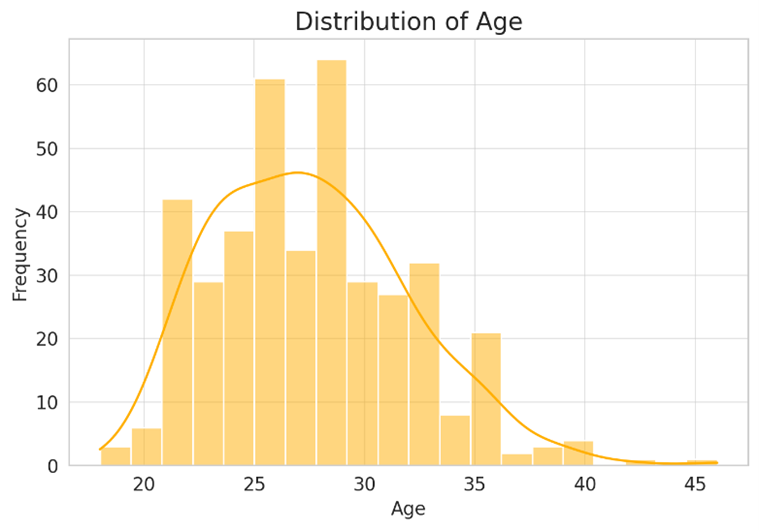
The boxplot of age by cluster further illustrates the relationship between player roles and career stages on championship teams. Cluster 2 players, who are typically high-impact stars, tend to fall within the prime age range of 25 to 30, reinforcing the idea that championship teams are driven by players at their physical and skill-based peak. The relatively tight distribution of ages within Cluster 2 suggests that these top-tier players are often in their most productive years, where they can contribute at an elite level without the decline in performance that comes with aging.
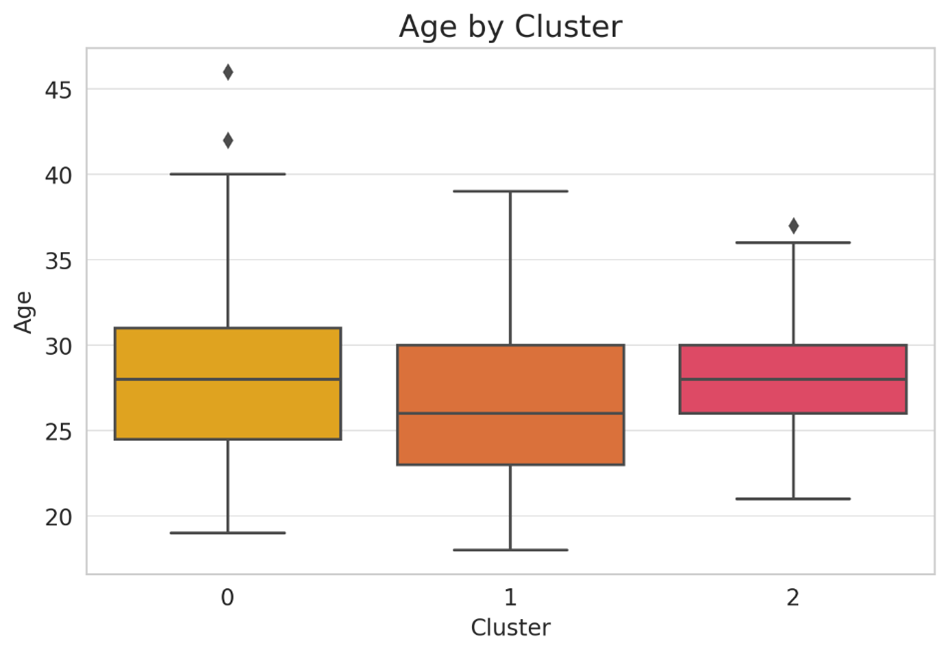
Clusters 0 and 1, however, feature a more varied age distribution, indicating that teams rely on a mix of younger developing players and experienced veterans to complement their core stars. Cluster 0 players, who provide essential depth contributions, show a broader spread of ages, including both younger secondary scorers and older, more seasoned role players. The presence of outliers above 40 in this group highlights that some veterans maintain effectiveness in specialized roles, particularly in leadership, defensive assignments, or special teams.
Cluster 1, consisting primarily of younger, lower-cost role players, has a median age slightly below Clusters 0 and 2, with several players in their early 20s. This suggests that championship teams benefit from cost-effective contributions from developing players, particularly those on entry-level contracts who can provide energy and secondary production without taking up significant salary cap space. While experience is valuable, teams clearly balance their rosters by incorporating younger players who can provide immediate impact while developing into long-term contributors.
Overall, this distribution supports the idea that while championship teams are built around core players in their prime years, they rely on a carefully structured mix of emerging talent and veteran leadership. The ability to integrate younger players into key roles while maintaining a foundation of experienced contributors is a critical factor in sustained success.
The histogram of draft rounds reveals that championship rosters are composed of a mix of early draft picks and later-round selections who have developed into key contributors. The highest concentration of players comes from the first round, which aligns with expectations, as elite talent is most often selected early in the draft. These high-end players are typically the foundation of championship teams, providing star power and high-impact performances that drive success.

Beyond the first round, however, there is a notable presence of players selected in later rounds, particularly in rounds two through four. This indicates that while top-tier talent is essential, successful teams are also built through strong scouting, player development, and finding value beyond the obvious first-round selections. Players taken in these mid-rounds often develop into reliable depth contributors or, in some cases, even outperform their draft position to become key players.
Interestingly, the distribution also shows a resurgence of players drafted in the seventh and eighth rounds, suggesting that teams still find impactful talent late in the draft. Many of these late-round picks likely took longer to develop, spending extended time in junior leagues, college hockey, or European leagues before transitioning into the NHL. This pattern reinforces the importance of patience in player development and the ability of championship teams to identify and cultivate talent beyond the early rounds.
The presence of players across all rounds suggests that winning teams do not rely solely on high draft positions but instead build through a well-rounded approach. The ability to develop mid-to-late-round selections into productive NHL players provides teams with depth and salary cap flexibility, as these players often come at a lower cost compared to high-profile first-round picks. This distribution highlights the importance of scouting, player development, and long-term roster planning in building a Stanley Cup-winning team.
The boxplot for draft round by cluster indicates a clear distinction in where different types of players are typically selected in the NHL Draft. High-impact players in Cluster 2 are overwhelmingly early-round selections, with most being drafted in the first or second round. This aligns with expectations, as teams prioritize elite talent at the top of the draft, and these players are the ones who go on to become franchise cornerstones. The narrow range in Cluster 2 suggests that very few late-round picks or undrafted players reach this level of impact, reinforcing the importance of securing top-tier talent through early draft selections.
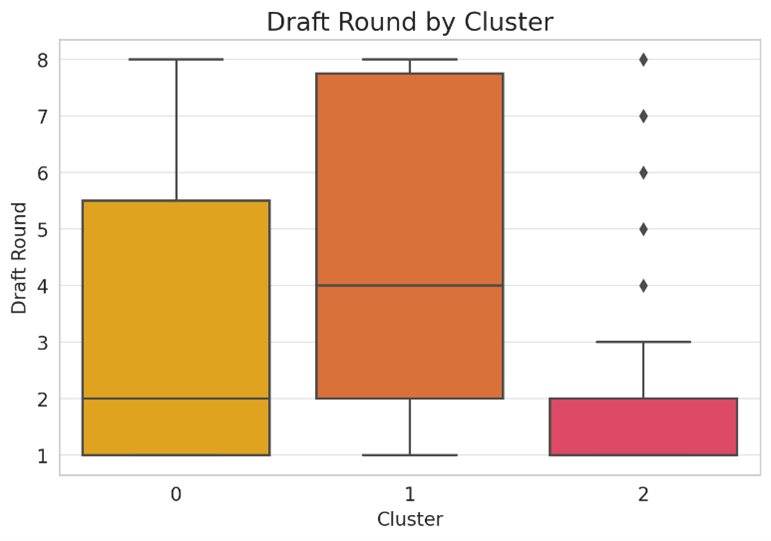
In contrast, depth contributors in Clusters 0 and 1 show a much wider range of draft positions, including a significant number of later-round selections. Cluster 0, which consists of solid mid-tier contributors, has players selected across nearly all rounds, from first-round picks to late-round selections and undrafted free agents. The median draft position for Cluster 0 is lower than Cluster 1, suggesting that while some first-round picks fall into this category, many players in this group were taken in the mid-to-late rounds but still carved out important roles on championship teams.
Cluster 1, which consists of younger or lower-impact role players, has the widest spread of draft positions, including many undrafted players. This suggests that while early draft selections tend to become elite players, successful teams also find value in later-round picks or undrafted players who develop into key contributors. These players often take longer to reach their peak but can become important depth pieces, providing valuable production at a lower salary cap hit.
This distribution highlights the importance of strong scouting and player development. While high draft picks are the most likely to become top-tier players, championship teams succeed by identifying and developing talent across all rounds of the draft. The ability to find and integrate lower-drafted or undrafted players into key roles allows teams to maintain roster depth and financial flexibility, ensuring long-term success.
By incorporating these statistical insights, we can see that Stanley Cup-winning teams are not built through a single formula. Instead, they combine elite talent, strong depth, and cost-effective players, ensuring a balanced roster capable of adapting to the high-pressure environment of the playoffs. The combination of high AB performers, experienced veterans, and younger depth pieces provides the versatility needed to sustain success throughout a grueling postseason run. These findings emphasize that while star power is crucial, championship teams also depend on a well-structured supporting cast, demonstrating the importance of roster balance in the path to a Stanley Cup.
Conclusion of Stanley Cup Analysis
By integrating AB metrics, clustering analysis, and detailed statistical breakdowns, this chapter provides a comprehensive understanding of how championship teams are constructed. The findings highlight the importance of roster balance, demonstrating that successful teams are built around a strong core of high-impact players while also relying on cost-effective depth and well-developed role players. The correlations between positive AB scores, playoff qualification, and Stanley Cup victories reinforce AB as a valuable tool for evaluating team success.
These insights have direct implications for front office strategies, scouting departments, and player development programs. Teams looking to build sustainable contenders must prioritize not only elite talent but also effective salary cap management, scouting efficiency, and player development pipelines that maximize contributions from later-round picks and undrafted players. The ability to blend high-AB performers with strategically selected depth pieces has consistently proven to be a key component of championship-winning rosters.
Future analyses could refine AB metrics further, enhancing predictive accuracy and providing even deeper insights into team-building strategies. Incorporating additional factors such as advanced analytics, situational impact, and evolving player development trends could help front offices optimize roster construction and maximize competitive windows. As the game continues to evolve, data-driven approaches like AB metrics will remain essential in shaping the next generation of championship teams.
Chapter 13 – Final Remarks
The Advanced Bracton Score (AB) and its interconnected family of metrics have redefined how hockey is analyzed, shifting the paradigm from traditional statistics to a more comprehensive, decision-driven approach. This paper has demonstrated that minimizing mistakes is the cornerstone of winning hockey games, a principle that extends from player evaluation to team construction, coaching impact, and general management efficiency. The research presented across 17 NHL seasons has confirmed that teams with high aggregate AB Scores consistently outperform those that rely on conventional scouting or raw talent alone. By integrating statistical modeling, machine learning, and clustering techniques, this study has uncovered underlying patterns in player success, team-building strategies, and even the economics of salary allocation. This analytical framework is not just a set of numbers—it is a philosophy of hockey intelligence, one that quantifies decision-making in a way that was previously immeasurable.
At the individual level, the AB Score has been shown to correlate with career longevity, team success, and efficiency in player contributions. Players with high AB Scores consistently produce positive Unscored Goals at the Margin (UGM), contributing to team performance beyond traditional box-score statistics. The integration of Tentative AB (TAB) in pre-NHL scouting has provided a data-driven method to project player success, particularly in identifying undervalued prospects in later draft rounds. This study’s findings have confirmed that players with positive TAB Scores are significantly more likely to reach the NHL and sustain careers at a high level. Similarly, the Replacement Level Player (RLP) analysis has shown that nearly half of the league’s skaters perform below replacement, reinforcing the importance of accurate talent identification and roster optimization.
Beyond individual players, coaching and management play a pivotal role in team success, as demonstrated by the Coaching AB and GM AB metrics. The sum-of-ranges methodology for coaching evaluation has provided a more robust framework for measuring a coach’s impact on player development, lineup optimization, and strategic execution. General managers who have historically maximized their team’s AB Scores through effective trades, draft selections, and salary cap management have been at the forefront of Stanley Cup contention. The data-driven approach to evaluating trades and arbitration cases has further reinforced the inefficiencies in contract negotiations and asset allocation. The insights from the Arbitration Analyzer have quantified how agents influence player earnings relative to their AB contributions, highlighting inefficiencies that could be exploited by teams willing to embrace advanced analytics.
When analyzing championship-winning rosters, the results were unmistakable: Stanley Cup teams consistently have higher AB Scores than their non-championship counterparts. The correlation between Total AB Score and Mean Wins underscores that constructing a high-AB roster is the single most predictive factor of long-term success. This conclusion was supported by Spearman’s rho calculations and regression analysis, which validated the AB framework’s ability to predict team performance with statistical rigor. The impact of goaltending on AB-based success was also evident, as elite goaltenders with high AB Scores had direct correlations with team wins, further proving that mistake minimization is critical even at the most isolated position on the ice. This research has shown that an effective team is not simply built around star players, but rather a cohesive, strategically assembled unit that maximizes collective AB contributions.
Ultimately, this study represents the culmination of years of research, refinement, and real-world application of Advanced Bracton Analytics as a guiding philosophy for hockey decision-making. The implications extend far beyond traditional analytics—this framework is a fundamental rethinking of how success is measured and pursued in professional hockey. By leveraging these insights, teams can not only optimize their roster construction and coaching strategies but also identify hidden inefficiencies in scouting, arbitration, and contract negotiations. The AB Score is not just a tool; it is a competitive advantage that, when properly implemented, has the power to transform how organizations operate, draft, develop, and compete at the highest level. The future of hockey analytics lies in embracing a methodology that values intelligence over instinct, structure over subjectivity, and, above all, decision-making excellence over raw skill alone.
Chapter 14 – Acknowledgements
This research and the development of the Advanced Bracton Score (AB) and its broader analytical framework would not have been possible without the contributions of numerous individuals, organizations, and platforms that provided the foundational knowledge, data, and support necessary to bring these ideas to life. First and foremost, I extend my gratitude to the people and editors behind NHL.com, the former CapFriendly.com, PuckPedia.com, hockeydb.com, Yahoo Sports, Fox Sports, and ESPN Hockey. These platforms were instrumental in supplying the statistical data required to build my initial research databases, offering historical records, salary cap figures, advanced player metrics, and team insights that shaped the foundation of my work. The accessibility of their statistics allowed me to refine my methodologies and establish a more comprehensive approach to evaluating hockey decision-making at every level of the sport.
I would also like to express my sincere appreciation to Professor Charles Grantham, whose expertise in sports business provided me with an in-depth understanding of the economic and managerial relationships that influence the sports industry. His teachings went far beyond the theoretical and helped me develop a critical perspective on the financial and operational dynamics that drive front-office decision-making. The insights I gained from his classes enabled me to better articulate and quantify the complex interactions between team management, player contracts, arbitration, and trade strategies, all of which are integral to the AB framework. His impact on my academic and professional growth has been invaluable.
A special thanks goes to Dr. Lynn Lashbrook at Sports Management Worldwide (SMWW) for offering me opportunities at a young age to immerse myself in the hockey industry through his courses and conferences. His mentorship and the resources provided by SMWW were pivotal in helping me gain early exposure to professional scouting, general management, and player representation. By allowing me to engage with industry experts and professionals long before entering graduate studies, Dr. Lashbrook provided me with the foundation and confidence needed to pursue my research and refine my analytical approach to the game. The knowledge gained from SMWW played a crucial role in shaping my perspective on hockey operations, from talent evaluation to organizational strategy.
I am deeply grateful to my father, Frank J. Abella III, at Investment Partners Group, for not only supporting my passion for hockey analytics but also actively contributing to the early stages of this research. His insights and expertise in financial modeling helped me construct the Advanced Bracton Formula, refining the way I measured player efficiency and mistake minimization. His encouragement and guidance in the development of HockeyFreeForAll.com (HFFA) were instrumental in bringing my work to the public, allowing me to share my findings and engage with a wider audience. Additionally, I would like to extend my gratitude to Brian Brown of Investment Partners Group, who introduced me to the world of data analytics and has been an unwavering source of support. His patience, willingness to answer my endless questions, and deep understanding of analytical frameworks helped me translate theoretical concepts into practical applications, significantly improving the accuracy and scope of my research.
A special acknowledgment is reserved for Coach Joe Cardarelli of Cortland State University, whose support and trust allowed me to apply my analytical research in a real-world setting. By giving me the opportunity to contribute scouting reports and program evaluations, he provided invaluable experience that reinforced the practical applications of the Advanced Bracton framework. His guidance at a critical stage in my career helped bridge the gap between theoretical research and on-ice decision-making, for which I am sincerely grateful.
Finally, I want to acknowledge Dr. Eric Rosenberg, whose guidance throughout my MBA in Business Analytics has been instrumental in elevating my technical skills. His expertise in Python and data science provided me with the tools necessary to implement advanced methodologies, including machine learning models, clustering techniques, and statistical regressions that are at the core of this research. Without his instruction, I would not have been able to process and interpret the extensive datasets that underpin the AB framework. The methodologies he taught me have shaped not just this research but my overall approach to data-driven decision-making, making his contributions invaluable to this work.
To all those mentioned above, and to everyone who has supported this research in any way. I extend my deepest gratitude. Your expertise, mentorship, and belief in this work have been essential in bringing The Advanced Bracton Score and HockeyFreeForAll.com paradigm to life.
 hockey free for all.com (HOME OF THE ADVANCED BRACTON)
Leave a comment